Friday, 23 Oct, 2026

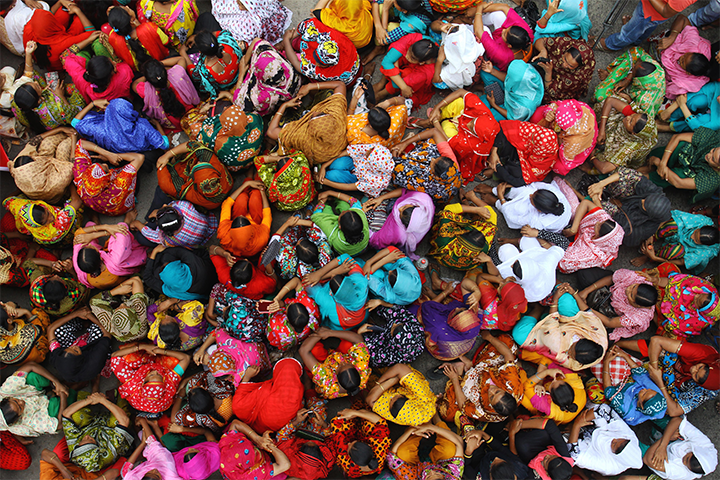
Photo courtesy: Pixabay
NSO data shows a strong link between women entrepreneurs and female employment across India’s urban informal economy, though productivity alone does not guarantee greater participation
Women’s entrepreneurship appears to be closely linked with women’s employment in India's urban informal economy. An analysis of the Annual Survey of Unincorporated Sector Enterprises (ASUSE) 2025, released by the National Statistics Office (NSO), shows that cities with a higher share of women-owned informal businesses also tend to have a larger proportion of women in their workforce. The relationship is visible across most of India’s large urban centres and suggests that expanding women’s entrepreneurship could play a critical role in raising female labour force participation.
Across the 46 million-plus cities covered in the survey, the trend is difficult to ignore.
Surat stands out as one of the strongest examples. Women own 43 per cent of proprietary establishments in the city and account for 41 per cent of workers in the informal sector. Vadodara, Ahmedabad and Pune exhibit a similar pattern, where the share of women business owners closely matches the proportion of women employed.
The reverse is equally true.

In Srinagar, fewer than one in 10 proprietary businesses are owned by women, and women account for barely 10 per cent of the informal workforce. Varanasi, Patna and Delhi also report low shares of both women entrepreneurs and women workers, indicating that limited business ownership often goes hand in hand with weaker employment opportunities for women.
Winners
The figures suggest that where women are more likely to run businesses, they are also more likely to find work.
However, the data also shows that economic productivity alone does not ensure greater female participation.
Delhi has one of the country's most productive informal economies, with each worker generating nearly Rs 2.65 lakh in gross value added annually, making it the third-highest among surveyed cities. Yet women account for only 13.5 per cent of its workforce, one of the lowest shares in India.
Greater Hyderabad tells a similar story. It ranks second in labour productivity but women make up just 19.82 per cent of workers.
Srinagar presents an even sharper contrast. Despite generating close to Rs 2.5 lakh per worker each year, it records the lowest female workforce participation among all surveyed cities.
Meanwhile, Greater Visakhapatnam produces around Rs 1.8 lakh per worker—significantly below Delhi—but women account for 42.5 per cent of the workforce, the highest share in the country.
The comparison suggests that the nature of economic activity matters as much as its productivity.
Trade-heavy informal economies consistently employ fewer women.
Among the eight cities where trade forms the largest share of informal establishments, women account for less than 20 per cent of workers on average.

Srinagar, where trade represents 57 per cent of informal establishments—the highest proportion in the survey—also has the country's lowest female workforce participation.
Other cities with a strong dependence on trade, including Kanpur, Delhi, Kota and Lucknow, also report women accounting for less than one-fifth of informal workers.
By contrast, cities with stronger manufacturing and service sectors tend to offer greater employment opportunities for women.
Nationally, women account for about 26 per cent of the informal workforce. Several cities significantly exceed this average.
Surat, where manufacturing makes up 43 per cent of informal establishments, reports women occupying 41 per cent of informal jobs.
Greater Visakhapatnam, with services accounting for 54 per cent of its informal economy and trade just 22 per cent, leads the country with women comprising 42.5 per cent of workers.
Chennai, where services account for nearly three-fifths of informal establishments, records female workforce participation of around 32 per cent. Coimbatore, supported by a mix of manufacturing (26 per cent) and services (46 per cent), reports a similar share, while Navi Mumbai, where services contribute 60 per cent of informal establishments, records women making up 35 per cent of the workforce.
There are exceptions to the broader trend.
Madurai remains heavily dependent on trade, which accounts for 44 per cent of its informal economy, yet women represent 35.6 per cent of its workforce. This suggests that local social conditions, industrial structure and labour-market dynamics can sometimes outweigh sectoral composition.
Overall, the ASUSE data points to a clear message. Across India’s urban informal economy, women’s entrepreneurship and women’s employment move closely together. Cities with more women running businesses are also the ones where more women participate in the workforce. As India seeks to raise female labour force participation, encouraging women-led enterprises may prove to be one of the most effective ways of creating employment opportunities for women themselves.