Wednesday, 15 Apr, 2026

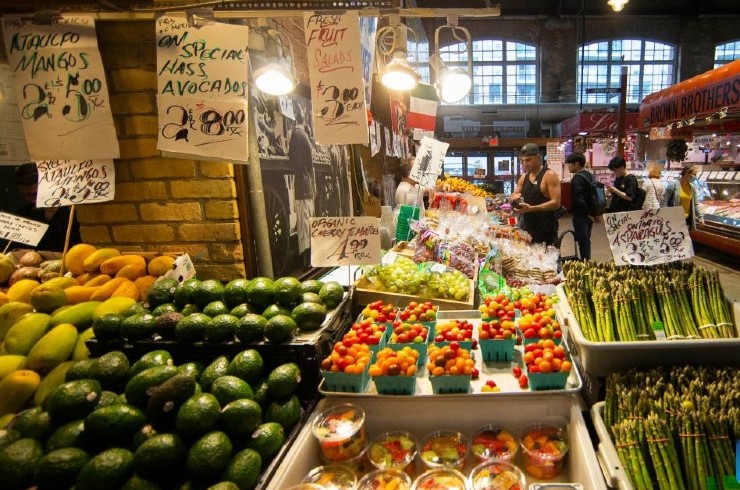
Food inflation, tracked through the Consumer Food Price Index (CFPI), also showed an upward movement. Image Source: IANS
This uptick comes at a time when global economic conditions remain uncertain, particularly due to ongoing tensions in West Asia, which can influence supply chains, commodity prices, and overall inflation trends.
India’s retail inflation, as measured by the Consumer Price Index (CPI), inched up slightly to 3.40 percent in March 2026 on a year-on-year basis, according to figures released by the Ministry of Statistics and Programme Implementation. This represents a modest rise from the 3.21 percent recorded in February 2026, suggesting a mild increase in overall price pressures faced by consumers.
This uptick comes at a time when global economic conditions remain uncertain, particularly due to ongoing tensions in West Asia, which can influence supply chains, commodity prices, and overall inflation trends. Looking at the rural-urban split, inflation in rural areas rose to 3.63 percent in March from 3.37 percent in February. Urban inflation also saw a marginal increase, reaching 3.11 percent compared to 3.02 percent in the previous month. This indicates that price pressures are being felt across both segments, though slightly more pronounced in rural regions.
Food inflation, tracked through the Consumer Food Price Index (CFPI), also showed an upward movement. It climbed to 3.87 percent in March from 3.47 percent in February, pointing to rising costs in essential food items. Within this, rural food inflation stood at 3.96 percent, while urban food inflation was slightly lower at 3.71 percent, again highlighting somewhat higher pressure in rural markets.
Official data noted that the year-on-year CPI inflation for March 2026, compared to March 2025, stands at 3.40 percent on a provisional basis. The corresponding figures for rural and urban inflation were 3.63 percent and 3.11 percent, respectively. In the housing category, inflation remained relatively subdued. Overall housing inflation was recorded at 2.11 percent, with rural housing at 2.54 percent and urban housing at 1.95 percent. This suggests that housing costs have been rising at a slower pace compared to other categories.

Source: Ministry of Statistics and Programme Implementation
Across major consumption segments, food and beverages registered an inflation rate of 3.71 percent at the combined level. The category of paan, tobacco and intoxicants experienced relatively higher inflation at 4.23 percent. Clothing and footwear saw moderate inflation at 2.75 percent, while utilities such as water, electricity, gas and other fuels recorded a lower inflation rate of 1.97 percent.
On the other hand, some sectors either saw very low inflation or remained flat. Transport costs showed almost no change, with inflation hovering around zero percent, while the information and communication segment recorded a minimal rise of 0.33 percent.
At a more granular level, price trends varied significantly across individual items. Essential vegetables and pulses such as onion, potato, garlic, arhar, and peas continued to experience deflation, although the pace of price decline has eased somewhat. In contrast, notable price increases were observed in items like silver jewellery, gold and other precious ornaments, as well as certain food items including coconut, tomato, and cauliflower, reflecting uneven price movements within the overall inflation basket.
Aditi Nayar, Chief Economist at ICRA, observed that CPI inflation edged up to 3.4 percent in March from the previous month, suggesting an early and modest effect of the ongoing West Asian tensions on overall inflation.
The CPI is heavily weighted by the RBI while formulating its bi-monthly monetary policy. The repo rate was last increased on February 08, 2023 by the Monetary Policy Committee (MPC) by 25 basis points (bps), bringing it to 6.50 percent. The MPC had increased the benchmark interest rate by 250 basis points in the fiscal year 2022-23 in an effort to control the raging inflation. The RBI increases the repo rate as a measure of tight monetary policy to counter inflation. Repo rate is the interest rate at which the central bank of a country lends money to commercial banks. In the event of inflation, central banks increase repo rate as this restricts the commercial banks to borrow from the central bank. This ultimately reduces the money supply in the economy and thus helps in reducing inflation.
Building on the latest inflation trends, the Reserve Bank of India decided to maintain the policy repo rate at 5.25 percent in its first bi-monthly Monetary Policy Statement for the financial year 2026–27, while retaining a neutral policy stance. The decision was announced after a three-day meeting of the Monetary Policy Committee, chaired by Governor Sanjay Malhotra, which commenced on April 6.

Source: Reserve Bank of India
Explaining the rationale behind the move, the Governor noted that the committee undertook a comprehensive review of evolving macroeconomic indicators, financial conditions, and the broader outlook before arriving at its decision. The MPC unanimously voted to leave the repo rate unchanged under the liquidity adjustment facility at 5.25 percent, signalling a cautious and balanced approach amid moderate inflation and external uncertainties.
As a result of this decision, other key policy rates also remain unchanged. The standing deposit facility rate continues at 5 percent, while both the marginal standing facility rate and the bank rate are held at 5.5 percent. These aligned rates reflect the central bank’s effort to maintain stability in the financial system while ensuring adequate liquidity.
Alongside the rate decision, the central bank provided its growth outlook for the year. India’s GDP growth for 2026–27 is projected at 6.9 percent, indicating a steady expansion despite global headwinds. The quarterly growth estimates suggest a gradual strengthening over the year, with growth pegged at 6.8 percent in the first quarter, 6.7 percent in the second, rising to 7 percent in the third, and further improving to 7.2 percent in the final quarter.
Taken together with the recent uptick in inflation, the policy stance reflects a careful balancing act—supporting growth while remaining watchful of emerging price pressures and global economic risks.