Friday, 16 Oct, 2026


Photo courtesy: IOC website
Even as ethanol blending reaches 20%, India’s oil dependence has deepened. Crude imports have risen to 226 mt in FY26 (to February), with import reliance exceeding 90%—a sign that demand growth is outpacing the gains from blending.
India’s ethanol blending programme has advanced at a striking pace over the past few years, emerging as a central pillar of the country’s strategy to curb dependence on imported crude oil. Yet, even as blending targets are met ahead of schedule, the data point to a more complex reality: rising fuel demand is offsetting much of the intended impact on import dependence.
The scale of progress on ethanol blending is undeniable. Ethanol supply has surged from 1,912.1 million litres in 2018-19 to 10,228 million litres in 2024-25. The acceleration has been particularly sharp after 2020-21, reflecting policy push, improved supply chains and greater participation from sugar mills and distilleries. India has already achieved 20 per cent blending in the ethanol supply year 2025-26 (ESY26), reaching a target that was originally set for later in the decade.
The rollout is now entering its next phase. From April 1, petrol pumps across the country are set to supply E20 fuel—petrol blended with up to 20 per cent ethanol—marked with a 95 Research Octane Number (RON). This marks the formal transition to a higher blending regime and signals the government’s intent to mainstream ethanol-blended fuel nationwide.
The policy has gained additional urgency in the backdrop of geopolitical tensions, particularly the energy market disruptions triggered by the West Asia conflict. Prime Minister Narendra Modi has repeatedly underscored ethanol blending as a strategic lever to reduce India’s reliance on imported crude. On the surface, the rapid scaling up of blending appears aligned with this objective.

However, a closer look at the numbers suggests that the relationship between blending and import dependence is far from straightforward.
When ethanol blending stood at around 5 per cent in 2018-19, India imported 226 million tonnes (mt) of crude oil, accounting for 87.4 per cent of its total requirement. Over the years, even as blending ratios increased steadily—rising to 20 per cent by ESY26—crude imports have not declined in absolute terms. In fact, they have remained elevated, touching 243 mt in 2024-25 and standing at 226 mt in 2025-26 (until February).
More significantly, import dependence has increased rather than decreased. From 87.4 per cent in 2018-19, the share of imports in total crude requirement has climbed to over 90 per cent, reaching 90.47 per cent in 2025-26 (until February). This trend highlights a key limitation of the ethanol blending strategy: while it reduces the proportion of fossil fuel in petrol, it does not necessarily lower overall crude demand if consumption continues to grow rapidly.
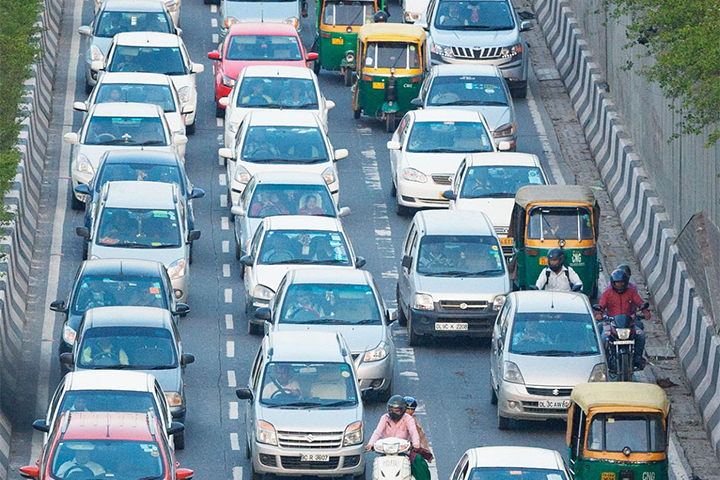
That is precisely what has been happening. Petrol consumption in India has risen steadily, driven by expanding mobility, rising incomes and continued dependence on internal combustion engine vehicles. Consumption increased from 28.3 mt in 2018-19 to 30.0 mt in 2019-20, before dipping to 28.0 mt in 2020-21 due to the pandemic. It then rebounded sharply to 30.8 mt in 2021-22, 35.0 mt in 2022-23 and 37.2 mt in 2023-24.
The upward trajectory has continued in recent years. Petrol consumption reached 40 mt in 2024-25, marking a 7.53 per cent increase. In 2025-26, consumption stood at 38.8 mt until February, reflecting a year-on-year growth of 6.3 per cent and keeping demand elevated.
This sustained rise in consumption has effectively diluted the impact of higher ethanol blending. Even as more ethanol is mixed into petrol, the overall volume of fuel being consumed has expanded at a faster pace, necessitating continued—and in some cases higher—imports of crude oil.

The data across years reinforce this pattern. Crude imports fluctuated from 227 mt in 2019-20 to 196 mt in 2020-21, before rising again to 212 mt in 2021-22, 233 mt in 2022-23 and 234 mt in 2023-24. The upward movement continued to 243 mt in 2024-25, alongside a steady increase in import dependence from 88.16 per cent in 2019-20 to 89.59 per cent in 2023-24 and beyond 90 per cent thereafter.
Taken together, these trends suggest that ethanol blending, while successful as a supply-side intervention, cannot on its own offset the pressures created by rising fuel demand. The policy has helped diversify the fuel mix and supported domestic agricultural value chains, but its ability to materially reduce oil imports remains constrained in a high-growth consumption environment.
The broader implication is that India’s energy transition will require a more multi-pronged approach. Ethanol blending can play an important role, but without parallel measures to moderate oil demand—through electrification, efficiency gains or alternative fuels—import dependence is unlikely to decline meaningfully.
For now, the country’s ethanol story is one of rapid progress but limited relief. The blending target may have been achieved ahead of time, but the larger goal of reducing crude dependence remains a work in progress.