Friday, 16 Oct, 2026

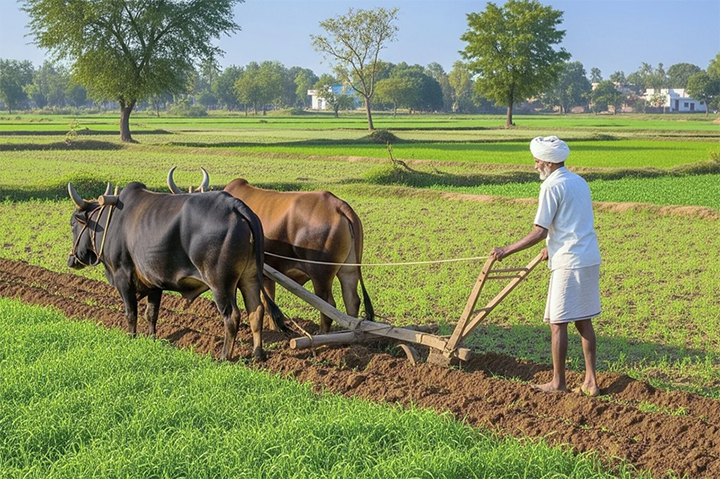
Photo courtesy: Pixabay
The subsidy surge also comes at a difficult moment for public finances, with tax revenue growth slowing even as welfare commitments and demands for infrastructure and rural spending remain high.
The fertiliser subsidy bill is heading for another wartime-style surge. Internal estimates from the expenditure department suggest the government may end up spending about Rs 2.40 lakh crore on fertiliser subsidies this fiscal year—nearly
Rs 70,000 crore more than the Rs 1.71 lakh crore provided in the Budget. The culprit is a familiar one: global commodity shocks colliding with India’s dependence on imports.
This time, the trigger is the West Asia conflict, which has sharply disrupted supplies and pushed up prices of di-ammonium phosphate (DAP), the world’s most widely used phosphorus fertiliser. India imports more than 80 per cent of its DAP requirement, leaving it highly exposed to global price swings. Urea dependence is lower but still substantial, with domestic production meeting only about one-third of demand.
The numbers illustrate the scale of the shock. Since March 2026, international urea prices have surged 85 per cent to around $950 per tonne, according to CareEdge Ratings. DAP prices have climbed 30 per cent to $900 per tonne. Raw materials used to produce fertilisers—ammonia, sulphur, phosphoric acid and natural gas—have also become sharply more expensive. Ammonia prices are up 60 per cent, while sulphur prices have risen 50 per cent.
For India, this matters because fertilisers are not merely an agricultural input; they are a political necessity. The government has effectively guaranteed farmers cheap fertilisers regardless of global prices. That means every jump in import costs translates directly into higher subsidy spending.
Officials say there is little appetite to pass these increases on to farmers. A senior government official said the Centre remained committed to ensuring adequate fertiliser availability at affordable prices during the crucial kharif sowing season. Rice, maize, soybean and pulses cultivation all depend heavily on timely fertiliser supply, making price increases politically risky.
As a result, the state absorbs the shock.
The government had budgeted urea imports at $460 per tonne and DAP imports at $667 per tonne for FY27. Current market prices are dramatically above those assumptions. Even if prices ease later in the year, the mismatch between budgeted and actual costs is already large enough to stretch the subsidy bill far beyond initial estimates.

India has responded in the only way it realistically can in the short term: buying more. Since the beginning of the West Asia crisis, the country has imported nearly 20 lakh tonnes of soil nutrients, including urea, DAP and NPK fertilisers. Indian Potash recently signed contracts for 1.35 million tonne of DAP at prices between $930 and $935 per tonne, sourced largely from Saudi Arabia, Russia, Egypt and Morocco.
That single deal accounts for roughly a quarter of India’s annual DAP imports.
The broader concern is fiscal. A fertiliser subsidy bill approaching Rs 2.40 lakh crore would bring back memories of FY23, when the Ukraine war sent global fertiliser prices soaring and subsidy spending hit a record Rs 2.54 lakh crore. At the time, the government justified the spending as necessary to protect food security and shield farmers from imported inflation.
The same logic applies now. But the repetition of these crises highlights a deeper structural problem: India remains dangerously dependent on imported fertilisers and imported energy inputs. Every geopolitical shock—whether in Eastern Europe or West Asia—quickly feeds into the country’s subsidy burden and fiscal arithmetic.
The subsidy surge also comes at a difficult time for public finances. Tax revenues are moderating, welfare commitments remain elevated, and pressure is growing for higher spending on infrastructure and rural support. Another large fertiliser overrun risks squeezing fiscal space elsewhere.
Yet politically, there are few alternatives. Raising fertiliser prices ahead of a major sowing season would hit rural sentiment and potentially fuel food inflation. India’s inflation management strategy has long depended on cushioning farmers from global commodity volatility, even at the cost of higher subsidies.
That leaves policymakers trapped between fiscal prudence and political necessity.
In the longer term, the latest shock may strengthen the case for expanding domestic fertiliser production, diversifying import sources and investing in alternative nutrient technologies. But those solutions take years. For now, India’s farm economy remains tied to global commodity markets it cannot control.
And as fertiliser prices soar again, the government’s subsidy bill is becoming the clearest measure of that vulnerability.