Friday, 16 Oct, 2026

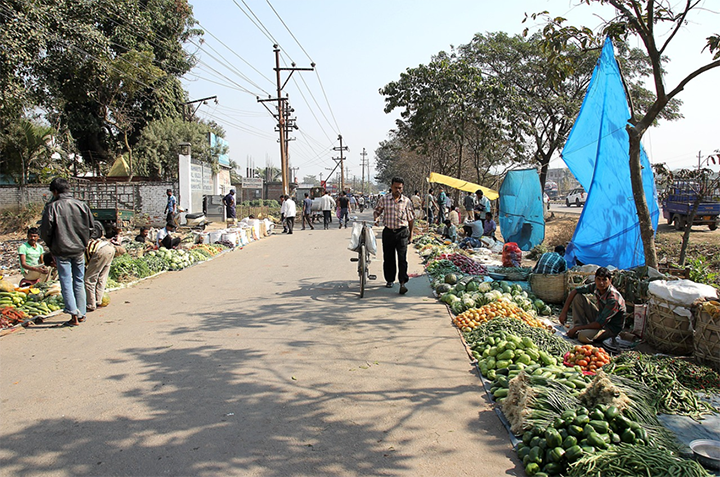
Photo courtesy: Pixabay
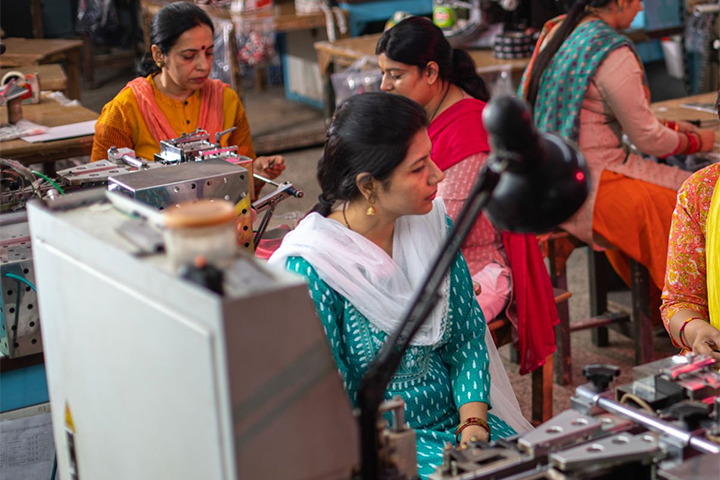
Across India, women head 27% of unincorporated establishments. In manufacturing, the share exceeds 60%, underscoring the role of small-scale production in female entrepreneurship
India’s informal economy is growing fast again. Small manufacturers, traders, repair shops and service providers added roughly 75 lakh workers in a single year, taking employment in the unincorporated non-agricultural sector to 12.81 crore in 2025, up from 12.06 crore a year earlier. The numbers underline the enduring importance of the sector, even as policymakers push for formalisation, digitalisation and large-scale manufacturing.
Yet the latest data also reveals a widening divide. Some states are producing far more economic value from relatively fewer enterprises because they are more productive and more digitally connected. Others continue to rely on large numbers of low-income businesses that generate jobs but limited value.
The findings come from the Operational and Economic Characteristics of the Annual Survey of Unincorporated Sector Enterprises (ASUSE) 2025, released by the National Statistical Office. The survey covers unincorporated non-agricultural businesses excluding construction and corporate enterprises, making it one of the clearest indicators of how India’s informal economy is evolving.
The scale of the sector remains enormous. Even after years of policy focus on formal employment and digital business models, informal enterprises continue to absorb millions of workers who struggle to find jobs in the organised sector.
The concentration of these enterprises remains heavily skewed towards a handful of populous states. Uttar Pradesh accounted for 13.8 per cent of all establishments in the sector and 14.5 per cent of total workers in 2025, the highest share nationally. West Bengal followed with 13.1 per cent of establishments and 10.4 per cent of workers, while Maharashtra ranked third with 8.3 per cent of establishments and 9.1 per cent of workers.
Together, these three states accounted for roughly 35 per cent of all establishments in the unincorporated non-agricultural economy. Large populations, dense local markets and lower entry barriers continue to make informal activity a major source of livelihood in these regions.
But the survey also shows that more businesses do not necessarily mean more economic strength.
Maharashtra and Tamil Nadu generate a much larger share of gross value added (GVA) relative to the number of establishments they host. Uttar Pradesh remained the single largest contributor to all-India GVA at 11.7 per cent, but Maharashtra was close behind at 11.2 per cent despite having far fewer enterprises. Tamil Nadu accounted for 8.2 per cent.
In urban areas, Maharashtra recorded the highest GVA share, followed by Uttar Pradesh and Tamil Nadu. This suggests businesses in these states are more productive, better connected to supply chains and more capable of generating higher incomes per worker.
The biggest divide, however, is digital.

Internet use for entrepreneurial activity rose sharply across the country. At the national level, adoption jumped from 27 per cent in ASUSE 2023-24 to 39 per cent in ASUSE 2025, an increase of 12 percentage points in a year.
The gains were visible in both rural and urban India. Rural adoption rose from 18 per cent to 31 per cent, while urban adoption climbed from 37 per cent to 49 per cent.
The rapid spread of smartphones, digital payments and online commerce is increasingly shaping even the smallest businesses. But the survey reveals huge differences between states.
Delhi recorded the highest internet adoption among informal establishments at 71.9 per cent. Haryana and Assam also emerged as highly connected states.
At the other end, Uttar Pradesh reported internet adoption of just 18.7 per cent, while West Bengal stood at 25.7 per cent, among the lowest levels in the country.
The digital gap closely mirrors the productivity gap. Delhi, Haryana and Tamil Nadu also recorded the highest GVA per establishment and per worker nationally. In effect, the more digitally connected states are also becoming the more economically productive ones.
That matters because India’s informal economy is no longer separate from the digital economy. Small traders increasingly rely on online payments, delivery apps, digital bookkeeping and social media marketing. Businesses without digital access risk remaining trapped in low-value activities even if they continue to employ large numbers of people.
The survey also highlights the growing role of women entrepreneurs.
Across India, 27 per cent of all unincorporated establishments are headed by female proprietors. In manufacturing, the share exceeds 60 per cent, showing that small-scale production activities remain an important source of female-led enterprise.
Telangana recorded the highest proportion of female-led establishments at 38.55 per cent. In manufacturing, 80.45 per cent of proprietary units in the state were run by women, the highest share among major states.
The data points to a broader shift in parts of southern India, where women are playing a larger role in informal manufacturing and household enterprise activity.
The ASUSE survey ultimately paints a mixed picture of India’s economy.
The informal sector remains a vast employment engine, capable of absorbing millions of workers even when formal job creation remains uneven. That resilience helps support consumption and local economic activity across much of the country.
But the survey also exposes deep structural differences between states. Some are moving towards higher productivity, greater digital integration and stronger value creation. Others remain dependent on low-income, labour-intensive enterprises that generate employment but limited economic mobility.
India’s next challenge may therefore be less about creating more businesses and more about improving the quality of those businesses. Without wider internet access, better infrastructure, easier access to formal credit and stronger integration into digital markets, large sections of the informal economy risk remaining stuck at subsistence levels.
For now, the data captures a central paradox of the Indian economy: the informal sector continues to be both a safety net and a constraint—large enough to sustain millions of livelihoods, but still too uneven and low-productivity to deliver broad-based prosperity.