Friday, 16 Oct, 2026

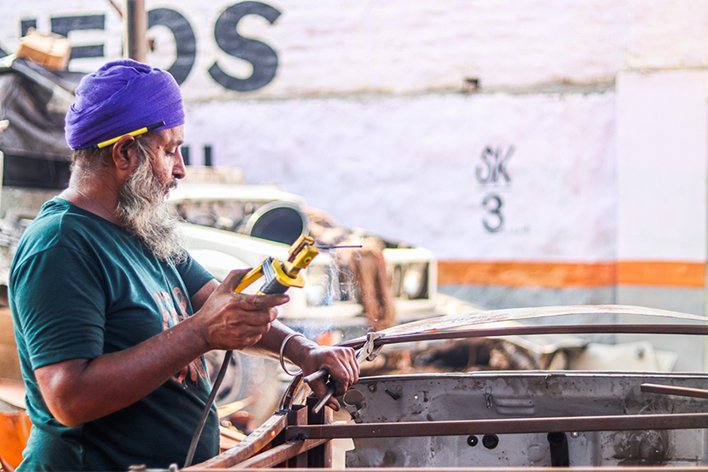
Photo courtesy: Pixabay
Among states employing more than 20 lakh informal workers, Haryana recorded the fastest growth, with its workforce rising 29.8% to 31 lakh in 2025 from 2023–24 levels
India’s informal economy—long the country’s largest source of non-farm employment—is showing increasingly uneven regional trends, with northern states driving rapid expansion while some of the country’s traditional industrial powerhouses lose momentum. An analysis of the latest Annual Survey of Unincorporated Sector Enterprises (ASUSE) data for 2025 shows Haryana emerging as the fastest-growing major state in informal non-agricultural employment, while Gujarat recorded the sharpest contraction among large states.
The findings highlight a widening divergence in the performance of India’s vast unincorporated sector at a time when policymakers are betting heavily on manufacturing, formalisation and digitalisation to reshape the labour market.
Among states employing more than 20 lakh informal workers, Haryana posted the strongest employment growth, with its workforce rising 29.8 per cent to 31 lakh workers in 2025 compared with 2023-24 levels. Uttar Pradesh, already India’s largest informal employer, added the highest number of jobs in absolute terms. Employment there rose 16 per cent to 1.86 crore, translating into an addition of 25.6 lakh workers in just one year.
Jharkhand recorded a 19.4 per cent increase in informal employment, while Rajasthan and West Bengal saw gains of 15.3 per cent and 10.4 per cent, respectively. West Bengal remained the country’s second-largest informal employer with 1.33 crore 80 lakh workers.
But the picture was sharply different in western and some southern states. Gujarat saw informal employment shrink 12.6 per cent to 80 lakh workers, making it the weakest performer among major states. Maharashtra, India’s third-largest informal employer, recorded a 3.7 per cent decline to 1.17 crore workers, while Kerala and Odisha also posted contractions.
The divergence suggests India’s informal economy is becoming increasingly fragmented, even as headline GDP growth remains among the fastest in the world.

Growth shifts north and east
The same pattern was visible in enterprise creation. Haryana again led among states with more than 1 million establishments, posting 21.8 per cent growth in the number of informal enterprises. Jharkhand followed with 19.6 per cent, while Rajasthan and Uttar Pradesh recorded gains of 18.3 per cent and 16.6 per cent, respectively.
Gujarat, by contrast, remained under pressure. The number of informal establishments in the state fell 5.7 per cent to 43.8 lakh, while Odisha recorded an even steeper decline of 7.6 per cent. Smaller regions such as Chandigarh and Himachal Pradesh also saw contractions.
The trend points to a broader reshaping of India’s informal economy. States historically associated with entrepreneurship and industrial dynamism are now witnessing slower momentum in the unorganised sector, while northern and eastern states are emerging as centres of low-cost enterprise expansion.
Part of the shift may reflect migration patterns, changing consumption demand and rising costs in more industrialised states. But it also suggests that informal economic activity is increasingly concentrated in regions where labour remains abundant and wages relatively low.
More jobs, but not better jobs
The ASUSE data also reveal a more troubling reality: rapid employment growth does not necessarily translate into higher productivity or incomes.
Measured by gross value added (GVA) per worker, several high-employment states lag far behind the national average. Uttar Pradesh, despite employing 18.6 million informal workers, generated only around Rs 1.26 lakh per worker annually. West Bengal’s 1.33 crore workers produced roughly Rs 1.18 lakh per worker, significantly below the national average of about Rs 1.57 lakh. Bihar also remained below average at around Rs 1.3 lakh per worker.
The implication is clear: much of the employment growth is concentrated in low-value-added activities that generate limited income gains.
By contrast, smaller and more urbanised states performed better on productivity. Uttarakhand recorded the sharpest increase among major states, with GVA per worker rising 29 per cent to around Rs 2.09 lakh annually. Delhi remained one of India’s most productive informal economies, with each worker generating roughly Rs 2.49 lakh, up nearly 22 per cent from 2023-24 levels.
Arunachal Pradesh posted the highest productivity growth overall at 36.5 per cent, though from a relatively small base.
Gujarat’s decline raises questions
Gujarat’s performance stands out for another reason. It was the only major state to record declines across all three key indicators—employment, establishment count and GVA growth. Odisha also showed weakness in both employment and enterprise creation, though the contraction was less broad-based.
For Gujarat, often projected as a manufacturing and business hub, the decline may point to deeper structural changes. Greater formalisation, automation and consolidation in organised industries could be reducing the role of smaller informal enterprises. Rising operating costs and weaker demand may also be weighing on micro businesses.
The real challenge: Productivity
The data underline a persistent challenge in India’s labour market. While millions continue to find work in the informal economy, the quality and productivity of those jobs remain uneven.
Even as formal payrolls expand and digital platforms reshape commerce, small unregistered enterprises continue to absorb a large share of the workforce. But without improvements in productivity, wages and scale, informal employment growth alone may do little to strengthen household incomes or consumption.
For policymakers, the issue is no longer merely job creation. It is whether India can create jobs that are productive enough to sustain long-term economic growth.