Friday, 16 Oct, 2026


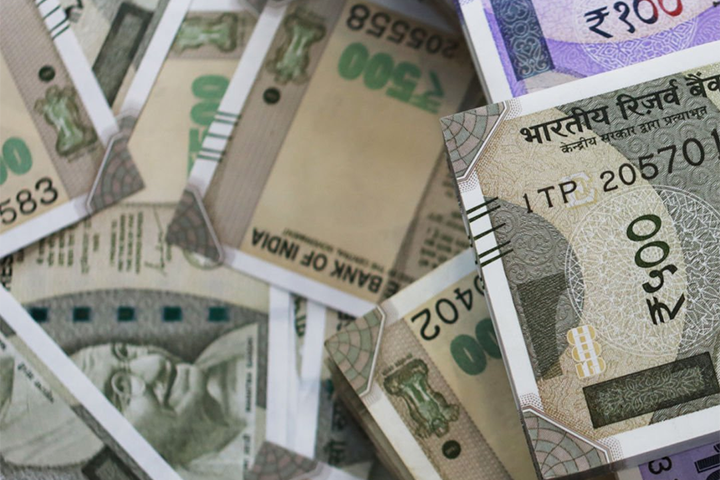
Photo courtesy: Pixabay
If crude prices ease, the rupee stabilises and the India-US trade deal progresses, foreign investors could return. Lower valuations may also make Indian equities attractive again
Foreign investors have pulled more than Rs 1.8 lakh crore from Indian equities so far in 2026, already surpassing the total outflow for all of 2025, underlining how quickly sentiment toward one of the world’s fastest-growing major economies has turned cautious.
The selloff, driven largely by foreign portfolio investors (FPIs), has made India the second-most sold equity market across Asia and emerging markets after South Korea, according to Bloomberg data. It is also the largest withdrawal by overseas investors in the first four months of any calendar year.
This is not a sudden reversal, but the continuation of a trend that began in late 2024 when elevated valuations, slowing corporate earnings and weakening macro signals started eroding investor confidence. In 2025, FPIs had already withdrawn Rs 1.66 lakh crore, then the highest annual outflow on record. That figure has now been overtaken within just four months of 2026.
Why foreign money is leaving
India’s problem is a mix of domestic vulnerabilities and global shifts.
For much of the past two years, Indian equities traded at a premium to most emerging markets, supported by strong domestic inflows and optimism around long-term growth. But premium valuations require premium earnings growth—and that has started to fade.
Corporate profit growth has moderated, consumption remains uneven, and private capital expenditure has not accelerated as strongly as expected. At the same time, the rupee has weakened sharply against the US dollar, reducing returns for foreign investors in dollar terms.
The escalation of the West Asia conflict since late February added another layer of risk. Higher crude oil prices, driven by fears of supply disruptions linked to Iran, directly threaten India’s macro stability. As one of the world’s largest crude importers, India remains highly exposed to oil shocks that can widen the current account deficit, lift inflation and pressure government finances.

This creates a dangerous cycle: higher oil prices weaken the rupee, a weaker rupee pushes foreign investors to exit, and those outflows put even more pressure on the currency.
The finance ministry itself described this in its April economic review as a “self-reinforcing dynamic”, while the Reserve Bank of India flagged West Asia tensions, global trade uncertainty and unresolved India-US trade negotiations as key risks to investor sentiment.
The AI gap is becoming costly
India’s challenge is also structural.
While South Korea and Taiwan have also seen foreign outflows, they remain more attractive to global investors because they offer stronger exposure to the artificial intelligence and semiconductor investment cycle. Global capital is increasingly chasing AI-linked manufacturing, chip supply chains and advanced technology production.
India, despite its strong domestic consumption story, still lacks scale in these sectors.
Its market remains heavily weighted toward financials, domestic consumption and traditional industrials—areas that offer stability but not the high-growth AI narrative global funds currently prefer. In comparison, Taiwan and South Korea provide direct access to semiconductor giants and advanced electronics manufacturing at relatively cheaper valuations.

This is where India’s investment case weakens. The economy may be growing faster, but markets reward future themes—and right now, AI is the dominant one.
Fed tightening adds pressure
The US Federal Reserve’s hawkish stance has made matters worse.
Higher US interest rates have kept Treasury yields elevated and strengthened the dollar, making American assets more attractive on a risk-adjusted basis. For global investors, the choice becomes straightforward: why stay in expensive emerging markets when safer returns are available in the US?
This has led to broad capital reallocation away from emerging markets, but India has been hit harder because of its valuation premium and oil vulnerability.
At the same time, institutions such as the World Bank, Goldman Sachs and Moody’s have revised down India’s FY27 growth projections, forcing investors to reassess earnings expectations.
The market has reflected that stress. The Nifty 50 is down 8.2 per cent this year, while the Sensex has fallen 9.8 per cent, underperforming most Asian peers.
Can domestic investors hold the market?
For now, domestic mutual funds and retail investors have prevented a sharper correction.
Systematic investment plans (SIPs), retirement savings and steady retail participation have created a powerful domestic liquidity cushion. This has become India’s strongest defence against foreign selling.
But domestic money has limits.
It can reduce volatility, but it cannot fully replace foreign capital when global funds move out at this scale. Sustained market rerating requires international investors to return.
What happens next
The near-term direction of Indian equities depends less on domestic optimism and more on external variables: crude oil prices, the rupee, US interest rates and geopolitical stability.
If oil prices stabilise, the rupee finds support and the India-US trade deal moves forward, foreign investors may begin returning. Lower valuations could also make Indian equities attractive again.
But if crude remains elevated and global risk aversion deepens, the outflows may continue.
The message from markets is clear: India’s growth story is still intact, but global investors are demanding more than growth—they want stability, earnings visibility and stronger alignment with the next global investment cycle.
Until that confidence returns, Indian equities may remain caught between strong domestic faith and weak foreign conviction.