Friday, 16 Oct, 2026


Photo courtesy: Pixabay
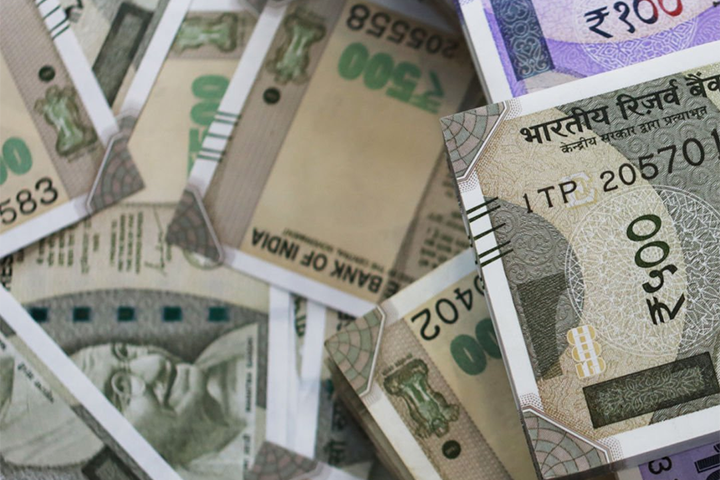
Monthly GST collections crossing Rs 2 lakh crore underscore the economy’s resilience, with strong compliance, continued formalisation and steady consumption supporting revenues despite lower rates.
India’s goods and services tax (GST) performance in 2025-26 underscores a subtle but important shift: revenue growth is being powered less by tax rates and more by the scale of economic activity. Even after a sweeping rate rationalisation in September aimed at boosting consumption, collections held steady—suggesting that higher volumes and better compliance are compensating for lower levies.
For the full year, gross GST collections rose 8.3 per cent, while net collections grew 7.1 per cent. Though healthy, this was the slowest expansion since the pandemic-hit 2020-21, when revenues had contracted by 7 per cent. The moderation reflects a conscious policy trade-off—sacrificing some revenue buoyancy in the short term to stimulate demand.
Yet, the topline numbers remain robust. Gross GST collections reached Rs 22.27 lakh crore in 2025-26, while net collections (excluding cess) stood at Rs 19.35 lakh crore. The data suggests that the tax system continues to generate sizeable revenues, even in a lower-rate environment, supported by expanding economic activity and a widening tax base.
March offered a clearer snapshot of this trend. Net GST collections rose 8.2 per cent year-on-year—the fastest pace in six months following the rollout of the GST 2.0 regime. Gross collections increased 8.8 per cent, driven by a sharp rise in import-related revenues. Monthly gross collections crossed Rs 2 lakh crore—the highest since May 2025—while net collections reached Rs 1.70 lakh crore, second only to April’s Rs 2.09 lakh crore in the fiscal year.
Sequential momentum was equally strong, with gross and net collections rising 9 per cent and 10 per cent respectively over February. This late-year acceleration points to a pickup in economic activity, reinforcing the view that increased transaction volumes are offsetting the impact of rate cuts.

However, the composition of these revenues reveals a more complex picture. GST from imports surged 17.8 per cent in March to Rs 53,861 crore, far outpacing the 5.9 per cent growth in domestic transaction revenues, which stood at Rs 1.46 lakh crore. The imbalance hints at a widening trade gap, with imports contributing disproportionately to tax collections.
Refund trends provide additional insight. Total GST refunds rose 13.8 per cent year-on-year to Rs 22,074 crore. Domestic refunds jumped 31.2 per cent, signalling strong internal economic churn, while import-related refunds declined 10.6 per cent. Export refunds, though moderating in March, remained healthy for the year overall—suggesting that outward-oriented sectors have not weakened materially despite global uncertainties.
The fiscal arithmetic has also been recalibrated. The Centre had initially budgeted Rs 11.78 lakh crore in GST revenues (including compensation cess) for 2025-26. Following the September rate cuts, this was revised down to Rs 10.46 lakh crore, reflecting the anticipated impact on collections. Net central GST (CGST) revenue stood at Rs 4.05 lakh crore, while net compensation cess collections were Rs 99,039 crore.
A structural change came with the discontinuation of the compensation cess from February 1, 2026. With only residual collections—estimated at about Rs 177 crore—reported thereafter, the GST system is entering a leaner phase. While this simplifies the tax framework, it also removes a cushion that had helped stabilise revenues during the early years of implementation.
Analysts view the crossing of the Rs 2 lakh crore monthly threshold as evidence of underlying economic resilience. Strong compliance, continued formalisation, and steady consumption appear to be sustaining revenue flows despite lower rates. There are also signs of broader regional participation, with smaller states and island territories contributing to growth.
At the same time, the data points to a “dual-speed” economy. The strength in import-related GST, coupled with relatively softer export refund trends, suggests external sector pressures are building. This has renewed calls for recalibrating industrial policy, including a possible next phase of the production-linked incentive (PLI) scheme, to strengthen domestic manufacturing and reduce reliance on imports.
State-level performance further highlights unevenness. Maharashtra (17 per cent), Karnataka (14 per cent) and Telangana (19 per cent) recorded strong GST growth, reflecting more dynamic industrial and consumption ecosystems. In contrast, Haryana (1 per cent), Andhra Pradesh (1 per cent) and Madhya Pradesh (0 per cent) lagged, pointing to disparities in economic momentum.
There is also a timing caveat. March collections largely reflect economic activity in February 2026 and therefore do not capture the potential impact of geopolitical disruptions, including the ongoing conflict in West Asia, which could affect trade flows and input costs in the months ahead.
Taken together, the GST data for 2025-26 suggests that India’s indirect tax system is becoming increasingly volume-driven. The government’s strategy of lowering rates to spur demand appears to be working—up to a point. Higher activity levels are sustaining revenues, but the growing reliance on import-led collections and uneven regional performance signal underlying imbalances.
The next phase will hinge on whether domestic manufacturing and consumption can broaden sufficiently to sustain growth without leaning heavily on external demand. Until then, GST collections may remain steady—but not yet truly buoyant.