Thursday, 17 Sep, 2026

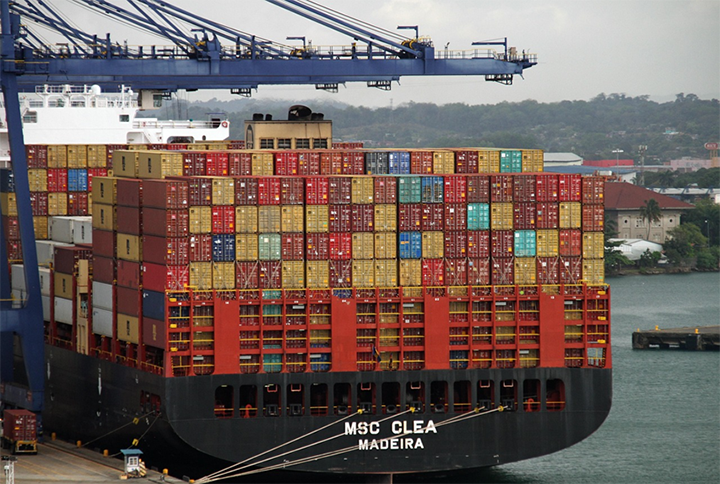
Photo courtesy: Pixabay
Despite a narrower gap in March, the current account deficit is set to widen to about 0.9% of GDP in FY26 from 0.6% in FY25, instead of the usual fourth-quarter surplus. If crude averages $85 a barrel, it could nearly double to 1.7%
India’s trade data for March offers a deceptively calm snapshot of an economy navigating a gathering storm. At a time when the Iran-linked conflict in West Asia has begun to disrupt one of the world’s most critical energy and shipping corridors, India still closed FY26 with record exports of $860.09 billion and a narrower monthly trade deficit. But beneath the surface, stress is visible—in collapsing trade with the Gulf, disrupted supply chains, and a growing reliance on services to steady the external account.
Start with the full-year picture. India’s combined exports of goods and services rose 4.22 per cent in FY26 to $860.09 billion, up from $825.26 billion in FY25. Merchandise exports grew just 0.93 per cent to $441.8 billion, signalling weak global demand. Imports rose faster, up 7.5 per cent to $775 billion, widening the merchandise trade deficit sharply to $333.2 billion from $283.5 billion a year earlier. Overall trade expanded 5.4 per cent to $1.84 trillion, but the imbalance deepened as imports outpaced exports.
March, the first full month after the West Asia conflict began on February 28, shows where the risks lie. Merchandise exports fell 7.44 per cent year-on-year to $38.9 billion — the steepest drop in five months—even though they rose 6.3 per cent sequentially and were the highest monthly print of FY26. Imports declined 6.5 per cent to $59.6 billion from $63.75 billion a year earlier, helped by a sharp 35–36 per cent fall in crude and petroleum shipments as Strait of Hormuz disruptions choked flows. The trade deficit narrowed to $20.7 billion, down from $27.1 billion in February and $21.7 billion a year ago.

That narrowing, however, reflects disruption rather than strength. Both exports and imports were hit by logistical constraints, particularly in West Asia, where port access has become difficult. Trade with the region—a key export market and import source — effectively halved. Exports to the Gulf dropped nearly 57.9–58 per cent to about $2.5 billion in March, while imports fell over 51.6 per cent to $8.7 billion. This is significant for an economy that typically ships around $6 billion worth of goods to the region every month.
The implications are wider than trade flows. West Asia is central to India’s energy security and a major source of remittances. Disruptions raise freight and insurance costs, tighten oil supplies, and risk weakening income flows from abroad. Officials have already indicated that logistical challenges will persist into April, suggesting that the disruption is not a one-off.
Sectoral data underline the breadth of the strain. As many as 24 of India’s top 30 export products contracted in March, while 16 sectors ended FY26 in negative territory. Even so, there were pockets of resilience. Engineering goods exports rose 1.1 per cent in March, pushing full-year shipments to a record $122.43 billion. Electronics, pharmaceuticals, chemicals, textiles, gems and jewellery, rice and marine products remained key drivers. Major export destinations included the US, the UAE, China, the Netherlands and the UK, while rice exports to China resumed after a two-year gap.

Services have been the main stabiliser. Services exports dipped 1.2 per cent in March to $35.2 billion, while imports fell about 3 per cent to $17 billion. For the full year, services exports grew 7.9 per cent to $418.3 billion and are now close to overtaking merchandise exports, even exceeding them in the December quarter. This has cushioned overall export growth, but also highlights a structural dependence on services.
External balances remain under pressure. Despite the March compression, India’s current account deficit is expected to widen to about 0.9 per cent of GDP in FY26 from 0.6 per cent in FY25, instead of the usual fourth-quarter surplus. If crude oil averages $85 per barrel, the deficit could nearly double to 1.7 per cent of GDP. Every $10 increase in oil prices would widen the deficit by 30–40 basis points. Adding to pressures, gold and silver imports surged 35 per cent to $84 billion during the year.
There are mitigating factors. Exporters have shown an ability to adapt, redirecting shipments when markets are disrupted. Officials argue that supply chains are being recalibrated and that lost West Asia demand can partly be offset elsewhere. A pipeline of trade agreements—with the UK expected in May 2026, Oman by June, and negotiations with the EU and New Zealand underway — could improve market access and support exports. On the domestic front, efforts to boost manufacturing continue, including approval of a Rs 91,000 crore semiconductor fabrication project at Dholera.
Yet these are medium-term responses. The immediate message from the data is more sobering. The narrowing of the trade deficit in March is a by-product of disruption, not demand strength. The record export figure masks weak goods trade and uneven sectoral performance. And the external environment — marked by geopolitical tensions, slowing global trade and volatile commodity prices — is turning more hostile.
In that sense, India’s FY26 trade performance tells a familiar story. The economy is resilient, but not immune. It has absorbed the first shock of the West Asia conflict without visible damage to headline numbers. But if the disruption persists—through higher oil prices, prolonged shipping constraints or weaker remittances—the pressure on growth, inflation and external balances will become harder to ignore.
For now, the numbers hold. The risks are building underneath.