Thursday, 19 Nov, 2026
Source of the image: Forbes India
India is witnessing a sharp rise in alcohol consumption, recording the fastest growth among 21 major markets in the first half of 2026. The surge reflects more than just an increase in drinking volumes, pointing towards changing consumer preferences, greater participation among younger drinkers and a growing appetite for premium beverages.
At a time when alcohol consumption is slowing across several major markets, India appears to be moving in the opposite direction. From beer and whisky to vodka, gin and wine, consumption is rising across almost every category, making the country an increasingly important market for the global beverage alcohol industry. The shift is particularly striking because it comes at a time when some of the world's biggest alcohol-consuming nations are witnessing declining demand.
According to estimates by drinks research firm International Wine and Spirits Record (IWSR), India's alcohol consumption volumes increased by 10% in the first half of 2026, the highest growth among 21 major markets tracked by the firm. India was also the only market in this group to record an increase across every beverage category and subcategory monitored. In comparison, total alcohol consumption across these 21 markets, which together account for 76% of global beverage alcohol volumes, declined by 1% during January-June 2026.
The contrast is particularly evident when compared with the United States and China, the world's two largest alcohol markets. Consumption volumes in the US declined by 4%, while China recorded a 3% fall during the same period. Even beer, which remains one of the most widely consumed alcoholic beverages globally, saw consumption decline by 4% in the US and 2% in China. India, meanwhile, recorded a 16% increase in full-strength beer consumption.
India's growth was followed by Colombia, where alcohol consumption increased by 9%, South Africa at 5%, Brazil at 3% and the UK at 2%. Mexico and Thailand also recorded growth, although IWSR did not disclose the exact figures. Interestingly, excluding the US and China from the calculations, alcohol consumption across the remaining markets grew by 1%, suggesting that the overall global decline was significantly influenced by the performance of these two large markets.
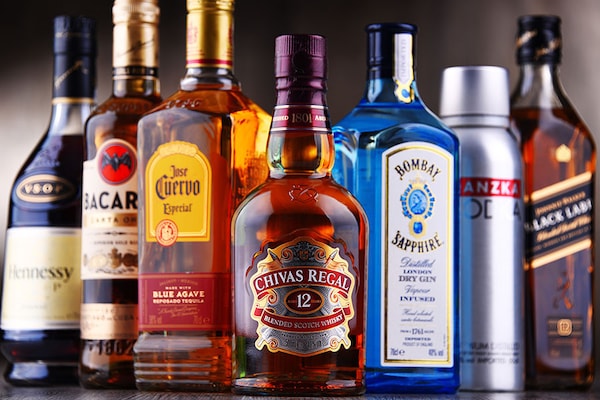
The changing consumption pattern in India is also visible in the range of beverages gaining popularity. Full-strength beer recorded a 16% year-on-year increase in consumption during the first six months of 2026, making it the fastest-growing major alcoholic beverage category. Ready-to-drink (RTD) alcoholic beverages, which include packaged cocktails and other premixed drinks, grew by 12%. Indian whisky consumption increased by 4%, while blended Scotch whisky registered an 8% rise. Vodka and gin consumption grew by 6% each, while rum and non-Cognac brandy recorded growth of 3% apiece. Still wine consumption increased by 2%, while fortified wine grew by 7%.

The figures suggest that Indian consumers are gradually broadening their choices beyond traditional drinking preferences. While whisky continues to remain an important part of the country's spirits market, newer categories such as vodka, gin and ready-to-drink beverages are also finding a larger consumer base.
A younger generation is changing the drinking market
One of the important factors behind this expansion is India's demographic profile, particularly the growing participation of younger consumers in the alcohol market. Unlike mature markets, where drinking habits are relatively established and population growth is slower, India continues to see a large number of people entering the legal drinking age every year.
Data from IWSR's Bevtrac survey, cited in an Economic Times report in July 2026, indicates that the proportion of Gen Z consumers aged 21-28 who consume alcohol increased to 80% in March 2026, compared with 70% a year earlier and 60% in 2023. The findings challenge the popular assumption that younger generations are increasingly moving away from alcohol.
However, the preferences of younger consumers are not necessarily the same as those of older generations. While whisky remains an established choice among older drinkers, younger consumers are increasingly exploring vodka, tequila and international spirits. Bars, restaurants and social experiences are also becoming important spaces for discovering new beverages and brands.
Rising disposable incomes and rapid urbanisation are further contributing to the expansion of the market. As more consumers gain access to organised retail, restaurants, bars and premium drinking experiences, the range of products available to them is also expanding. Euromonitor's September 2026 assessment of India's alcoholic drinks market identifies favourable demographics, urbanisation, rising incomes and the growing appeal of premium and craft products as important factors supporting the industry's growth.
The shift is also visible in the changing economics of alcoholic beverages, particularly beer and spirits. According to an Economic Times report in September 2026, beer volumes increased by 17% nationally in the June quarter, compared with just 2% growth in spirits. Taxation changes in states such as Maharashtra, Karnataka, Odisha and West Bengal, where taxes on Indian-made foreign liquor were increased while beer prices were kept unchanged or reduced in certain cases, contributed to a shift in consumer preferences towards beer.
An assessment by ICRA in September 2026 also highlighted the difference in performance between the two categories. Indian spirits volumes reportedly declined by around 3% in FY26, following a 2% fall in FY25, largely due to excise-led price increases and inflation. Beer volumes, in contrast, grew by approximately 8%. ICRA expects beer volumes to increase by 5-7% in FY27, while spirits volumes could contract by 4-6%. At the same time, premium spirits continue to perform better than mass-market products, indicating that consumers are not only changing what they drink but also where they choose to spend.
The surprising rise of non-alcoholic beer
Perhaps the most interesting development in India's changing drinking habits is the growing popularity of non-alcoholic beer. While almost every major alcoholic beverage category recorded growth, non-alcoholic beer registered an even sharper increase of 25% in the first half of 2026.
At first glance, the rise of non-alcoholic beer alongside increasing alcohol consumption may appear contradictory. However, the two trends can coexist. For some consumers, drinking is as much about social participation as it is about alcohol itself. Non-alcoholic beer allows people to enjoy familiar flavours and participate in social occasions without necessarily consuming alcohol. It can also appeal to those who have to drive, have professional commitments or simply want to moderate their intake.
Despite its rapid growth, non-alcoholic beer still accounts for a relatively small part of India's beverage market. According to an earlier media report, alcohol-free beer makes up approximately 80% of India's still-nascent zero-proof beverage category. However, the broader zero-proof segment accounts for well under 1% of India's alcoholic beverage market by value. This means that the 25% growth is coming from a relatively small base, although it points towards an emerging consumer segment.
The situation in India is particularly different from what is unfolding in several established alcohol markets. IWSR has attributed the global slowdown partly to growing moderation trends and the increasing use of GLP-1 weight-loss drugs, which have been associated with reduced alcohol consumption. Inflation, tariffs and economic uncertainty have also affected American consumers, while China's slowing economy and other structural challenges have weighed on demand.
India, meanwhile, continues to offer considerable room for market expansion. Its relatively low per-capita alcohol consumption compared with several established markets, growing middle-income population and changing consumer preferences provide beverage companies with an opportunity to expand their presence.
This opportunity becomes clearer when consumption is measured on a per-capita basis. According to 2024 estimates cited in Carlsberg India's industry assessment, India recorded approximately 5.2 litres of pure alcohol consumption per person aged 15 and above annually. This was considerably lower than the United States (9.6 litres), Germany (10.9 litres), the United Kingdom (10.4 litres) and France (11.2 litres), while China recorded 3.7 litres per person. The comparison highlights an important distinction: although India's overall consumption is growing rapidly, its average per-capita consumption remains relatively low compared with several established markets. Given its enormous population, even modest increases in per-person consumption can translate into substantial growth in overall market volumes.
However, measuring India's actual alcohol consumption remains challenging. Official sales and taxation data may not fully capture locally produced, home-brewed, illicit or otherwise unrecorded alcohol. Although international estimates attempt to account for some of this consumption, gaps in reporting and data collection mean that the actual level of demand could be higher or lower than reported figures.
The larger story, therefore, is not simply that Indians are drinking more. It is that the country's beverage market is changing in terms of who is drinking, what they are choosing and how they are consuming it. Whether it is the growing popularity of beer, the increasing interest in international spirits or the emergence of non-alcoholic alternatives, India's drinking habits are evolving.