Thursday, 19 Nov, 2026

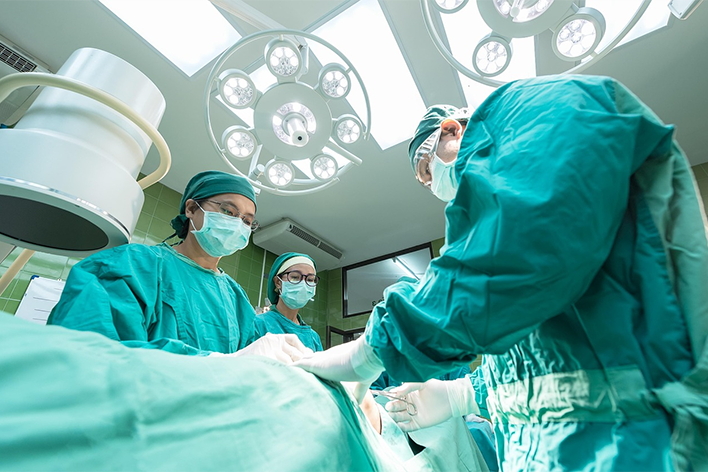
Photo courtesy: Pixabay
India has made progress in reducing the healthcare burden on households. The real test is whether ordinary families can afford treatment without draining their savings or taking on debt
A hospital stay can wipe out years of household savings. More Indians are turning to health insurance to avoid that risk, while government-funded schemes are taking on a larger share of the healthcare bill. Together, the two accounted for 21.2 per cent of India’s total health expenditure in FY24, up from 15.9 per cent in FY21.
The shift, accelerated by the Covid-19 pandemic, points to a gradual change in how Indians pay for healthcare. Instead of relying entirely on household savings when illness strikes, more of the cost is being met through government schemes and private insurance.
The latest National Health Accounts estimates, released by the health ministry, show that government-funded social security expenditure on health rose to 11 per cent of total health expenditure in FY24 from 8.6 per cent in FY21. Private health insurance accounted for another 10.2 per cent, up from 7.3 per cent.
For the first time, both sources individually crossed the 10 per cent mark.
The change is important in a country where a serious illness can push families into debt. Government schemes such as Ayushman Bharat Pradhan Mantri Jan Arogya Yojana provide financial protection to eligible households, while private insurance is increasingly being seen as a way to guard against steep hospital bills.
The improvement is also visible in the amount households pay directly for treatment. Out-of-pocket expenditure fell to 42.7 per cent of total health spending in FY24 from 64.2 per cent in FY14. The government wants to bring this down further to 35 per cent by FY26.
That progress has been backed by a sharp rise in public spending. Government expenditure on health nearly tripled from Rs 1.3 lakh crore in FY14 to Rs 4.14 lakh crore in FY24.
More money is also going into primary healthcare, where early diagnosis and treatment can prevent illnesses from becoming expensive medical emergencies. Government spending on primary healthcare reached about Rs 1.53 lakh crore in FY24.

The expansion of Ayushman Arogya Mandirs is part of this effort to bring basic healthcare, screening and treatment closer to people, particularly in rural areas. For households that live far from hospitals, access to these services can mean the difference between treating an illness early and facing a much larger medical bill later.
Demand for healthcare is rising, too. The National Statistical Office's 80th-round health survey shows that the proportion of people seeking healthcare services in rural areas increased from 6.8 per cent in 2017-18 to 12.2 per cent in 2025. In urban areas, it rose from 9.1 per cent to 14.9 per cent, a health ministry official said.
But lower out-of-pocket spending does not necessarily mean healthcare has become affordable. Insurance policies may not cover every treatment or expense, and access to hospitals and doctors remains uneven. Families without adequate insurance can still face substantial bills when serious illness strikes.
The larger test, therefore, is not how much money flows through insurance schemes but how much financial protection reaches patients. India has made progress in shifting the cost of healthcare away from households. The real measure of success will be whether an ordinary family can afford treatment without exhausting its savings or borrowing money.