Sunday, 11 Oct, 2026

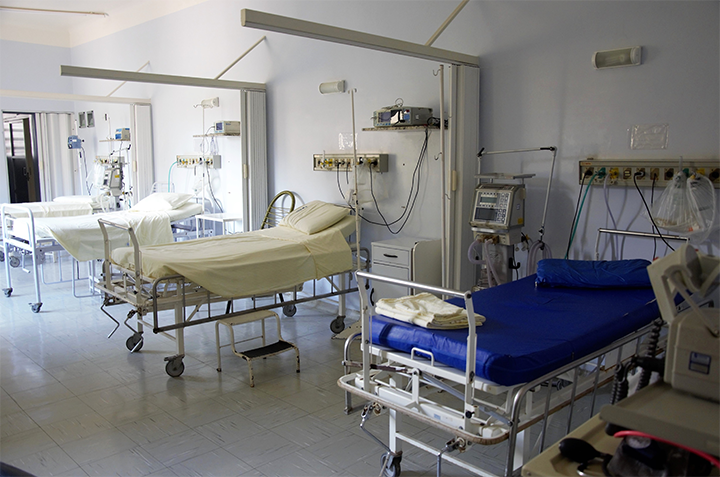
Photo courtesy: Pixabay
Until public healthcare and financial protection improve, private investment may expand capacity without making care affordable to those who need it most
Nearly $10 billion has flowed into Indian hospital chains over the past five years from global investors such as Blackstone, KKR, General Atlantic and TPG. The money signals the growing commercial appeal of healthcare in India. It also exposes an uncomfortable contradiction: as investors see opportunity in the hospital business, millions of households continue to bear much of the cost of obtaining treatment.
The question is not whether private hospitals have a role to play. They do, and an important one. It is why a country with an extensive public health system remains so dependent on private providers—and why the financial consequences of that dependence fall so heavily on families.
The spending figures offer a clue. In 2014-15, public hospitals accounted for 7.4 per cent of total out-of-pocket expenditure on healthcare. Their share fell to about 4 per cent in 2018-19 and remained largely unchanged thereafter, reaching 4.1 per cent in 2022-23, according to a report in the Business Standard.
Private hospitals moved in the opposite direction. They accounted for 28 per cent of household out-of-pocket healthcare spending in 2014-15. That share climbed to 34 per cent in 2017-18 before easing marginally to 33.7 per cent in 2022-23.
The figures do not establish why patients choose one hospital over another. But they point to a persistent imbalance. Private hospitals account for roughly a third of household out-of-pocket healthcare spending, while the share going to public hospitals has remained low.

The problem is not simply who provides treatment, but who pays for it.
Out-of-pocket expenditure is not confined to hospital admissions. It includes medicines, diagnostic tests, outpatient consultations and other treatment costs. For those with limited savings, even routine treatment can mean reducing expenditure on food, education or other necessities.
The consequences extend beyond healthcare. Money spent on medical bills cannot be spent elsewhere. Borrowing to meet treatment costs can weaken a family’s finances long after the immediate illness has passed. The vulnerability is especially acute when income is uncertain and savings are limited.
This is why the expansion of private healthcare cannot, by itself, be treated as evidence of progress.
Private investment can bring capital, modern equipment, specialist doctors and more organised delivery of treatment. The interest shown by large global investors suggests that India’s hospital market offers considerable scope for growth. As demand for medical services rises, private providers will be needed to expand capacity.
But the ability to attract investment is not the same as the ability to provide affordable care. Capital follows the prospect of returns. It may therefore favour lucrative urban markets and specialised treatments without necessarily meeting the needs of poorer households, smaller towns or regions with inadequate medical facilities.
A hospital sector can grow rapidly while access to treatment remains unequal. The commercial success of private providers cannot compensate for a public system that is unable to meet essential needs.

Public hospitals matter not merely because they offer care at lower cost, but because they provide an alternative when private treatment is unaffordable. Investment in primary care, district hospitals, staffing, diagnostics and the reliable availability of medicines can reduce the need for patients to seek costly treatment elsewhere. Better access to care at an early stage can also help prevent conditions from becoming more serious and expensive to treat.
Financial protection must improve alongside public capacity. Insurance and publicly funded treatment schemes need to shield households from large medical bills, with effective safeguards against gaps in coverage and unexpected costs. Insurance on paper offers limited reassurance if patients still face substantial expenses when they need treatment.
The central policy challenge, then, is not simply to build more hospitals. It is to ensure that the availability of treatment does not depend primarily on a household’s ability to pay.
The flow of nearly $10 billion into hospital chains tells investors that India offers room for expansion. The household spending figures tell policymakers something less reassuring: the growth of healthcare as a business has not removed the financial burden of obtaining care.
The measure of progress should not be how much capital the sector attracts, or how many hospitals it builds. It should be whether a patient can obtain treatment without having to choose between health and financial security. Until public provision and financial protection improve, private healthcare’s expansion may add capacity without making care affordable to those who need it most.