Sunday, 11 Oct, 2026

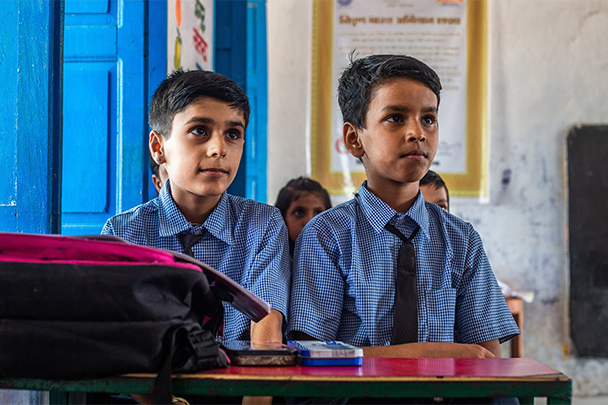
Photo courtesy: Pixabay
The rise of private schools reflects higher incomes and greater choice, but it is also a warning. When even low-income families stretch their budgets for private or English-medium schools, they are signalling a loss of faith in the government school next door
The crisis in government schools is increasingly about trust. As household incomes rise, even poorer parents are willing to pay for low-cost private schools, often described as ‘convent schools’, because they see them as offering better teaching, English-language skills and a better chance of securing a good job. Government schools accounted for 69.8 per cent of all schools in 2018-19, but 68.54 per cent in 2025-26. Over the same period, private schools increased their share from 21 per cent to 23 per cent, while government-aided schools slipped from 5.46 per cent to 5.4 per cent.
The wider numbers show a system under pressure. The number of schools fell from 1.55 million in 2018-19 to 1.46 million in 2025-26, a reduction of 84,318. Enrolment rose from 260 million to 265 million in 2021-22, but then fell to 247 million in 2025-26.
The pupil-teacher ratio improved from 27 to 24 over the period. Teacher numbers have also risen in recent years, according to UDISE+ (Unified District Information System for Education Plus), so the improvement cannot be attributed entirely to falling enrolment. But the decline in the number of pupils remains significant.
More worrying is that around 31 per cent of eligible children aged 3 to 17—roughly 111 million—were not enrolled in 2025-26, a pattern that has persisted since 2018-19.

The shift towards private education is also visible in rural India. ASER 2024 (Annual Status of Education Report) showed that the share of children aged 6-14 in government schools rose from 65.6 per cent in 2018 to 72.9 per cent in 2022, as the pandemic pushed families towards the free public system. By 2024, it had fallen to 66.8 per cent, while private-school enrolment had risen to 33.2 per cent. As household finances recovered, some families evidently returned to private schools.
That does not mean private schools are universally better. ASER 2024 recorded improvements in learning outcomes in government schools, while private-school pupils often come from better-off and better-educated families. But parents are paying for what they perceive as more regular teaching, discipline and English-language education.
The regional divide is stark. In 2025-26, government schools accounted for 82 per cent of schools in eastern India, against 8 per cent for private schools. In the north, the shares were 57 per cent and 36 per cent respectively; in the south, 65 per cent and 25 per cent.
Basic infrastructure is no longer the biggest weakness. About 99 per cent of government schools have functional drinking water, 94 per cent have electricity and 96 per cent have toilets. The digital gap is much wider: only 25 per cent have functional desktops, 16 per cent have projectors and 6 per cent have digital libraries.
The bigger problem emerges as children grow older. Dropout rates in 2025-26 were 7 per cent at the secondary level, 3.6 per cent at middle school, 1.8 per cent at the preparatory stage and negligible at the foundational stage. Retention fell from 92 per cent at primary level and 90 per cent at preparatory level to 75 per cent at middle school and just 44 per cent at secondary level.
India is therefore better at getting young children into school than keeping them there through the years when education becomes most important for employment and earnings.

The government’s financial commitment has also weakened relative to the size of the budget. The share of school education and literacy fell from 1.9 per cent of the Union Budget in FY10 to 1.4 per cent in FY26. Higher education’s share fell from 1.4 per cent to 1 per cent.
This creates an uncomfortable contradiction. India wants a skilled workforce and a demographic dividend, yet its public school system is losing ground in the competition for parental confidence, remains poorly equipped digitally and commands a smaller share of the Union Budget than it did 16 years ago.
The rise of private schools is partly a sign of rising incomes and greater choice. It is also a warning. When even low-income families stretch their budgets to pay for a private or English-medium school, they are making a judgment about the government school next door.
“School Thik Karo”, therefore, means more than repairing buildings or adding computers. The real test is whether government schools can regain the confidence of parents who now have a choice.