Friday, 16 Oct, 2026

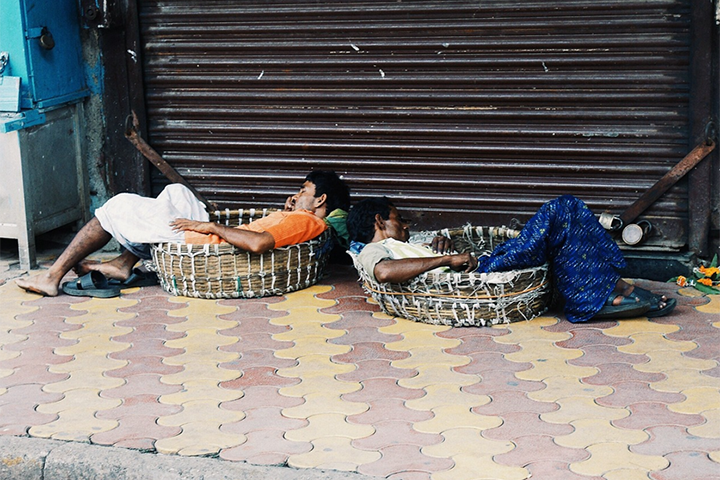
Photo courtesy: Pixabay
Cash transfers and subsidies can support consumption and ease short-term distress, but they also create recurring fiscal burdens that become harder to sustain if revenues weaken or borrowing rises
The Assembly election results in Assam, Kerala, Tamil Nadu, West Bengal and Puducherry have once again shown that welfare promises remain one of the strongest political currencies in India. From cash transfers and free electricity to support for women, students and unemployed youth, parties across states leaned heavily on schemes aimed at easing the financial pressures faced by ordinary households.
But while the promises sounded generous, the ability of states to pay for them differs sharply. Behind the campaign slogans lies a more difficult question: can every state afford an expanding welfare bill at a time when debt levels remain high and economic growth uneven?
The campaign promises themselves reveal how deeply welfare has become embedded in state politics. In Assam, the BJP promised to increase monthly assistance under the Orunodoi scheme to Rs 3,000 to strengthen women’s empowerment. The party also announced financial support for fish farmers and one million traditional weavers, along with a Rs 10,000 wage subsidy per employee for new industries investing in the state. It further promised 200,000 government jobs.
Kerala’s UDF focused on household support measures, promising Rs 1,000 monthly aid for college girls, free bus travel for women, health cover of Rs 25 lakh per family, higher welfare pensions and interest-free loans of up to Rs 5 lakh for youth.

Tamil Nadu’s TVK promised Rs 2,500 monthly assistance for women heads of households, free electricity, Rs 15,000 annual payments to mothers or guardians to reduce school dropouts, and Rs 30,000 annual transfers to weaver families. It also promised 8 grams of gold and silk sarees for brides from families earning below Rs 5 lakh annually.
In Puducherry, the NDA campaign highlighted free LPG cylinders for ration card holders. In West Bengal, the BJP promised Rs 3,000 financial assistance for women, Rs 3,000 monthly support for unemployed youth and implementation of the 7th Pay Commission recommendations.
The scale of these promises reflects the pressures households continue to face from rising living costs, uneven income growth and employment concerns. Welfare measures are no longer confined to poorer states or specific political ideologies—they have become a central electoral strategy across India.
Yet the economic strength of these states differs widely. Tamil Nadu, Kerala and Puducherry have remained well above the national average in per capita income for years, giving them relatively stronger revenue bases to support welfare spending. Assam and West Bengal, however, continue to remain below the national average, limiting fiscal flexibility even as political expectations rise.
The differences become more visible when looking at state finances. Kerala and West Bengal continue to carry relatively high debt burdens, with debt levels close to 38 per cent of Gross State Domestic Product (GSDP). High debt means a larger share of state resources is diverted toward interest payments, reducing room for fresh expenditure.
Assam faces a different challenge. While its debt burden is relatively lower, its fiscal deficit has widened sharply in recent years, signalling growing expenditure pressures. At the same time, Assam has recorded the highest capital outlay as a share of GSDP among the five states, indicating a stronger push toward infrastructure development compared with the others.

Tamil Nadu appears relatively better positioned economically. The state recorded the largest share of foreign direct investment (FDI) equity inflows among the five states, far ahead of the others, reflecting its stronger manufacturing and industrial base.
Labour market trends also show a mixed picture. Unemployment rates declined across most of the states every year till 2025, reflecting broader economic recovery and government support measures. However, only West Bengal consistently reported unemployment below the national average.
The persistence of employment concerns despite improving jobless numbers partly explains why parties are increasingly relying on welfare commitments aimed at women, youth and households struggling with financial stress. In many cases, welfare schemes are functioning not just as poverty relief, but also as compensation for weak formal job creation and stagnant incomes.
The broader challenge for these states lies in balancing political commitments with fiscal sustainability. Cash transfers and subsidies can support consumption and ease short-term distress, but they also create recurring obligations that become difficult to sustain if revenues weaken or borrowing rises.
The election results therefore highlight more than just a return of welfare-heavy politics. They underline the widening gap between political ambition and fiscal capacity across Indian states. Some states may be able to absorb expanding welfare commitments because of stronger income levels and industrial growth. Others, already carrying high debt or widening deficits, may face increasingly difficult trade-offs between welfare spending, infrastructure investment and fiscal discipline in the years ahead.