Monday, 21 Sep, 2026

Source: India Today
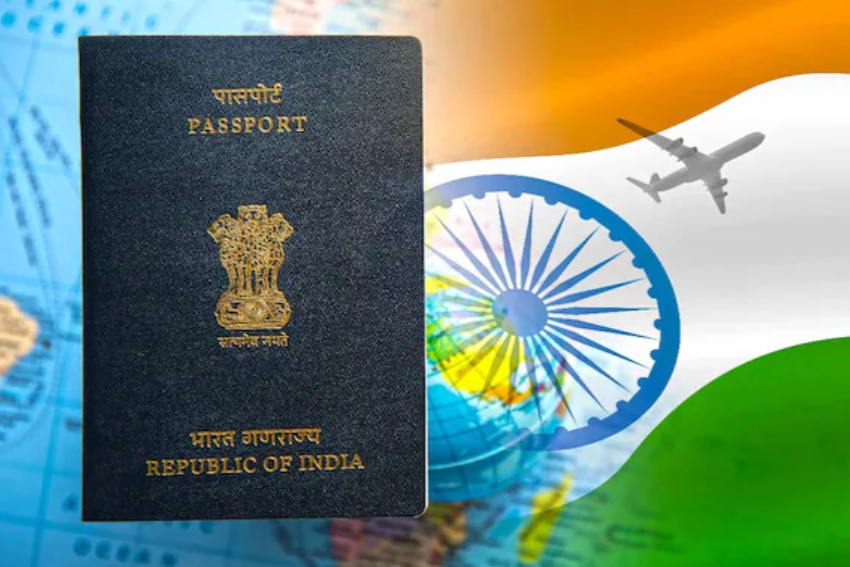
India has seen a sharp increase in the number of citizens giving up their passports since the pandemic, with nearly nine lakh renunciations recorded over five years. The trend has reignited concerns around brain drain, as a growing share of highly skilled professionals choose to permanently anchor their careers abroad.
More than 1.7 million Indians have given up their citizenship since 2014, according to data presented in Parliament. While Indians have migrated abroad for decades, the scale and pace at which citizenship is now being renounced marks a shift that has drawn renewed attention to the issue of brain drain.
Official figures show that between 2011 and 2024, around 2.06 million Indians adopted foreign citizenship. For much of the 2010s, annual numbers rose gradually, without sharp spikes. Between 2011 and 2019, citizenship renunciations increased from 1,22,819 to 1,44,017, a rise of about 17% over eight years.
The pandemic year of 2020 broke this trend. With international travel disrupted and administrative processes slowed, the number of Indians giving up citizenship fell sharply to 85,256, nearly 41% lower than in 2019. This decline, however, proved temporary.
As the global movement resumed, the figures rebounded strongly. In 2021, the number nearly doubled to 1,63,370. The following year saw a further surge, with 2,25,620 Indians giving up their passports, around 57% higher than the pre-pandemic level in 2019. Although the numbers eased slightly to 2,16,219 in 2023 and 2,06,378 in 2024, they remained significantly above earlier averages. Even in 2024, citizenship renunciations were about 43% higher than before Covid-19.
Put together, nearly nine lakh Indians have given up their citizenship in just the last five years. Between 2011 and 2019, an average of about 1.3 lakh people renounced citizenship each year. Over the past five years, that average has risen to roughly 2.2 lakh annually, an increase of nearly 70%.

The rise in numbers does not reflect sudden departures from India. For most people, giving up citizenship is the final step in a long migration journey rather than its beginning. Many spend years studying or working abroad, paying taxes, building careers, and raising families before becoming eligible for foreign citizenship. By the time renunciation papers are filed, India has often already shifted from being home to being a place of occasional visits.
This helps explain why the trend accelerated after the pandemic. Covid-19 delayed mobility and paperwork, compressing several years’ worth of decisions into a shorter post-pandemic window. But the sustained elevation in numbers suggests deeper structural factors at work.
India’s economic growth is real, yet uneven. Wealth creation remains concentrated among a relatively small segment. For professionals in the middle, growth often feels uncertain and abstract. Overseas job markets, by contrast, offer predictability, fixed working hours, clearer labour protections, transparent taxation systems, and more visible links between performance and career progression. These factors become particularly important in people’s 30s and 40s, when stability, healthcare, children’s education, and long-term planning begin to outweigh short-term opportunity.
Education and Skills Driving Migration
Education remains the most common gateway to permanent overseas settlement. Students leave India for degrees in engineering, medicine, management, and research. Many then transition into skilled employment, followed by permanent residency and, eventually, citizenship. This process usually unfolds over a decade or more.
Certain sectors make this pathway easier. Technology and healthcare stand out due to persistent global demand. Skilled professionals in these fields are actively recruited, offered structured visa pathways, and provided long-term security.
According to investment banker and financial advisor Sarthak Ahuja, about 7,500 Indian doctors are currently working overseas. He has also pointed to a strong outward preference among academic professionals, with nearly 67% of professors seeking employment abroad, and roughly one-third of IIT graduates eventually moving overseas.
The most common destinations for Indians giving up citizenship continue to be the United States, Canada, Australia, the United Kingdom, and Germany. However, resistance to immigration in some of these countries is reshaping choices. Ahuja notes that countries actively welcoming Indian professionals have shifted in recent years, with growing opportunities in places such as the UAE, Saudi Arabia, Germany, Italy, Finland, Japan, and New Zealand. He also highlights IT and medicine as the fields most likely to enable overseas employment, compared to commerce or liberal arts.
The Impact on India’s Talent Pool
The scale of citizenship renunciations is beginning to reshape India’s talent landscape. At its core, this trend reflects a redistribution of highly skilled human capital. India produces a large share of the world’s STEM graduates each year, yet a significant proportion eventually anchors itself abroad.
Roughly one-third of engineering graduates from premier institutions like the IITs take up employment overseas. In healthcare, tens of thousands of Indian doctors practise outside the country, forming one of the largest foreign-trained cohorts in nations such as the UK and Australia. Universities and research institutions in India report growing challenges in retaining top faculty and researchers, many of whom cite better funding, infrastructure, and institutional autonomy abroad. This has revived concerns around brain drain, particularly in advanced healthcare, research, and academic leadership. At the same time, India’s global diaspora contributes remittances, investment flows, and international research collaborations.
Brain drain is not new to India. Skilled professionals have been migrating overseas since the 1970s. What is changing is the profile of those leaving and the finality of their decisions. As former media advisor Sanjaya Baru has argued, the current phase increasingly involves the successful and the wealthy, those with the means to choose where they live, work, and pay taxes. For many who moved abroad a decade ago, citizenship has now become a logical conclusion rather than an emotional rupture. The decision reflects long-term calculations about careers, family, health, and institutional stability.