Thursday, 17 Sep, 2026

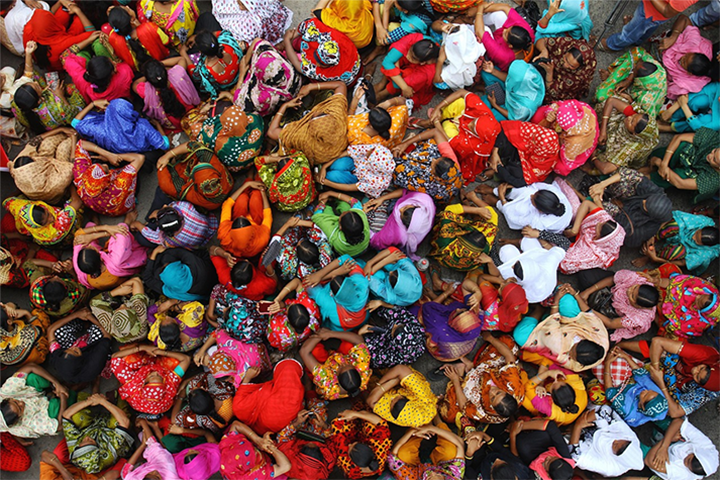
Representational image. (Photo courtesy: Pixabay)
Rising arrests but few convictions highlight enforcement gaps. Many women caught in raids are later found to be trafficking victims, coerced or trapped rather than criminals
On paper, India appears to be making progress against immoral trafficking. Arrests under the Immoral Traffic (Prevention) Act have inched down over the past decade, from 5,407 in 2015 to 5,183 in 2023. But beneath this modest decline lies a more troubling reality: enforcement remains heavy, justice remains elusive, and victims — especially women and children—continue to fall through the cracks.
Between 2015 and 2023, more than 17,000 cases of immoral trafficking led to 49,313 arrests. Nearly 30 per cent of those arrested were women. Yet convictions tell a starkly different story. Throughout the period, fewer than one in five arrested women were convicted, and the conviction rate has steadily worsened. By 2023, it had slipped into single digits.
This widening gap between arrests and convictions raises uncomfortable questions about how the law is being enforced and who it is really catching. Many of the women arrested during raids are later found not to be offenders but victims of trafficking themselves—coerced, exploited or trapped by circumstance rather than criminal intent.
That reality received judicial recognition earlier this year when the Bombay High Court struck down an order mandating the one-year detention of an adult woman rescued during a police raid. The court ruled that an adult victim under the Immoral Traffic (Prevention) Act cannot be detained against her will, reinforcing the principle that rescue cannot morph into punishment.
Children at the Core
The nature of offences registered under the law points to where the crisis is most acute. Procuring children for prostitution, detaining persons in prostitution premises and engaging in prostitution near public places have consistently accounted for the largest share of cases. Among these, crimes involving children dominate.
This explains why immoral trafficking remains the backbone of human trafficking in India. More than half of all trafficking cases are linked to sexual exploitation, primarily of women and children. Yet enforcement outcomes remain bleak. As of 2023, over 95 per cent of these cases were still pending in courts.

Justice delayed in trafficking cases is not merely justice denied; it is justice that actively endangers victims. Prolonged trials weaken deterrence, exhaust survivors and often push them back into unsafe environments while cases crawl through the system.
Coastal concentration
Geography adds another layer to the story. Trafficking cases are heavily concentrated in a few states, particularly along the coast. Tamil Nadu, Karnataka and Maharashtra together account for the highest share of immoral trafficking cases in 2023.
These states are also among India’s most urbanised and industrialised, with large migrant populations, tourism-driven economies and informal labour markets — conditions that traffickers exploit. Frequent police raids in these regions partly explain higher arrest numbers, but again, outcomes remain weak.
Higher enforcement intensity has not translated into stronger convictions. That points to persistent gaps in investigation quality, evidence collection, witness protection and victim rehabilitation.
Policing without closure
The data suggest an approach that prioritises visibility over resolution. Arrests are swift and measurable; convictions are slow and uncertain. Raids often rely on broad legal powers, but cases falter in court when evidence proves thin or when victims — wrongly treated as accused—withdraw cooperation.
Women are the clearest casualty of this approach. Though they form roughly a third of those arrested, their conviction rates have collapsed over time. This strongly indicates misidentification: victims being processed as offenders, only for cases to unravel later.

Such practices erode trust in law enforcement and discourage survivors from seeking help. They also clog courts with weak cases, delaying justice for genuine offenders.
A System at a crossroads
Recent court rulings suggest the old model is under strain. Judges are increasingly emphasising consent, adult agency and the distinction between rescue and detention. That shift could force a rethink of how the law is applied—away from mass raids and towards survivor-centred enforcement.
The larger challenge, however, is structural. As long as cases remain stuck in courts, rehabilitation remains patchy and conviction rates remain dismal, the fight against trafficking will continue to look tougher than it truly is.
Falling arrest numbers alone do not signal progress. What matters is whether traffickers are punished, victims are protected and the system stops repeating the same mistakes under the guise of enforcement.
The data make one thing clear: India’s battle against immoral trafficking is not losing urgency. But without deeper reform, it risks losing credibility—and the very people it claims to protect.