Sunday, 20 Sep, 2026

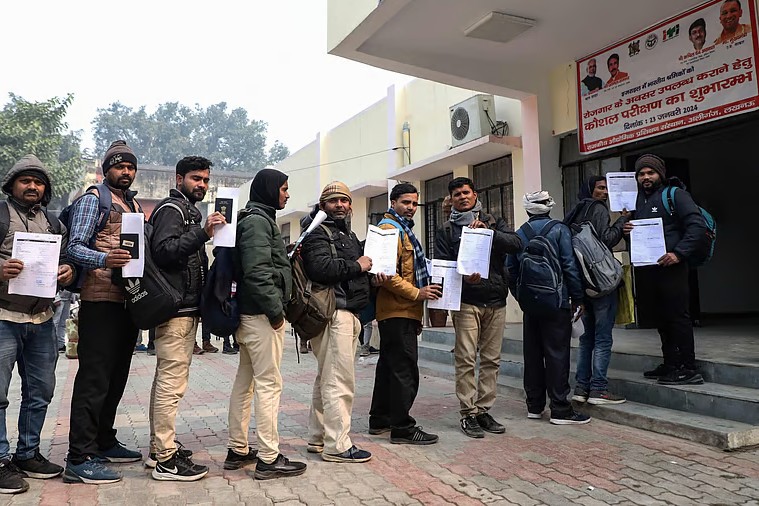
Image source: Deccan Herald
India’s expanding higher education system is producing more graduates than the labour market can absorb. With graduates forming 67% of unemployed youth, the country faces a growing mismatch between education and employment opportunities.
The share of unemployed youth aged 20–29 who are graduates has increased sharply over the past two decades, even as access to higher education has expanded. According to the State of Working India 2026 report released by Azim Premji University, graduates accounted for around 67% of unemployed youth in 2023, amounting to nearly 1.1 crore individuals. This marks a substantial rise from 32% in 2004, when around 30 lakh unemployed youth were graduates. Over the same period, the share of graduates within the youth population increased from 10% (1.9 crore) to 28% (6.3 crore), reflecting a steady expansion in tertiary education enrolment.
However, the growth in employment opportunities has not kept pace with the increasing number of degree holders. Between 2004 and 2023, approximately 50 lakh graduates were added each year, while only around 28 lakh found employment annually. Of those employed, about 17 lakh secured salaried jobs. This widening gap between graduate supply and employment generation has contributed to rising graduate unemployment and slower earnings growth. The report notes that while graduates continue to earn more than non-graduates in entry-level jobs, the earnings premium has been narrowing over time, particularly since 2017, when earnings growth for young men began to slow.
Educational attainment among young people has improved over the past decade, with a larger share completing higher levels of education and entering the labour market with graduate degrees. Yet, less than half of all graduates were employed, with only 48.8% reporting some form of work. Within this group, a small fraction held stable positions, with 6.7% in permanent salaried roles and 3.7% in white-collar occupations. Around 40% of graduates in the labour force reported open unemployment, a trend that has remained broadly unchanged between 1983 and 2023. The report also finds that only a small share of youth secure stable salaried jobs within a year of graduation.
The expansion of higher education institutions has significantly increased the number of graduates. College availability rose from 29 per lakh youth in 2010 to 45 per lakh youth in 2021, largely driven by the growth of private institutions. At the same time, financial barriers continue to limit access to professional courses such as engineering and medicine, where the cost of education often exceeds the annual per capita expenditure of poorer households, although this gap narrowed somewhat between 2007 and 2017.
Structural challenges affecting employability are also highlighted in the report, including skill mismatches, limited work experience, and gaps in the vocational training ecosystem. The number of industrial training institutes has increased by nearly 300%, largely due to private sector expansion. However, this growth has been accompanied by concerns over declining training quality, inadequate infrastructure, and weak alignment with industry needs. The report observes that the geographical distribution of ITIs shows no clear association with the location of manufacturing firms, indicating limited effectiveness in improving employment outcomes.

India’s demographic profile further underscores the urgency of job creation. With an estimated 367 million individuals aged 15–29, the country is approaching the peak of its demographic dividend. Of these, around 263 million are outside the education system and form the potential workforce. The ratio of the working-age population to dependents is expected to decline after 2030 due to a shrinking youth share and a rising elderly population. The report cautions that without sufficient growth in productive employment, the economic benefits of a large young workforce may not fully materialise.
Economic pressures are also shaping education and employment decisions. The share of young men enrolled in education declined from 38% in 2017 to 34% by late 2024, with financial necessity increasingly cited as a reason for leaving studies. The proportion of young men attributing their exit from education to financial constraints rose from 58% in 2017 to 72% in 2023.
The report emphasises the need for policies that strengthen the transition from education to employment. It calls for expanding salaried job opportunities, improving the link between school education and vocational training to reduce skill gaps, strengthening job-matching platforms like the National Career Service, and expanding social security support for young workers.