Monday, 21 Sep, 2026

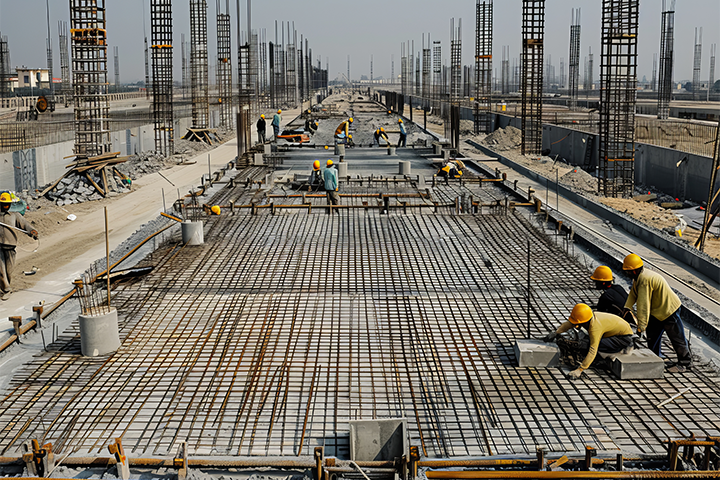
Photo courtesy: Pixabay
The investment revival remains narrow. Government spending and marquee projects continue to dominate, while a broad-based private capex cycle has yet to emerge
India’s latest investment numbers appear to offer exactly what policymakers have been waiting for: evidence that the long-delayed private capital expenditure cycle has finally begun. Fresh investment proposals jumped 71 per cent quarter-on-quarter to Rs 14.77 lakh crore in the first quarter of FY27, while new private-sector projects rose 70.6 per cent to Rs 10.59 lakh crore.
The headline, however, tells only half the story.
Almost the entire increase can be traced to four nuclear power projects worth Rs 6.5 lakh crore announced in Maharashtra. Strip them out, and India’s investment narrative changes from boom to stagnation. Fresh investment proposals actually fell 4.27 per cent from the previous quarter to Rs 8.27 lakh crore from Rs 8.63 lakh crore. More importantly, private investment—the clearest indicator of corporate confidence—declined 31.88 per cent sequentially.
That distinction matters because investment cycles are rarely built on a handful of mega projects. They become self-sustaining only when hundreds of companies across manufacturing, logistics, mining, technology and services simultaneously expand capacity. India’s latest data suggest that broad-based corporate confidence remains elusive.
The composition of investment reinforces the point. Manufacturing, mining, and oil and gas all contracted sequentially during the quarter. These are sectors that typically generate exports, productivity gains and large-scale employment. Their weakness suggests that companies remain reluctant to commit capital despite lower inflation, easier monetary conditions and relatively robust domestic growth.

Instead, government-backed spending continues to carry much of the burden.
New central government capital expenditure proposals surged 168 per cent to Rs 2.72 lakh crore from Rs 1.01 lakh crore in the previous quarter, cushioning the weakness in private investment. Public spending has repeatedly prevented India’s investment cycle from losing momentum over the past few years. But government capex can only crowd in private investment if companies believe demand will remain durable and external risks manageable.
That confidence has yet to emerge.
Projects Today’s assessment points squarely to geopolitics. The West Asia conflict disrupted energy supplies, shipping routes and export markets during the quarter, prompting companies to postpone investment decisions. In an increasingly fragmented global economy, boardrooms appear more concerned about oil prices and trade disruptions than domestic borrowing costs.
The dominance of nuclear projects illustrates another challenge. The power sector recorded a spectacular 507 per cent increase in proposed investments, accounting for more than half of total project announcements. Yet excluding nuclear projects, investment in electricity weakened sharply, with renewable energy proposals falling 38.47 per cent to Rs 69,258 crore. Transport projects grew 60 per cent and state government proposals edged up 3.3 per cent to Rs 1.46 lakh crore, but neither was enough to offset the weakness elsewhere.
The investment pipeline is also becoming increasingly concentrated. Just 143 mega projects worth at least Rs 1,000 crore accounted for Rs 12.06 lakh crore of proposed investment. Such concentration makes the headline numbers vulnerable. Delays or cancellations of only a few projects can significantly alter the national investment picture.

There are reasons for optimism. If geopolitical tensions ease, shipping normalises and energy markets stabilise, companies may revive investment plans in the second half of FY27. Lower uncertainty over exports and faster project execution would also improve corporate willingness to deploy capital.
But investors should resist reading too much into one quarter’s headline figures.
India’s economy has undoubtedly become more resilient over the past decade. Public infrastructure spending has improved logistics, banks are healthier and corporate balance sheets are stronger. Yet those conditions alone do not guarantee an investment boom. Companies invest when they see sustained demand, predictable global markets and confidence that returns will justify the risks.
That threshold has not yet been crossed.
The latest data therefore offer less evidence of a capex renaissance than of an economy still leaning on government spending and a few extraordinary projects. Until investment broadens beyond marquee announcements into factories, industrial parks and medium-sized enterprises across sectors, India's private investment revival will remain more promise than reality.