Monday, 12 Oct, 2026

Economic ties continue to serve as the strongest foundation of the bilateral relationship. Indonesia has consistently ranked among India's most significant trading partners in Southeast Asia and emerged as India's second-largest trading partner within ASEAN. Image Source: DD India
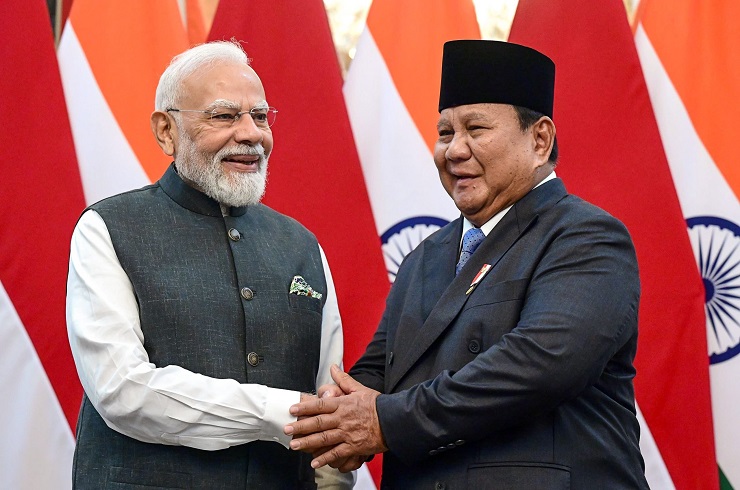
Modi held extensive bilateral discussions with Indonesian President Prabowo Subianto, who personally bid farewell to the Indian Prime Minister at the airport, reflecting the warmth and importance attached to the relationship.
Prime Minister Narendra Modi concluded a three-day official visit to Indonesia, marking an important milestone in the rapidly evolving partnership between the two Indo-Pacific democracies. The visit, which forms the first leg of his three-nation tour covering Indonesia, Australia and New Zealand, underscored New Delhi's growing emphasis on strengthening strategic and economic engagement with key regional partners. Modi held extensive bilateral discussions with Indonesian President Prabowo Subianto, who personally bid farewell to the Indian Prime Minister at the airport, reflecting the warmth and importance attached to the relationship. The visit also built upon the momentum generated by President Prabowo's visit to India as the Chief Guest for the Republic Day celebrations in January 2025.
A major outcome of the visit was the signing of fourteen agreements spanning defence, maritime security, agriculture, critical minerals, digital technologies and capacity building. Both leaders reaffirmed their commitment to expanding defence and maritime cooperation, building upon the Defence Cooperation Agreement signed in 2018. They also emphasised that economic collaboration remains one of the strongest pillars of bilateral ties and expressed their determination to unlock new commercial opportunities through greater trade, investment and technological cooperation. Prime Minister Modi described the visit as one that had opened fresh avenues for collaboration in defence and security, maritime affairs, artificial intelligence, digital innovation, emerging technologies and human resource development. President Prabowo, meanwhile, highlighted that India and Indonesia, as two of the world's largest democracies, share a responsibility to contribute to peace, stability and prosperity across the Indo-Pacific.
Among the agreements concluded during the visit, the defence partnership attracted the greatest strategic attention. India and Indonesia signed a landmark contract under which BrahMos Aerospace, the Indo-Russian joint venture, will supply BrahMos supersonic cruise missiles to the Indonesian Armed Forces. Indonesia had been exploring the acquisition of the missile system since at least 2018, with negotiations gathering pace over the past few years. Earlier this year, Jakarta confirmed that it had finalised the procurement process, and the reported package is expected to include a complete missile battery comprising launchers, radars and missiles. The agreement further establishes India as an emerging defence exporter in Southeast Asia, following similar BrahMos exports to the Philippines and Vietnam, while simultaneously strengthening Indonesia's maritime deterrence capabilities amid an increasingly contested regional security environment.
Beyond defence, both countries broadened cooperation in sectors that are becoming increasingly important to future economic and technological competitiveness. Agreements covering agriculture, steel and resilient critical mineral supply chains are expected to support industrial development and reduce vulnerabilities associated with global supply disruptions. Cooperation in emerging technologies, digital innovation and artificial intelligence reflects the shared ambition to prepare both economies for the next phase of technological transformation. The two leaders also inaugurated a joint conservation initiative at the UNESCO-listed Prambanan Temple complex in Yogyakarta, symbolising the enduring civilisational and cultural links that have connected India and Indonesia for centuries.
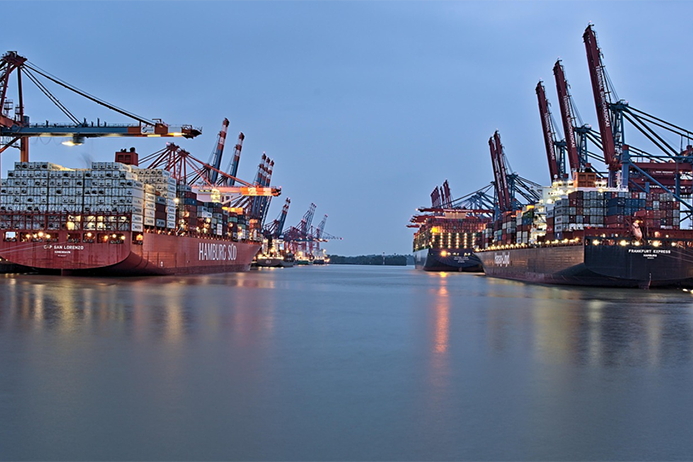
Economic ties continue to serve as the strongest foundation of the bilateral relationship. Indonesia has consistently ranked among India's most significant trading partners in Southeast Asia and emerged as India's second-largest trading partner within ASEAN. Bilateral trade has expanded dramatically over the past two decades, rising from approximately US$4.3 billion in 2005-06 to nearly US$39 billion in 2022-23, before moderating to around US$28.15 billion in FY 2024-25 amid changing global economic conditions.

Source: Embassy of India, Jakarta
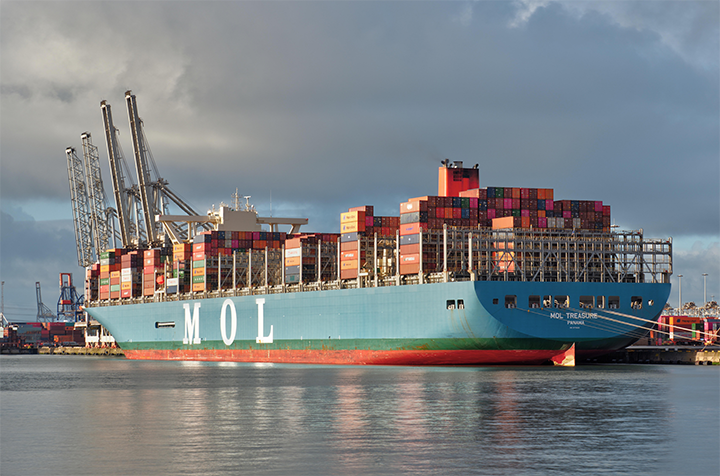
Indonesia was India's tenth-largest trading partner during FY 2024-25, accounting for 1.23 percent of India's exports and 3.21 percent of its imports. India remains one of the largest purchasers of Indonesian coal and the biggest importer of Indonesian crude palm oil, while also sourcing minerals, rubber, pulp and paper, and hydrocarbon products from the country. In return, India exports refined petroleum products, commercial vehicles, telecommunications equipment, agricultural commodities, steel products, plastics and processed food products to Indonesia. Between 2019 and 2025, Indian investments in Indonesia approached US$1 billion, reflecting growing confidence among Indian businesses in Indonesia's expanding market and industrial potential.
The economic relationship is particularly valuable for India because of its complementary nature. Indonesia provides access to critical raw materials that support India's manufacturing and energy requirements without posing significant competitive pressure on India's domestic industrial base. Unlike some Southeast Asian economies whose exports directly compete with Indian manufacturing, Indonesia's export profile largely complements India's economic needs. At the same time, Indonesia represents a substantial and growing market for Indian products, investments and technology, making the relationship increasingly beneficial for both sides.
Despite these positive developments, the strategic partnership continues to face certain structural limitations. While both countries advocate a free, open and inclusive Indo-Pacific, their security priorities are shaped by different geographical realities. India's strategic focus remains centred on South Asia, the Indian Ocean Region and its immediate maritime neighbourhood, whereas Indonesia's principal security concerns are concentrated in Southeast Asia, particularly the South China Sea and regional ASEAN dynamics. These differing strategic orientations naturally limit the extent of defence coordination despite growing convergence on broader regional issues. Nevertheless, both countries recognise the value of closer cooperation in maritime security, defence industrial collaboration and regional stability, especially amid intensifying geopolitical competition in the Indo-Pacific.
Overall, Prime Minister Modi's visit has significantly strengthened India-Indonesia relations by adding greater strategic depth to an already robust economic partnership. The BrahMos missile agreement, expanded cooperation in critical minerals and emerging technologies, and continued growth in trade and investment demonstrate that the relationship is steadily evolving beyond traditional commercial engagement. While differences in strategic priorities may place practical limits on the partnership, both countries appear committed to building a more comprehensive and future-oriented relationship that contributes to regional security, economic resilience and Indo-Pacific stability.