Monday, 12 Oct, 2026

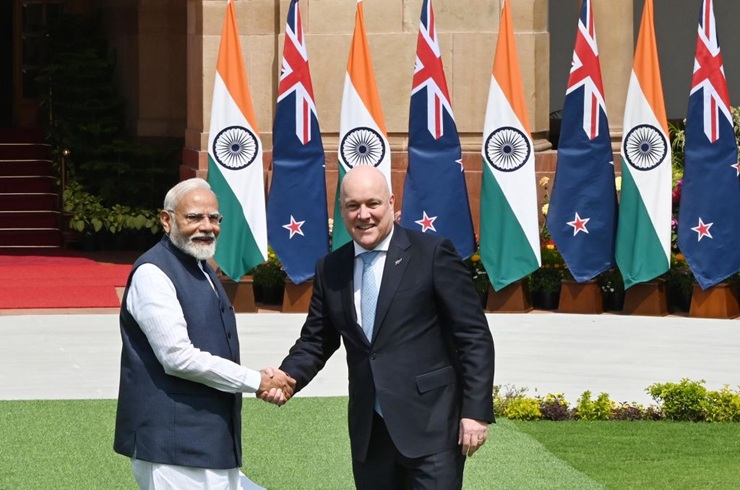
An important highlight of the discussions was the progress made under the India–Cyprus Joint Action Plan 2025–2029, which had been announced during Prime Minister Modi’s visit to Cyprus in 2025. Image Source: The Indian Express
Following the talks, Prime Minister Modi announced that both countries had agreed to formally elevate bilateral ties into a Strategic Partnership in recognition of the expanding scope and momentum of engagement between the two sides.
The State Visit of Nikos Christodoulides to India concluded on Saturday with both nations announcing a landmark elevation of bilateral ties to the level of a Strategic Partnership, a move that signals a new chapter in India–Cyprus relations and reflects the growing convergence of their geopolitical, economic and strategic interests.
The visit is being regarded as a major diplomatic milestone, aimed at deepening cooperation across a broad spectrum of sectors including diplomacy, trade, security, fintech, education, innovation and maritime connectivity. During delegation-level talks held at Hyderabad House in New Delhi, Prime Minister Narendra Modi described India’s relationship with Cyprus as “strong and futuristic,” emphasizing that the partnership is anchored in shared democratic values, mutual trust and respect for the rule of law.
Following the talks, Prime Minister Modi announced that both countries had agreed to formally elevate bilateral ties into a Strategic Partnership in recognition of the expanding scope and momentum of engagement between the two sides. The decision marks a significant upgrade in relations and underlines the increasing strategic relevance of Cyprus for India, particularly in the context of India’s growing engagement with Europe and the Mediterranean region.
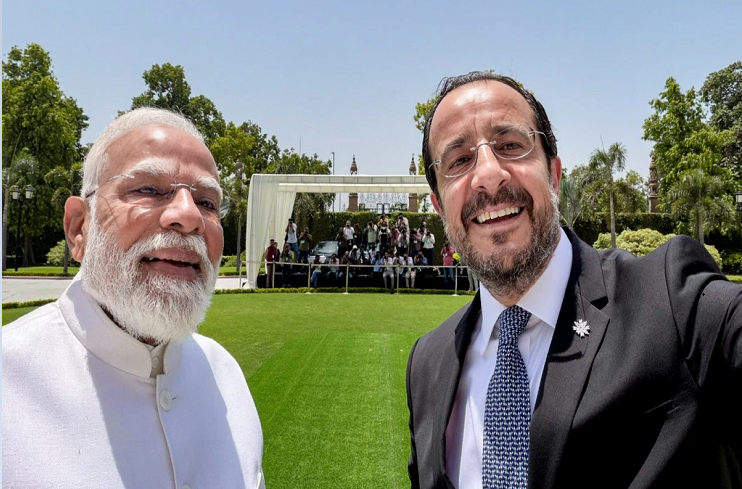
According to the Ministry of External Affairs, the discussions covered a wide range of collaborative initiatives. These included the creation of a Joint Working Group on Counter-Terrorism to strengthen security cooperation and intelligence-sharing mechanisms, enhanced diplomatic training collaboration between the Sushma Swaraj Institute of Foreign Service and Cyprus’ Diplomatic Academy, as well as new avenues for cooperation in higher education, scientific research and innovation. President Christodoulides also shared a photograph with Prime Minister Modi on X, expressing gratitude for the warm hospitality extended to him and his delegation during the visit.
As part of his engagements in the national capital, the Cypriot President paid tribute to Mahatma Gandhi at Rajghat before proceeding for official meetings. During their bilateral talks held on 22 May 2026, the two leaders conducted extensive discussions on regional, global and bilateral issues, expressing satisfaction over the renewed momentum in India–Cyprus relations across multiple domains.
Both leaders reaffirmed the long-standing and trusted partnership between the two democracies, highlighting their shared commitment to democratic principles, sovereignty and international law. They also exchanged views on India–EU relations, evolving geopolitical developments and global security challenges of mutual concern.
An important highlight of the discussions was the progress made under the India–Cyprus Joint Action Plan 2025–2029, which had been announced during Prime Minister Modi’s visit to Cyprus in 2025. The two sides welcomed the steady implementation of the roadmap and agreed to commemorate the 65th anniversary of diplomatic relations in 2027 through a series of special events and exchanges.
On the multilateral front, both leaders strongly emphasized the urgent need for reforms in the United Nations Security Council to make it more representative, effective and responsive to contemporary geopolitical realities. Cyprus reiterated its unequivocal support for India’s bid for permanent membership in a reformed UNSC. The two nations also agreed to closely coordinate in multilateral institutions, including the United Nations, and pledged support for each other’s candidatures in international forums.

Source: Ministry of Commerce and Industry
The trade data indicates that while bilateral trade between India and Cyprus remains relatively modest in absolute terms, the relationship has demonstrated resilience and untapped growth potential. Trade volumes witnessed a sharp rise in FY 2021–22, crossing USD 214 million, likely driven by post-pandemic economic recovery and increased commercial activity. However, the subsequent decline and stabilization around the USD 135–140 million mark suggest that economic engagement between the two countries is still operating below its potential. Despite this, Cyprus continues to hold strategic economic importance for India, not merely as a trading partner but as a gateway to European markets and a significant source of foreign investment.
Economic cooperation emerged as another major pillar of the visit. Both sides welcomed the sustained growth of Cypriot investments into India, acknowledging Cyprus as an increasingly important gateway for investments into the Indian economy. The leaders stressed the immense untapped potential in bilateral economic relations and encouraged businesses from both countries to explore opportunities in sectors such as financial services, shipping and maritime industries, logistics, clean energy, waste management, space technology, scientific research, startups, artificial intelligence and digital innovation.
The leaders also highlighted the opportunities expected to emerge from the recently concluded India–EU Free Trade Agreement, which is likely to further enhance trade flows, connectivity and investment cooperation between India and European markets. The two leaders welcomed the successful conclusion of the long-awaited India–EU Free Trade Agreement during the India–EU Summit held on 27 January 2026, describing it as a transformative moment in relations between India and the European Union. The agreement is being seen as a major breakthrough that could significantly reshape economic and strategic engagement between the two sides by unlocking new opportunities in trade, investment, technology and connectivity.
Both sides also endorsed the Joint India–EU Comprehensive Strategic Agenda for 2030, an ambitious roadmap designed to deepen and expand cooperation across a wide range of sectors. The framework aims to strengthen coordination between India and the European Union in areas such as trade, digital innovation, clean energy, resilient supply chains, maritime security, infrastructure, emerging technologies and global governance. The agenda reflects a shared vision to build a more robust and future-oriented partnership capable of delivering tangible and mutually beneficial outcomes not only for India and Europe, but also for the broader international community.
Describing the India–EU Free Trade Agreement as a historic milestone in the evolving strategic partnership, the leaders emphasized that the deal has the potential to dramatically enhance bilateral economic integration and create new avenues for growth. They called for the early signing and swift implementation of the agreement so that businesses and industries on both sides can begin leveraging its full economic potential.
A major focus of the discussions was financial and fintech connectivity. Both sides welcomed the growing engagement in the financial sector, including the Memorandum of Understanding signed in 2025 between the National Payments Corporation of India’s international arm, NIPL, and Eurobank Cyprus. In a significant development, the two countries also welcomed the establishment of interoperability between India’s Unified Payments Interface (UPI) and the European Central Bank’s Target Instant Payment Settlement (TIPS) system. The initiative is expected to facilitate seamless cross-border digital transactions, benefiting tourists, businesses and financial institutions in both countries while further integrating India’s digital payment ecosystem with Europe.
At the conclusion of the visit, both leaders expressed satisfaction with the growing depth and breadth of India–Cyprus relations and directed officials to ensure the timely implementation of the Joint Action Plan 2025–2029 under the newly elevated Strategic Partnership framework.
The two sides agreed to maintain regular high-level political engagement and continue building upon the shared spirit of mutual respect, cooperation and strategic trust. Both leaders acknowledged that the visit represented far more than a routine diplomatic exchange as it marked a decisive transformation of a historically cordial relationship into a modern, ambitious and future-oriented strategic partnership designed to address emerging geopolitical and economic realities of the 21st century.