Friday, 23 Oct, 2026

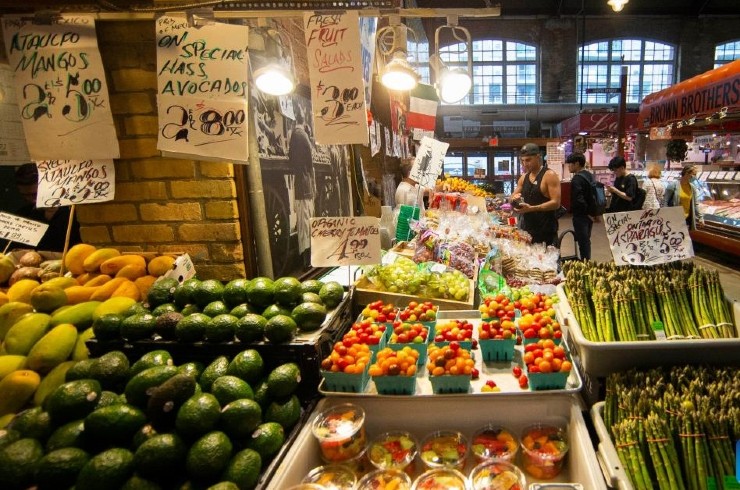
According to data released by the Ministry of Statistics and Programme Implementation (MoSPI), headline retail inflation accelerated from 3.93 percent in May to 4.38 percent in June, broadly matching market expectations. Image Source: IANS
The primary driver of the increase was food inflation, which rose to 5.32 percent in June from 4.78 percent in May.
India's retail inflation climbed to 4.38 percent in June, crossing the Reserve Bank of India's (RBI) medium-term target of 4 percent for the first time in 17 months, as higher food and fuel prices, renewed geopolitical tensions in West Asia and concerns over an uneven monsoon combined to push up the cost of living. The latest Consumer Price Index (CPI) reading signals a resurgence of inflationary pressures after an extended period of moderation, posing fresh challenges for policymakers seeking to balance price stability with economic growth.
According to data released by the Ministry of Statistics and Programme Implementation (MoSPI), headline retail inflation accelerated from 3.93 percent in May to 4.38 percent in June, broadly matching market expectations. A Reuters poll of economists had projected inflation at 4.3 percent, with estimates ranging from 3.65 percent to 5.50 percent. The June figure is also the highest recorded since India adopted the revised CPI series with a new base year and an updated consumption basket earlier this year, making it a significant milestone in the country's inflation trajectory.
The primary driver of the increase was food inflation, which rose to 5.32 percent in June from 4.78 percent in May. Rural food inflation stood at 5.45 percent, while urban food inflation was comparatively lower at 5.09 percent, highlighting the greater impact of rising food costs in rural areas. Although some vegetables continued to register year-on-year declines, the pace of price correction slowed. Potato prices contracted by 20.34 percent compared with a steeper decline of 23.71 percent in May, while tomato prices fell 31.92 percent after recording a sharp 48.43 percent increase a month earlier. Economists believe that rising prices of cereals, pulses, edible oils and other essential food items offset the moderation in vegetable prices, keeping overall food inflation elevated.

Source: Ministry of Statistics and Programme Implementation
Weather conditions remain one of the biggest risks to the inflation outlook. Food prices have begun to reflect the impact of patchy monsoon rainfall in several agricultural regions, and economists caution that inflationary pressures could intensify if El Niño conditions weaken rainfall further in the coming months. The southwest monsoon, which contributes nearly 70 percent of India's annual rainfall, plays a critical role in agricultural production, rural incomes and food supplies. Nearly half of India's cultivated land still depends on rainfall rather than irrigation, making crop output highly sensitive to monsoon performance.
Global developments have added another layer of uncertainty. The renewed escalation of tensions in West Asia has pushed international crude oil prices higher, raising concerns over imported inflation. As the world's third-largest importer and consumer of crude oil, India remains particularly vulnerable to sustained increases in energy prices. Higher crude prices not only raise transportation and manufacturing costs but also widen the country's current account deficit, weaken the rupee and increase imported inflation across multiple sectors of the economy.
Economists also point out that elevated fuel costs tend to have a cascading impact by increasing logistics and supply chain expenses, eventually feeding into the prices of a wide range of consumer goods and services. If geopolitical tensions persist and energy prices remain elevated, inflationary pressures could become more broad-based in the months ahead.
Commenting on the latest inflation figures, Upasna Bhardwaj, Chief Economist at Kotak Mahindra Bank, noted that the upward trend in inflation has largely been driven by higher food prices and the partial pass-through of recent fuel price increases. She added that the evolving monsoon situation and the renewed geopolitical tensions remain key variables to watch and expects the RBI to raise policy rates by 50 basis points during the second half of FY27 if inflationary pressures persist.
The RBI is mandated to maintain headline retail inflation at 4 percent, with a tolerance band of 2 percent to 6 percent for the five-year period from April 1, 2026, to March 31, 2031. While the latest reading remains comfortably within the upper limit of the inflation target, breaching the 4 percent benchmark after such a long interval is likely to keep the central bank cautious.
The inflation data assumes added significance because it comes just weeks after the RBI decided to leave the benchmark repo rate unchanged at 5.25 percent during its June monetary policy review. The six-member Monetary Policy Committee (MPC), led by RBI Governor Sanjay Malhotra, unanimously voted to retain both the policy rate and the neutral policy stance, signalling a balanced approach as policymakers assess the competing risks to growth and inflation.
At the same time, the central bank revised its inflation forecast for FY27 upward to 5.1 percent, compared with 4.6 percent projected in April. The revision reflects persistent food price pressures, higher global energy costs and the uncertainties arising from geopolitical developments. Despite keeping interest rates unchanged for a second consecutive policy meeting, the RBI has acknowledged that inflation risks have become more pronounced than anticipated earlier in the year.
The repo rate remains one of the RBI's principal tools for managing inflation. It is the interest rate at which the central bank lends funds to commercial banks. Higher repo rates increase borrowing costs for banks, which in turn raises lending rates across the economy, moderating demand and reducing inflationary pressures. The RBI had last raised the repo rate on February 8, 2023, by 25 basis points to 6.50 percent, capping a cumulative increase of 250 basis points during FY23 as part of an aggressive monetary tightening cycle to combat surging inflation. Since then, the central bank has gradually shifted towards a more balanced approach as inflation moderated before showing signs of a renewed pickup this year.
Before the latest flare-up in West Asia, the Centre's monthly economic review had expressed optimism that easing global commodity prices, particularly crude oil and urea, would help moderate imported inflation and improve macroeconomic stability. However, the renewed geopolitical tensions have reversed much of that optimism by pushing global crude prices higher once again, complicating India's inflation outlook. Going forward, the trajectory of food prices, the progress of the monsoon, developments in global energy markets and geopolitical risks are expected to remain the key determinants of inflation and monetary policy over the rest of FY27.