Friday, 23 Oct, 2026

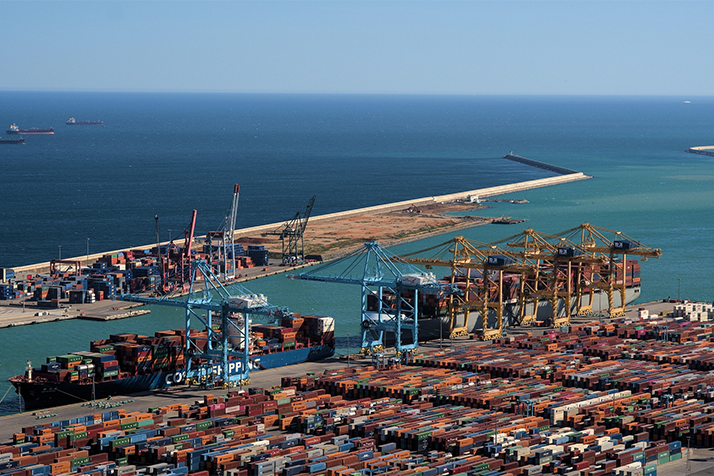
Photo courtesy: Pixabay
While West Asia remained the only region to record weaker trade, signs of recovery have emerged. Exports to the region are estimated to have grown 7.3% year-on-year to $5 billion in June
For much of the past two years, India's external sector has offered an unusual source of comfort. Imports remained subdued, the current account stayed manageable and policymakers took solace in the belief that the economy’s dependence on the outside world was under control. June’s trade numbers, however, tell a different story.
India’s merchandise trade deficit widened to a five-month high of $30.4 billion as imports surged 31 per cent year-on-year to $70.8 billion, their fastest pace of expansion in nearly four years. At first glance, the numbers appear worrying. A wider trade gap usually raises concerns about pressure on the rupee, the current account deficit and imported inflation.
But the composition of imports tells a more nuanced story. Not every widening trade deficit is a sign of economic weakness. Sometimes it reflects an economy that is investing rather than merely consuming.
Nearly half of the increase came from commodities and capital-intensive sectors. Crude oil imports jumped more than 40 per cent to $19.3 billion, reflecting elevated global prices following tensions in West Asia. Fertiliser imports trebled to $2.3 billion, partly because of higher prices and partly because India is rebuilding inventories to support agriculture. Electronics, machinery and chemicals also registered strong growth.

These are not discretionary imports. They are inputs into production, infrastructure and consumption that keep the economy functioning.
India has always faced a structural constraint. It imports energy because it lacks sufficient domestic crude oil. It imports electronics because manufacturing capabilities are still evolving. It imports fertilisers because food security depends on them. The trade deficit therefore says as much about India's stage of development as it does about its macroeconomic health.
There is another side to the story that deserves equal attention.
Exports continued to surprise on the upside. Merchandise exports rose 15.4 per cent to $40.4 billion despite a fragile global economy and persistent geopolitical uncertainty. Engineering goods expanded 21 per cent to $11.5 billion, retaining their position as India's largest export category. Electronics exports climbed 19 per cent to $4.9 billion, overtaking petroleum products to become the country's second-largest export segment. Pharmaceuticals, chemicals and gems and jewellery also recorded healthy growth.
For decades, India’s exports were dominated by petroleum products, textiles and gems. Electronics now occupy a position that would have seemed improbable just a few years ago. That reflects the impact of production-linked incentive schemes, multinational companies diversifying supply chains and India's growing integration into global manufacturing networks.
In other words, imports and exports are both signalling structural transformation.
The challenge is that imports are rising faster than exports.
Economists will naturally focus on what this means for the current account deficit. ICRA expects it to widen to at least 1 per cent of GDP in FY27. That remains manageable by historical standards but represents a reversal from the unusually benign external balances of recent years.
The bigger risk lies elsewhere.

If crude oil prices remain elevated because of prolonged geopolitical tensions, India’s import bill could continue to rise regardless of domestic demand. Unlike electronics or machinery, higher oil imports do not necessarily create future productive capacity. They simply make growth more expensive.
Yet focusing only on the deficit would miss the larger message embedded in these numbers.
Strong imports often accompany periods of robust economic expansion. Companies import machinery because they are investing. Consumers import electronics because incomes are rising. Fertiliser imports increase because agriculture is expanding. These are characteristics of a growing economy, not a contracting one.
More significantly, the June data offer cautious optimism. Export growth has become increasingly diversified. Electronics, engineering goods and pharmaceuticals are reducing India’s dependence on traditional sectors. Even shipments to West Asia have begun recovering despite regional instability, though exports to the United States slipped marginally.
Economists say India cannot permanently narrow its trade deficit simply by suppressing imports. A fast-growing economy will always import more energy, technology and capital goods. The sustainable solution lies in expanding export competitiveness rather than restricting imports.
India’s trade deficit is widening. But unlike in previous decades, it increasingly reflects an economy investing in its future rather than merely financing its consumption. The challenge for policymakers is to ensure that today’s import surge translates into tomorrow’s export capacity. That will determine whether the current deficit becomes a temporary cost of development or a lasting macroeconomic vulnerability.