Saturday, 03 Oct, 2026

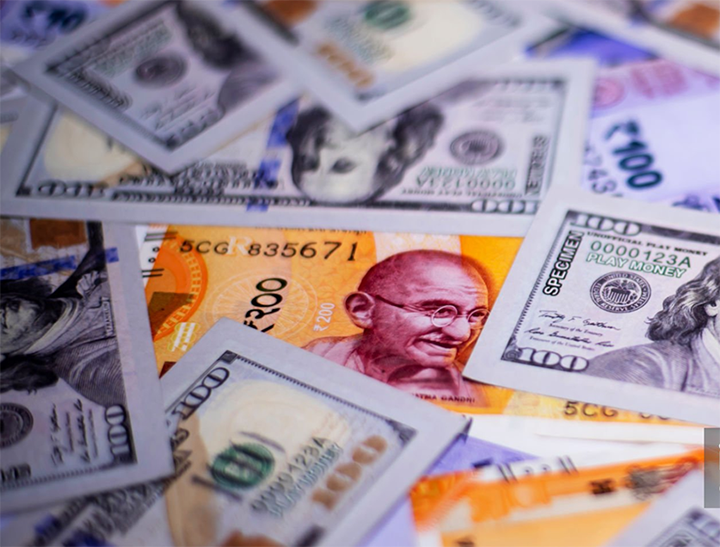
Photo Courtesy: Pixabay
Money has not disappeared. It has become more selective. The task for Indian startups is to build businesses strong enough to earn it
India’s startup funding slump is being blamed on the conflict in West Asia. That is only partly true. Wars create uncertainty, markets dislike uncertainty, and investors become cautious when geopolitical tensions rise. But if the current funding winter were merely a reaction to events in West Asia, it would probably pass once the crisis subsides. The deeper reality is that the conflict has exposed changes that were already reshaping the global venture capital industry.
The numbers are stark. Between March and mid-June 2026, startup funding in India fell 43 per cent from a year earlier to $7.81 billion. The sharpest decline came in late-stage funding, which collapsed by more than 60 per cent. Seed funding also shrank dramatically, while early-stage investments remained relatively resilient.
The immediate trigger may be geopolitical uncertainty, but the roots of the slowdown run much deeper.
For more than a decade, startups benefited from an era of abundant global liquidity. Interest rates were low, capital was cheap and investors were willing to fund growth even when profits seemed a distant prospect. Money flowed into technology ventures across the world because investors had few alternatives that promised similar returns.

(Source: Tracxn / Funding in $ bn | Deal count in numbers)
That era is ending.
Today’s investors are becoming more selective. Rising geopolitical tensions, volatile markets and concerns about global growth have made them reassess risk. Venture capital depends on long-term confidence. Investors backing startups today are betting on outcomes that may emerge five or ten years from now. When the world becomes less predictable, those bets become harder to justify.
The weakening of the rupee has added another layer of complexity. Currency depreciation may not attract much public attention, but it matters enormously to foreign investors. Even if a startup succeeds, a weaker currency can erode returns when profits are converted back into dollars. As exchange-rate risks increase, investors naturally demand higher returns or choose safer destinations.
Yet the biggest challenge facing Indian startups may not be geopolitical uncertainty or currency weakness.
It is competition for capital.
The global investment community has found a new favourite sector: artificial intelligence. Over the past two years, enormous amounts of venture capital have been redirected towards AI companies, semiconductor infrastructure, data centres and advanced computing technologies, particularly in the United States. Capital that once chased consumer internet businesses across emerging markets is increasingly being concentrated in a relatively small number of AI-driven opportunities.
For India, this means the funding pool is shrinking from two directions at once. Investors are becoming more cautious because of geopolitical risks, and the money that remains available is being pulled towards sectors and geographies seen as offering higher returns.
The slowdown is also exposing weaknesses that accumulated during the startup boom years.
Many late-stage companies raised money at valuations that were difficult to justify by revenues or profits. Large funding rounds became commonplace, creating an impression that capital would always be available. The current correction suggests those assumptions were misplaced.
That may not necessarily be bad news.
Many Indian startups have responded by focusing on profitability, improving cash flows and reducing dependence on continuous fundraising. Some have turned to debt financing. Others are preparing for public listings instead of relying indefinitely on private investors. These are signs of a maturing ecosystem rather than one in decline.
However, there is one development that deserves closer attention.
Over the past decade, investors from the Gulf emerged as an important source of capital for Indian startups. Sovereign wealth funds, family offices and institutional investors from the region became active participants in India's technology story. The ongoing instability in West Asia threatens to slow that momentum. Investment decisions are taking longer, due diligence has become more rigorous and some investors are choosing to wait for clarity before making fresh commitments.
The impact extends beyond fundraising. Many Indian startups saw West Asia as a natural market for expansion because of geographic proximity, strong trade links and growing digital adoption. A more unstable region complicates those ambitions and raises operational risks.
Yet the sectors still attracting investor interest reveal where the future may lie. Artificial intelligence, defence technology, semiconductors, cybersecurity, advanced manufacturing and space technology continue to draw attention. Investors increasingly favour businesses linked to technological capability, strategic resilience and national competitiveness.
That shift reflects a broader transformation in the global economy.
The age of easy money rewarded growth at any cost. The emerging era rewards profitability, technological depth and resilience. Investors are no longer impressed merely by rapid customer acquisition or soaring valuations. They want sustainable business models and defensible technologies.
Seen through that lens, the West Asia conflict did not create India's startup funding slowdown. It accelerated trends that were already underway. The correction is forcing founders and investors alike to adapt to a world where capital is scarcer, expectations are higher and discipline matters more than hype.
For Indian startups, the question is no longer whether money is available. The question is whether they can build businesses strong enough to attract it.