Saturday, 15 Aug, 2026

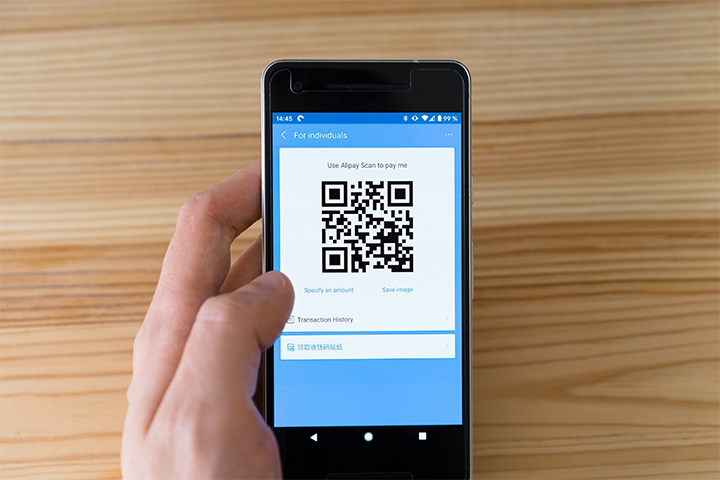
Photo courtesy: Pixabay (Representational image)
India’s payments revolution is entering a third phase. Banking brought people in; digital payments changed how they transact. Now software is replacing the hardware of payments
India’s payment system is undergoing a quiet but important transformation. The country is not just moving from cash to digital payments; it is also moving from physical payment infrastructure to software-led payments. Consumers and merchants are increasingly using Unified Payments Interface (UPI) quick response (QR) codes and online card transactions. At the same time, automated teller machines (ATMs), micro ATMs and other traditional payment infrastructure are either stagnating or shrinking.
The numbers show the scale of the change. The number of reported UPI QR codes rose 16.9 per cent year-on-year to 79.26 crore at the end of June, according to Reserve Bank of India data. In contrast, micro ATMs declined 8.4 per cent to less than 13.4 lakh. Off-site ATMs fell 6.8 per cent to 73,426, while the overall network of bank ATMs and cash recyclers remained almost unchanged at about 210,000.
This is more than a change in the way Indians pay. It is a change in the economics of the payments business.
A QR code is relatively cheap and easy to deploy. A merchant does not necessarily need a card-swiping machine or other expensive equipment. A customer with a smartphone and a bank account can make a payment instantly. For banks and payment companies, software can therefore expand much faster than a network of physical machines.
The shift is happening against a broader decline in the use of cash. Experts say India’s transition towards cashless payments remains firmly on track. The total value of payments grew 22 per cent in FY26, taking the ratio of cashless payments to gross domestic product (GDP) to 35 per cent.
UPI is at the centre of this change. While UPI peer-to-peer transactions and bank transfers are growing steadily, UPI payments are accounting for the bulk of incremental growth. Cash-based transactions, meanwhile, are declining. ATM withdrawals fell 11 per cent in volume terms.

The change is also visible in card usage. Indians are increasingly using credit cards to shop online. Credit-card e-commerce transaction volume jumped 30.6 per cent during the year, with online purchases accounting for about 63 per cent of total credit-card spending.
Debit cards tell a contrasting story. Transactions at physical point-of-sale terminals fell 12.3 per cent, while debit-card ATM withdrawals declined 8.6 per cent.
This suggests that Indians are changing not just how they pay, but also where they pay. The physical shop and the ATM are losing some of their importance as online commerce and mobile payments become more common.
The ATM network itself is also being reshaped rather than simply dismantled. Banks appear to be concentrating their physical infrastructure around branches. On-site ATMs and cash recyclers increased 3.9 per cent year-on-year to about 136,000, while off-site ATMs fell 6.8 per cent to 73,426.
Micro ATMs have seen an even sharper decline. Their number fell 3.8 per cent during the June quarter and 8.4 per cent over the year.
For banks, the logic is understandable. Physical machines require installation, maintenance, electricity, security and cash management. A digital payment system does not require a new machine for every additional transaction. Once the network is established, millions of payments can pass through it at relatively low additional cost.
That makes India’s digital payments model particularly significant for small businesses. A neighbourhood shop, street vendor or small service provider can accept UPI payments without investing heavily in traditional card-payment equipment. This lowers the cost of participating in the formal digital economy.
There are, however, reasons not to declare the ATM obsolete. Cash remains important, particularly for sections of the population that have limited access to smartphones, reliable internet connections or digital financial services. India’s large geographical and economic diversity means that the transition will not happen at the same speed everywhere.
For banks, too, physical infrastructure will continue to have a role. The rise in on-site ATMs and cash recyclers shows that consumers still need access to cash, even if they are using it less frequently.
Yet the direction of travel is unmistakable. UPI QR codes are expanding rapidly while several parts of India’s cash infrastructure are shrinking.
India’s payment revolution is therefore entering a new phase. The first stage was about getting people into the banking system. The next was about giving them digital ways to move money. The emerging phase is about replacing the physical machinery around payments with software.
For Indian consumers, this may simply mean scanning a QR code instead of reaching for cash. For banks and payment companies, it represents something much bigger: the future growth of India's payments system may require more code than machines.