Thursday, 17 Sep, 2026

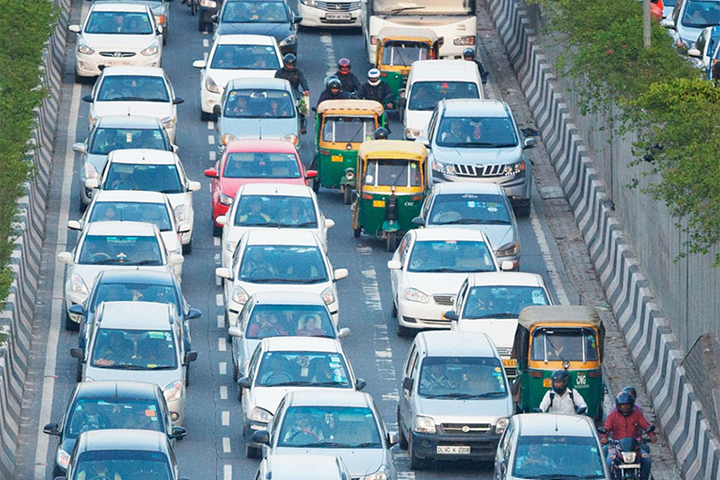
Photo courtesy: Pixabay
The task now is to maintain momentum. With global trade uncertain and state-level gaps widening, policymakers must balance fiscal discipline with growth support
A steady rise in tax collections and a broad-based surge in vehicle sales are offering policymakers an encouraging signal: consumption, the backbone of India’s growth story, appears to be holding firm even after last year’s sweeping tax overhaul.
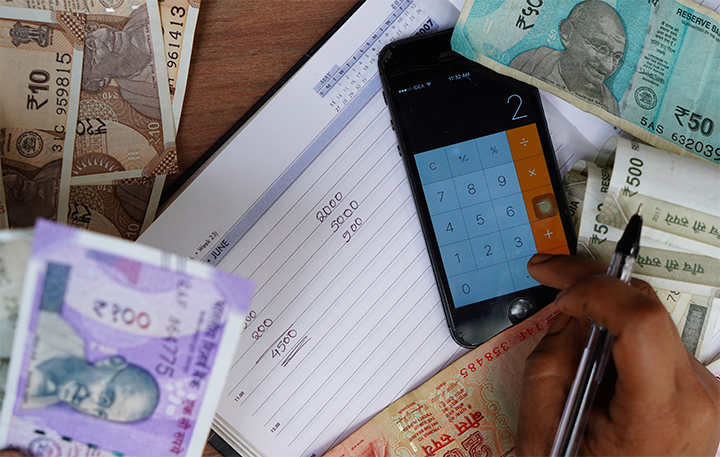
Gross Goods and Services Tax (GST) collections climbed 8.1 per cent year-on-year in February to over Rs 1.83 lakh crore. The increase was driven by robust import-related revenues and a gradual strengthening in domestic sales. Gross domestic GST revenue rose 5.3 per cent to about Rs 1.36 lakh crore, while collections from imports jumped 17.2 per cent to Rs 47,837 crore — an indication that inbound shipments and related duties remain buoyant.
After adjusting for refunds, total net GST collections stood at over Rs 1.61 lakh crore, up 7.9 per cent from a year earlier. Refunds themselves rose 10.2 per cent to Rs 22,595 crore, reflecting both improved compliance and the maturing of the tax system. However, net cess revenue fell sharply to Rs 5,063 crore from Rs 13,481 crore last February, partly mirroring the impact of rate changes on select goods.

The February numbers assume significance because they come months after the most ambitious GST rate rationalisation since the tax was rolled out. Effective September 2025, rates on about 375 items were cut, and the four-slab structure of 5, 12, 18 and 28 per cent was consolidated into two principal slabs of 5 per cent and 18 per cent, with a new 40 per cent peak rate reserved for a narrow band of ultra-luxury and sin goods.
As expected, collections dipped in the immediate aftermath of the rate cuts, sliding to ₹1.70 trillion in November. But revenues recovered to Rs 1.74 lakh crore in December and surged to a record Rs 1.93 lakh crore in January, aided partly by quarterly return filings. February’s moderation appears seasonal rather than structural.
Tax experts argue that the data underscore the resilience of domestic consumption. Deloitte India’s MS Mani noted that higher spending has more than compensated for rate reductions. EY’s Saurabh Agarwal said the performance reflects the strength of India’s consumption engine and the gradual stabilisation of the tax ecosystem. Price Waterhouse & Co LLP’s Pratik Jain described the trend as indicative of predictable and stable growth, while Grant Thornton Bharat’s Manoj Mishra pointed to cumulative collections of Rs 20.27 lakh crore so far this year—up 8.3 per cent—as evidence of structural firmness rather than a cyclical spike.
Yet the picture is uneven at the state level. Major manufacturing and consumption hubs such as Tamil Nadu and Madhya Pradesh reported negative growth in GST collections, while states like West Bengal, Haryana, Uttar Pradesh and Maharashtra posted single-digit increases below the national average. For state governments already navigating tight fiscal positions, these divergences may warrant closer scrutiny.
Parallel data from the automobile sector reinforce the consumption narrative. Domestic passenger vehicle (PV) wholesales rose 11.4 per cent year-on-year in February to about 4.25 lakh units, buoyed by sustained appetite for sport utility vehicles and the after-effects of GST rationalisation that lowered prices in several segments.

At the market leader, Maruti Suzuki India, wholesales were broadly flat at around 1.61 lakh units. The company consciously recalibrated its production mix to prevent long waiting periods, shifting focus between entry-level, compact and utility vehicles across recent months. Retail sales, however, grew about 12 per cent, suggesting healthy underlying demand. A new production line at its Kharkhoda facility, expected to be operational from April, will add up to 1.5 lakh units annually to its installed capacity of 2.6 million units.
Tata Motors Passenger Vehicles posted a sharp 34.2 per cent rise in domestic wholesales to 62,329 units, retaining its second position in the market. Mahindra & Mahindra saw volumes climb 19 per cent to 60,018 units, reflecting continued traction for its utility vehicle portfolio. At Hyundai Motor India, domestic wholesales grew 9.8 per cent to 52,407 units, while total sales including exports touched 66,134 units—its strongest February performance to date.
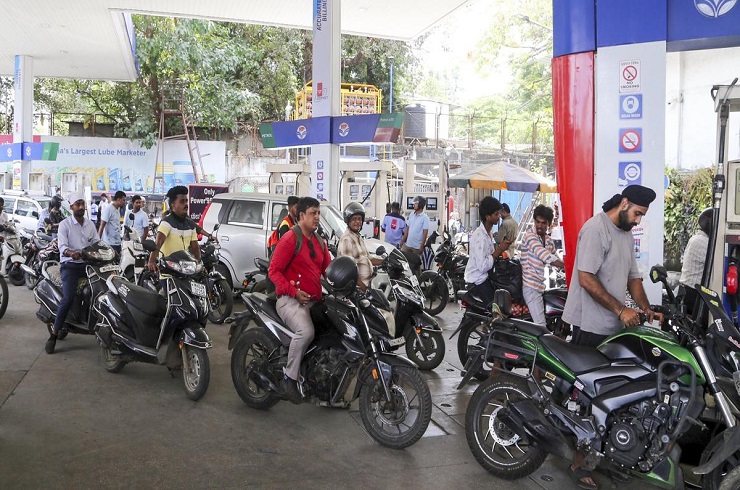
Two-wheeler manufacturers outpaced the PV segment, benefiting from a lower base and improving rural sentiment. Hero MotoCorp reported a 44.7 per cent surge in domestic sales to 3.57 lakh units, driven by scooters and the core 100cc-125cc motorcycle category. TVS Motor Company recorded a 32 per cent increase to 3.65 lakh units, signalling broad-based demand recovery.
Taken together, the tax and auto numbers suggest that India’s consumption cycle has weathered both policy shifts and external uncertainties. The GST overhaul, initially seen as a revenue risk, appears to have broadened compliance and stimulated spending without undermining the exchequer. Meanwhile, automobile sales — often viewed as a barometer of discretionary demand — indicate that households remain willing to commit to big-ticket purchases.
The challenge now is to sustain this momentum. With global trade conditions uncertain and state-level disparities widening, policymakers will need to balance fiscal prudence with growth support. For the moment, though, the data point to an economy that is adjusting to reform—and still spending.