Sunday, 20 Sep, 2026

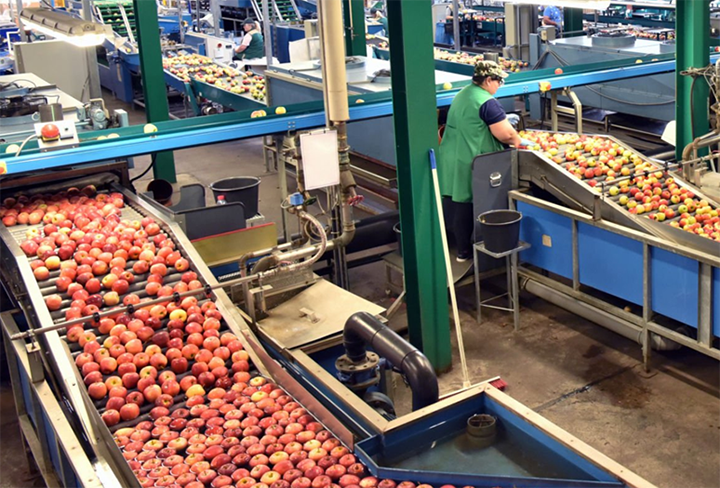
Photo courtesy: Pixabay
If India is to turn its demographic dividend into prosperity, policymakers may need to value food processing as much as semiconductors. The biggest job gains are coming from labour-intensive industries
When the Narendra Modi government launched the Production-Linked Incentive (PLI) scheme, the spotlight fell squarely on glamorous sectors—smartphones, semiconductors, electric batteries and solar modules. These industries symbolised India's ambition to become a global manufacturing powerhouse. Yet, six years later, the numbers tell a more nuanced story. The biggest winner in terms of employment is not high technology but the decidedly unglamorous food processing industry.
That should surprise only those who confuse investment with development.
Government data tabled in Parliament show that the PLI schemes across 14 sectors attracted cumulative investment of Rs 2.4 lakh crore by the end of FY26 and generated 1.45 million jobs. These include nearly 8.5 lakh direct jobs and over 5.5 lakh indirect jobs, the latter concentrated in large-scale electronics manufacturing (LSEM), information technology hardware and solar photovoltaic (PV) modules. Exports under the scheme have also been impressive, surging 280 per cent from ₹4 trillion in FY24 to Rs 15.2 lakh crore in FY26.
Those are respectable achievements. Yet beneath the headline numbers lies a more important lesson about India's development strategy.
Food processing generated the highest employment—3,29,200 direct jobs—with investments of only about Rs 9,200 crore. No other sector comes close. White goods, with investment of Rs 6,400 crore, created another 52,700 jobs.
Contrast this with electronics, the poster child of India's manufacturing ambitions. Large-scale electronics manufacturing, driven mainly by smartphones, attracted Rs 20,580 crore of investment but generated only 1.7 lakh jobs—roughly half as many as food processing despite investing more than twice as much.

The contrast becomes sharper elsewhere. Pharmaceuticals received Rs 45,158 crore of investment and created just over 1.1 lakh jobs. High-efficiency solar photovoltaic module manufacturing absorbed the highest investment of all—Rs 64,873 crore—but generated only 14,800 jobs. Specialty steel invested Rs 23,800 crore and produced almost the same number of jobs. At the other extreme, the advanced chemistry cell (ACC) battery segment created a mere 1,245 jobs, the lowest among all PLI sectors, while drones and drone components attracted the least investment at just Rs 595 crore.
These figures expose an uncomfortable truth. India has become obsessed with measuring manufacturing success by investment announcements. But investment is only an input. Employment and productivity are the outcomes that ultimately matter.
Capital-intensive industries naturally generate fewer jobs because machines replace labour. A modern solar module factory or pharmaceutical plant depends on automation, robotics and highly skilled engineers. Such industries contribute to exports, technology transfer and industrial capability, but they cannot solve India's employment challenge.
India adds millions of young people to the labour force every year. For them, labour-intensive industries remain indispensable. Food processing illustrates why. It requires relatively modest capital, draws workers from rural and semi-urban areas, creates demand for agricultural produce and builds value chains extending from farms to factories to retail shelves. Every rupee invested generates disproportionately larger employment than in capital-heavy manufacturing.
This does not mean India should abandon electronics or solar manufacturing. That would be a serious mistake. Smartphone production has transformed India's export profile, making electronics one of the country's fastest-growing export sectors. Solar manufacturing is essential for energy security, while pharmaceuticals strengthen India's position as the world's leading supplier of affordable generic medicines.
The lesson is not that one sector is superior to another. Rather, different sectors serve different economic objectives.
Electronics maximise exports and technological sophistication. Solar manufacturing reduces import dependence. Pharmaceuticals strengthen industrial capability. Food processing delivers jobs. Public policy should recognise these differences instead of expecting every PLI scheme to achieve every objective simultaneously.
The government’s own numbers demonstrate that the PLI programme has broadly succeeded in stimulating manufacturing. Investment of Rs 2.4 lakh crore, exports of Rs 15.2 lakh crore and 1.45 million jobs represent substantial gains. But policymakers should resist judging success solely through the lens of export growth or investment commitments.
India’s greatest economic constraint is not capital. Domestic and foreign investment continue to flow into promising sectors. The country’s real constraint is productive employment. Manufacturing that fails to absorb labour cannot by itself deliver inclusive growth, however impressive its export statistics.
That is why the biggest lesson from the PLI scheme comes not from smartphones or solar panels but from biscuits, dairy products, processed foods and other low-profile industries. They remind us that development is not merely about building technologically advanced factories. It is about creating livelihoods at scale.
The glamour industries may dominate headlines and investor presentations. But if India’s objective is to convert its demographic dividend into sustained prosperity, policymakers may need to devote as much attention to food processing as to semiconductors. The data suggest that the most ordinary factories are producing the most extraordinary economic outcome: jobs.