Friday, 23 Oct, 2026

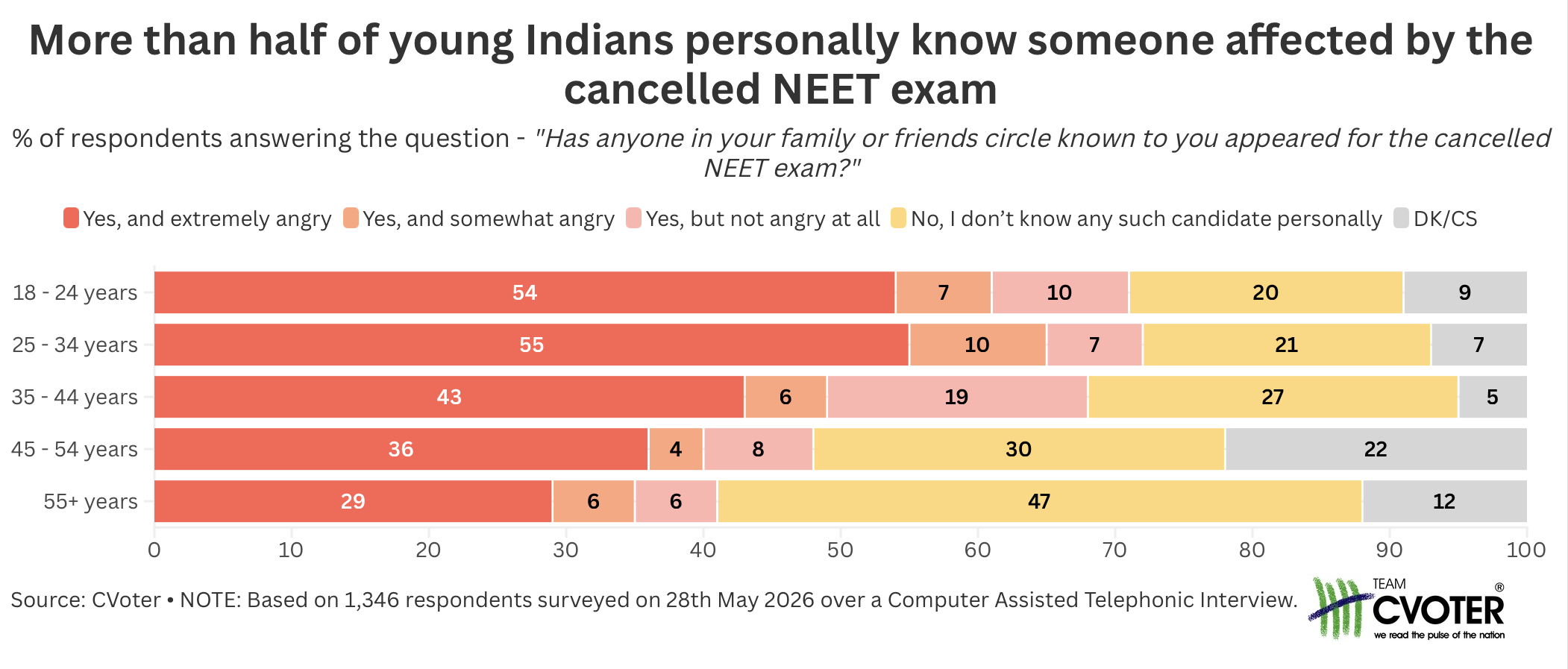
Beyond institutional critique, the discussion between Deshmukh and Sutanu Guru, Executive Director, CVoter, highlighted the human cost. Students and parents are experiencing anger, anxiety, and a sense that years of effort may be wasted.
The India Tracker conversation on competitive examinations paints a worrying picture: on the basis of CVoter’s Snap Poll on the NEET controversy, trust in exams like NEET is eroding, and the consequences extend far beyond scorecards. Yashwant Deshmukh, Director, CVoter, repeatedly emphasized that concerns begin “competitive exams have lost their integrity,” framing the problem as a crisis of confidence rather than a series of isolated incidents. The centralized examination system and institutional shortcomings were identified as core drivers of this mistrust, with participants noting that the issue appears structural and systemic.

Beyond institutional critique, the discussion between Deshmukh and Sutanu Guru, Executive Director, CVoter, highlighted the human cost. Students and parents are experiencing anger, anxiety, and a sense that years of effort may be wasted—“students are getting angry and parents are loosing patience” and worries about “what is the point of so much hardwork” underscore the emotional toll on families. This mood is not merely anecdotal; the Deshmukh and Guru urged listeners to see survey results as signals of broader public sentiment demanding accountability and reform.
Both called for transparency and institutional responsibility as necessary steps to rebuild confidence. Rather than celebrating success stories alone, the conversation argued, stakeholders must address systemic gaps exposed by the poll. CVoter’s snap-poll approach was presented as a means to capture the nation’s mood, offering policymakers and data enthusiasts a clearer view of public expectations.

In short, the discussion makes a clear case: declining trust in competitive exams is a serious social concern with tangible consequences for students, families, and institutions. The remedy, as drawn from the conversation, lies in transparent processes, accountability, and evidence-driven reforms to restore credibility and public faith in the examination system.