Friday, 23 Oct, 2026

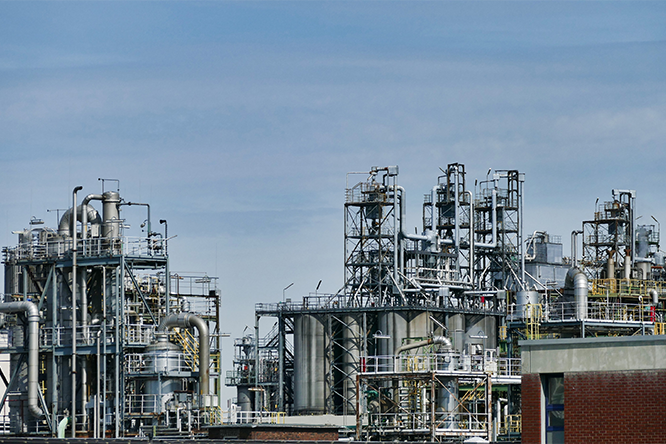
Photo courtesy: Pixabay
Crude oil accounts for around one-fifth of India’s merchandise imports. Higher oil prices quickly widen the trade deficit, pressure the current account, weaken the rupee and add to inflation
India’s crude oil import bill has delivered an uncomfortable reminder that in energy markets, prices often matter far more than volumes. Official data show that the country imported 18.9 million tonne (MT) of crude oil in June, 7.1 per cent less than the 20.3 MT imported a year earlier. Yet the import bill jumped 48 per cent year-on-year to $14.7 billion. That apparent contradiction tells an important story about India's growing vulnerability to geopolitical shocks.
The explanation lies in crude prices. The Indian basket averaged $85.47 a barrel in June, sharply higher than $69.77 a barrel a year earlier. A rise of more than 22 per cent in prices, combined with changes in sourcing and freight costs, overwhelmed the decline in import volumes. In commodities, price movements often dominate quantity effects, and oil is no exception.
The immediate trigger is the disruption of shipping through the Strait of Hormuz following the West Asia crisis. The Strait is one of the world’s most important energy chokepoints. Any interruption there tightens global supplies, raises insurance and freight costs, and pushes crude prices higher. India may be thousands of kilometres away, but its economy remains deeply exposed because it imports around 90 per cent of its crude oil requirements, half of its liquefied natural gas (LNG), and 60 per cent of its liquefied petroleum gas (LPG).
This dependence makes energy security not merely an economic issue but a strategic one. Crude oil remains India’s single largest import item, accounting for around one-fifth of the country’s merchandise import bill. Every sustained increase in oil prices widens the trade deficit, puts pressure on the current account, weakens the rupee, and eventually feeds into domestic inflation. Policymakers cannot escape this arithmetic.

India’s response has been pragmatic rather than ideological. Faced with constrained supplies from West Asia, refiners have diversified aggressively. Russia supplied around half of India's crude imports in June, maintaining its position as the country's largest supplier. The United Arab Emirates and Venezuela also emerged among the leading sources, while refiners increased purchases from Brazil and Angola.
This represents a remarkable transformation. Until the Ukraine war, Russia accounted for only a tiny share of India's crude imports. Today it has become indispensable. The shift demonstrates India's willingness to buy from whichever supplier offers the best combination of availability and price. That commercial flexibility has served the country well over the past three years and is again cushioning the impact of supply disruptions.
However, diversification is not the same as insulation. Buying from Russia, Venezuela or Angola cannot shield India from a global price shock. Oil is priced in an integrated international market. If Brent rises because supplies tighten, all buyers ultimately pay more, regardless of where the crude originates.
The government’s policy response has therefore focused on ensuring domestic fuel availability. It has continued to levy excise duty on exports of petrol, diesel and aviation turbine fuel since the beginning of the West Asia crisis, discouraging exports and giving priority to domestic consumption when supplies are under strain. That reflects a familiar dilemma: refiners naturally seek export markets offering better margins, while governments prioritise domestic energy security during periods of uncertainty.
The broader numbers underline the scale of the challenge. India's net oil and gas bill—which measures imports of crude, LNG and LPG after subtracting earnings from exports of refined petroleum products—rose 36.4 per cent year-on-year to $13.1 billion in June. For the first quarter of FY27, the crude oil import bill surged 61 per cent to $49.8 billion, while the net oil and gas bill climbed 45 per cent to $44.9 billion.
Such increases have consequences extending well beyond the energy sector. A larger oil import bill raises demand for dollars, complicates exchange-rate management and narrows the government's fiscal room if it is forced to absorb part of the higher costs through lower fuel taxes or subsidies. Even if retail fuel prices are allowed to adjust, higher transport and logistics costs eventually ripple through the economy.
The larger lesson is clear. India has made impressive progress in renewable energy, but the transition away from imported fossil fuels will take decades. Until then, the country will remain vulnerable to geopolitical events far beyond its shores. Diversified sourcing can reduce supply risk, strategic reserves can provide temporary relief, and prudent macroeconomic management can soften the blow. But as long as India imports nine-tenths of its crude oil, every crisis in West Asia will continue to arrive, sooner or later, on the nation's balance sheet.