Sunday, 20 Sep, 2026

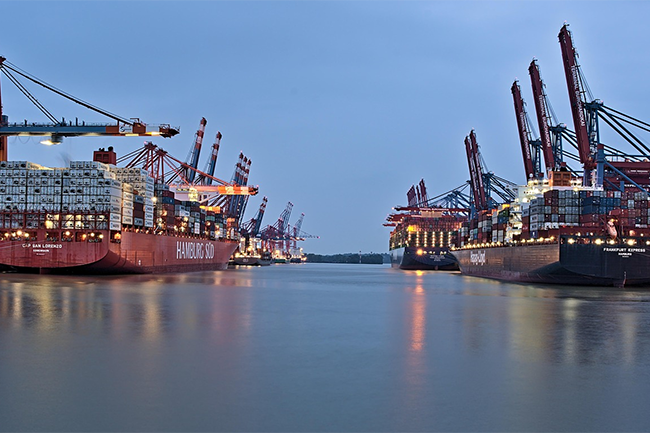
Photo courtesy: Pixabay
The Budget sends mixed signals: customs collections are set to rise 5% to Rs 2.7 lakh crore in 2026–27, while revenue foregone from exemptions will increase 2.9%
India’s free-trade strategy is beginning to show up clearly in its tax numbers. Customs duty foregone because of preferential tariff cuts under existing trade agreements is expected to cross Rs 1 lakh crore in 2026-27, according to the Union Budget. That figure marks a steady rise from Rs 98,569 crore in 2025-26, already higher than the budget estimate of Rs 94,172 crore for that year.
The largest single revenue impact comes from India’s agreement with the Association of Southeast Asian Nations (Asean), where customs revenue foregone is projected at Rs 40,833 crore in 2026-27. The imbalance in trade flows under this pact has been a long-standing concern in New Delhi. Imports from Asean have grown much faster than Indian exports, prompting calls for a review of the agreement on goods.
In August 2023, both sides agreed to complete that review by 2025. The deadline has since been missed, and Indian officials have expressed dissatisfaction with the slow progress. The numbers underscore why the issue has become sensitive: as tariff preferences widen and import volumes expand, the notional revenue cost rises in parallel.
Other bilateral agreements also carry a visible fiscal imprint. The pact with Japan is estimated to account for Rs 11,365 crore in revenue foregone in 2026-27; South Korea for Rs 10,872 crore; and Australia for Rs 5,107 crore. The trade agreement with the United Arab Emirates, which came into force in May 2022, is expected to contribute Rs 9,267 crore to customs revenue foregone in the same year.
These figures do not necessarily represent direct losses in the strict sense. They measure the gap between duties that would have been collected under most-favoured-nation (MFN) tariffs and those collected under preferential rates. India’s applied MFN tariffs remain higher than those of many large economies, particularly in agriculture, automobiles and certain consumer goods. As a result, free-trade negotiations typically require substantial tariff cuts to offer meaningful access. The larger the gap between MFN and preferential rates, the larger the headline revenue impact.
This dynamic has long divided policymakers. Officials in the revenue department have argued that deep tariff reductions constrain customs collections, which have accounted for roughly 6–7 per cent of the Centre’s gross tax revenue in recent years. At a time when fiscal space is limited, a steady erosion of this stream raises concerns.
Trade policymakers counter that customs duties are not primarily a revenue instrument but a lever for shaping trade patterns. Lower input tariffs, they argue, can reduce production costs, help integrate India into global value chains and ultimately expand the broader tax base through stronger economic activity. In that view, the static calculation of revenue foregone misses the dynamic gains.

The Budget offers a mixed picture. Customs duty collections are projected to rise 5 per cent in 2026-27 to Rs 2.7 lakh crore, after a 10 per cent increase in 2025-26. At the same time, the projected increase in customs revenue foregone for 2026-27 is 2.9 per cent. Some trade specialists suggest this may be conservative. India has concluded nine trade agreements covering 38 countries over the past five years, and several are expected to come into force during the current financial year.
Recent deals include agreements with the European Free Trade Association, the UK, Oman, New Zealand and the European Union, as well as an interim trade arrangement with the US. Commerce and industry minister Piyush Goyal has said that India now enjoys preferential market access to almost 70 per cent of global trade through such agreements.
Yet the eventual fiscal impact will depend on more than the text of the agreements. Utilisation rates by importers, shifts in sourcing patterns and trade diversion effects all shape the outcome. If firms actively use preferential routes and reconfigure supply chains to benefit from lower tariffs, the revenue foregone could exceed current projections. Conversely, if compliance costs or rules-of-origin requirements limit take-up, the gap may be smaller.
The broader question is whether the trade strategy delivers enough export growth and investment to justify the fiscal trade-off. In cases such as Asean, where imports have outpaced exports, the political economy becomes harder to manage. Reviews and recalibrations may become more frequent as India seeks to balance openness with domestic industry concerns.
For now, the numbers signal that India is moving more decisively into a network of trade agreements, accepting the upfront cost of tariff reductions. The fiscal arithmetic is becoming more visible, but the ultimate test will lie in whether these agreements translate into stronger competitiveness, deeper integration and a wider tax base over time.