Tuesday, 22 Sep, 2026

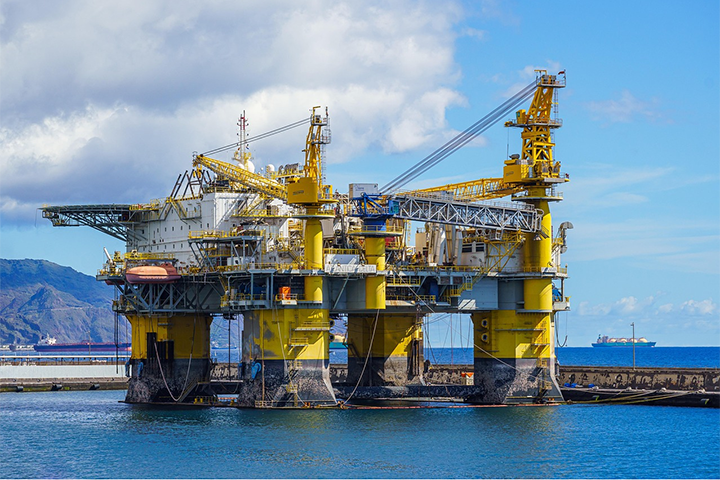
Photo courtesy: Pixabay
Iran was India’s second-largest crude supplier in FY10, but US sanctions and supply uncertainty saw Iraq overtake it in FY17, with imports stopping in June 2019
A decade ago, Iran was among India’s most reliable sources of crude oil. Then geopolitics intervened. US sanctions gradually pushed Iranian oil out of India’s import basket, forcing refiners to turn elsewhere. Today, as global energy politics shift once again, the possibility of Iranian crude returning to Indian refineries is resurfacing—and it could not come at a more sensitive moment for India’s energy security.
The speed with which Indian refiners respond to political openings was evident in early 2016. After the Obama administration lifted nuclear-related sanctions on Iran in January that year, Indian crude imports from Iran surged. In 2016-17, refiners doubled their purchases from the previous year to about 545,000 barrels per day. That sharp rise highlighted not just pent-up demand but also how well Iranian oil suited India’s refining system.
Iran had been India’s second-largest crude supplier after Saudi Arabia in FY10. But prolonged uncertainty over sanctions and supply reliability saw Iraq overtake Iran by FY17. When the US withdrew sanction waivers in 2019, imports from Iran collapsed entirely. Since mid-2019, Indian refiners have not bought Iranian crude at all.
What has changed now is the broader supply landscape. India’s oil demand is rising by an estimated 3–4 per cent annually, while import dependence has climbed to roughly 90 per cent. At the same time, India’s access to discounted Russian crude — a key buffer in recent years—has narrowed. Reliance Industries, the country’s largest buyer of Russian oil, has stopped purchases, and overall Russian flows to India fell sharply between November and January, according to tanker-tracking data.

This has reopened the search for alternative barrels. If international sanctions on Iran were eased—whether through a diplomatic agreement or a coordinated move by the US and the UN—Indian refiners would likely be among the first to return. Analysts argue that Iran represents a natural substitute at a time when options are shrinking.
One reason is technical compatibility. Many Indian refineries were designed to process sour crude from West Asia. Iranian light and heavy blends fall squarely into this category and have historically delivered strong fuel yields. Refinery executives who have processed Iranian grades in the past say operators understand their behaviour well, reducing operational risk and optimisation costs.
Economics further strengthen the case. Iranian crude is priced against the Oman-Dubai benchmark, the same reference used for much of the Middle East. This familiarity allows refiners to hedge and plan more effectively. Comparable grades sourced from the US, Brazil or West Africa often involve higher freight costs and longer delivery times, adding to working-capital requirements.
Logistics matter too. For refiners on India’s west coast, Iran is a short-haul supplier. Shorter voyages translate into lower shipping costs, faster replenishment cycles and less exposure to freight rate volatility. In an environment where refining margins are under pressure, these factors can make a meaningful difference.
History shows the scale Iran can achieve quickly. In FY16, India imported around 273,000 barrels per day from Iran. A year later, that figure had doubled. At its peak, oil accounted for nearly 90 per cent of India’s imports from Iran in value terms, underscoring how central crude trade was to bilateral ties.

Still, significant hurdles remain. Unlike Russian oil, Iranian crude is explicitly restricted under US and UN sanctions. Indian officials have consistently maintained that New Delhi complies with UN-mandated sanctions, even when commercial incentives are strong. Any resumption of imports would therefore require a formal easing of restrictions, not just market interest.
There is also geopolitical uncertainty within Iran itself, where domestic unrest and diplomatic tensions continue to cloud long-term supply prospects. Refiners may be eager, but policy clarity will be decisive.
Even so, the strategic logic is hard to ignore. India needs diversity in its crude sourcing, especially as global energy flows become more fragmented. Iranian oil offers familiarity, efficiency and scale—qualities that are increasingly scarce in today’s market.
If sanctions were lifted, Indian refiners would not be starting from scratch. They would be reviving a well-worn supply route, one that once played a crucial role in powering the country’s growth. In an era where energy security is shaped as much by diplomacy as by demand, Iran’s return would be less a comeback than a recalibration of India’s oil strategy.