Monday, 21 Sep, 2026

Photo courtesy: Pixabay
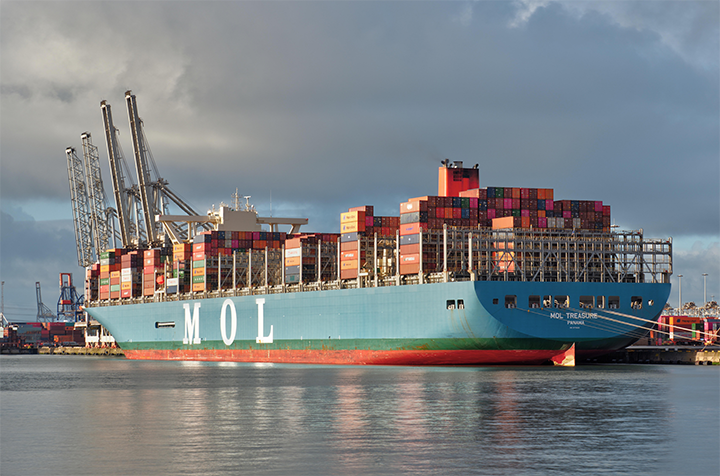
India–EU trade reached $136.5 billion in 2024–25. Under the agreement, the EU will scrap tariffs on 99.5% of Indian exports, while India will liberalise over 92% of tariff lines, deepening access on both sides
After nearly two decades of intermittent negotiations, India and the European Union have concluded one of the most consequential free-trade agreements signed globally in recent years. The pact binds together economies representing about a quarter of global gross domestic product and close to one-third of world trade, creating a combined market of roughly two billion people at a time when the global trading system is becoming increasingly fractured.
In commercial terms, the scale is significant. India–EU bilateral trade stood at $136.54 billion in 2024–25, with India exporting goods worth $75.85 billion and importing $60.68 billion. The agreement aims to deepen this relationship substantially. The EU will eliminate tariffs on 99.5 per cent of Indian exports by value, covering nearly 97 per cent of its tariff lines, while India will liberalise duties on over 92 per cent of tariff lines, accounting for about 97 per cent of imports from the 27-nation bloc.
Tariff dismantling will be gradual but front-loaded. India will reduce duties to zero on roughly 30 per cent of bilateral trade value as soon as the agreement enters into force, with coverage expanding to more than 93 per cent over a decade. The EU will remove tariffs on around 90 per cent of Indian exports from day one, with the remainder phased out over seven years.

The immediate gains for India are expected in labour-intensive sectors such as textiles, apparel, footwear, fisheries, leather and pharmaceuticals, where EU tariffs often exceed 10 per cent despite the bloc’s relatively low average import duty of about 4 per cent. European exporters, in turn, gain preferential access to one of the world’s fastest-growing large economies, particularly in agri-food, machinery, medical devices, automobiles and high-end consumer goods.
The agreement’s scope extends well beyond goods. In services, the EU has opened 144 sub-sectors, while India has liberalised 102, reflecting an attempt to balance differing priorities. European firms are set to benefit from improved access to India’s financial and maritime services markets, while Indian professionals gain a more predictable framework for business mobility. Commitments on post-study work opportunities for Indian students mark a politically sensitive but economically meaningful concession by the EU.
Strategically, the timing is telling. India is seeking to secure large, stable export markets as its manufacturers grapple with tariff headwinds in the United States, while Europe is diversifying its trade partnerships amid growing uncertainty in transatlantic relations. Alongside the FTA, the two sides unveiled a five-year strategic agenda, a defence and security partnership, and cooperation frameworks on mobility and green hydrogen, underscoring that the reset is not confined to trade alone.
Not all differences have been resolved. The EU has refused to grant India a country-specific exemption from the Carbon Border Adjustment Mechanism (CBAM), which came into force on January 1. However, New Delhi has secured an assurance that any flexibility extended to other countries will also apply to India. A technical group will assist Indian exporters in carbon accounting and compliance, raising the possibility that India’s future carbon pricing regime could be recognised, reducing the risk of double taxation.
Sensitive sectors have been carefully insulated. In automobiles, India has agreed to reduce import duties from over 100 per cent to as low as 10 per cent, but only within tightly defined annual quotas capped at 250,000 vehicles. Lower-priced mass-market cars will face stricter limits, while higher quotas apply to premium vehicles, where domestic manufacturing capacity remains limited. A similar, phased approach applies to wines and spirits, with India’s 150 per cent tariff on wine set to decline gradually to between 20 and 30 per cent for premium and mid-range categories.

Despite its breadth, the agreement is no substitute for reform at home. India’s simple average most-favoured-nation tariff, at around 16 per cent, remains among the highest in major economies. Having offered deep concessions to Europe, New Delhi now faces a stronger case for lowering tariffs more broadly. The forthcoming Union Budget offers an opportunity to signal a decisive shift towards a more competitive trade regime.
Equally critical is the need to reassess quality-control orders and regulatory barriers that often function as de facto trade restrictions. Without addressing these constraints, India’s integration into global value chains will remain limited. The agreement also revives the debate over whether India should reconsider participation in mega-regional trade arrangements such as the Comprehensive and Progressive Agreement for Trans-Pacific Partnership.
Ultimately, the success of the India–EU FTA will depend less on negotiated tariff schedules than on domestic competitiveness. Past trade agreements have often failed to deliver expected gains for Indian firms because productivity gaps and regulatory frictions persisted. Unless internal reforms accelerate, preferential market access alone will not be enough.
The pact is a reaffirmation of commitment to a rules-based trading order at a time of growing protectionism. Whether it translates into sustained export-led growth will now depend on how decisively India acts within its own borders.