Thursday, 17 Sep, 2026

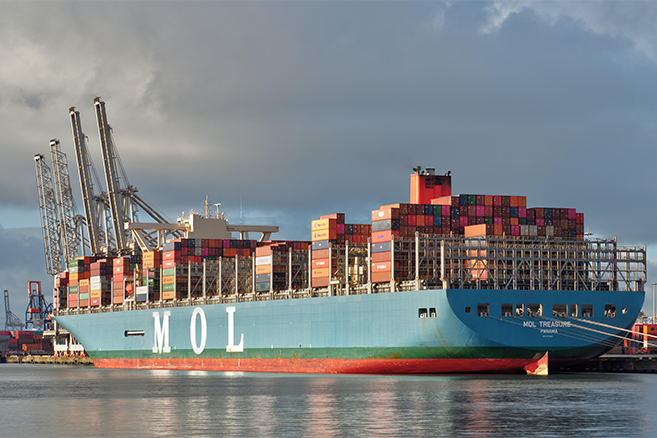
Photo courtesy: Pixabay
Support for exporters will centre, in the near term, on easing logistics, widening market access and improving credit flow. But these remain stopgap measures rather than structural fixes
India’s widening trade deficit is once again flashing warning signals—but this time, the story is less about oil shocks and more about structural dependence, volatile commodity demand, and geopolitical disruption converging at once. In February, the deficit nearly doubled to $27 billion from $14.42 billion a year earlier. Imports surged 24 per cent, even as exports slipped 0.81 per cent to $36.61 billion. The headline number looks alarming, though there is a partial breather: the gap narrowed from January’s $34.68 billion. Scratch beneath the surface, however, and the pressures appear deeper and more persistent.
Start with imports. The spike is being driven not by a single factor but by a combination of consumption, industrial demand, and global price effects. Gold imports jumped a staggering 218.5 per cent to $7.4 billion, while silver surged 285 per cent to $1.6 billion—the latter reflecting rising industrial use, particularly in electronics and renewable-linked sectors. Add to that petroleum imports of $12.97 billion, electronics at $10.09 billion, and machinery worth $5.32 billion, and the contours of India’s import bill become clear: it is both consumption-heavy and production-dependent.
Exports, meanwhile, are holding up but losing momentum. A marginal month-on-month rise of 0.13 per cent is hardly reassuring, especially when 15 of the 30 key sectors saw a contraction. The bright spots—engineering goods (up 12.9 per cent), electronic goods (10.4 per cent), and pharmaceuticals (3.4 per cent) — indicate pockets of resilience. But they are not broad-based enough to offset weakness elsewhere.

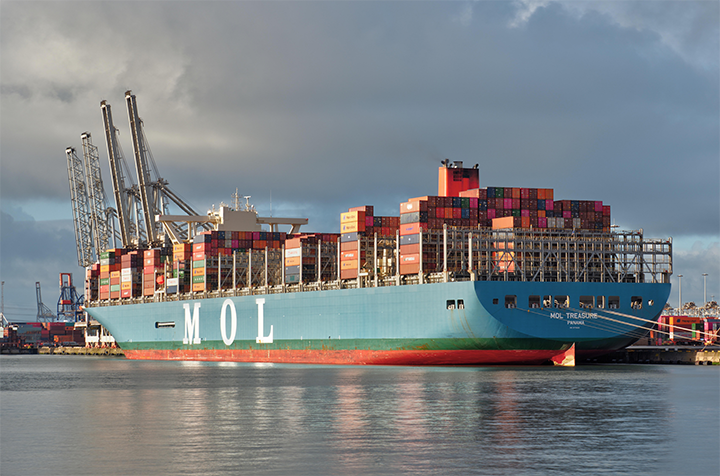
The bigger concern lies in what the February data foreshadows. Commerce secretary Rajesh Agrawal has already flagged March as a “challenging” month, citing logistics bottlenecks linked to the Gulf conflict. West Asia is a critical export destination for India, and disruptions there ripple quickly through shipping routes, insurance costs, and delivery timelines. If exports to that region trend downward, the deficit could widen again despite any moderation in imports.
Yet, the most consequential number in the data is not February’s deficit—it is India’s trade gap with China crossing $100 billion for the first time. At $102 billion during April–February, up from $91.1 billion a year earlier, it underlines a structural imbalance that policy tweaks alone have failed to correct.
What makes this gap particularly striking is that India’s exports to China have actually grown robustly—up nearly 38 per cent to $17.5 billion. But imports, rising over 15 per cent on a much larger base to nearly $120 billion, continue to outpace them decisively. The asymmetry is stark: India is exporting more, but it is importing far more of what it cannot yet produce competitively.
A closer look reveals why. India’s export gains to China are concentrated in a few categories—telecom instruments (with shipments soaring nearly six-fold to $2.3 billion), oil products (up 133 per cent to $2.1 billion), and copper items (up 675 per cent to $500 million). These are either cyclical or commodity-linked. In contrast, imports from China are entrenched in core industrial inputs: electronic components, electrical machinery, chemicals, and pharmaceutical ingredients.
This is not just a trade imbalance; it is a supply chain reality. Despite years of policy emphasis on self-reliance and production-linked incentives, Indian manufacturing remains deeply integrated with—and dependent on—Chinese intermediates. From smartphones to solar modules to pharmaceuticals, the backbone of production often runs through Chinese supply lines.
That creates a paradox. Efforts to curb imports through quality controls and standards can only go so far without disrupting domestic industry. In many sectors, restricting Chinese inputs would slow production rather than boost local capacity, at least in the short term.
So what does this mean for India?
First, the trade deficit is no longer a cyclical concern; it is becoming structural. High gold imports point to financial behaviour—a hedge against uncertainty—while rising electronics and machinery imports reflect industrial demand that domestic capacity has yet to meet.

Second, export growth is increasingly vulnerable to external shocks. The Gulf-related logistics disruption is a reminder that geopolitical risks can quickly choke trade flows, especially when export markets are regionally concentrated.
Third, the China imbalance is a long-term strategic challenge. Crossing the $100 billion mark is not just symbolic; it signals that India’s integration into global supply chains remains asymmetric.
What next?
In the immediate term, the government’s promised support measures for exporters will need to focus on easing logistics, expanding market access, and providing credit support. But these are palliative steps.
The deeper response must be structural. India needs to accelerate domestic manufacturing in critical intermediate goods—electronics components, machinery, and chemicals—where dependence is highest. This will require not just incentives, but ecosystem building: scale, infrastructure, and technology partnerships.
At the same time, export strategy must shift from incremental gains to diversification. Over-reliance on a handful of markets, such as West Asia, leaves India exposed to geopolitical disruptions.
Finally, policymakers must accept a hard truth: reducing the trade deficit with China will be a slow, uneven process. It cannot be achieved through restrictions alone. It will depend on whether India can build competitive capacity at home while integrating more effectively into alternative global supply chains.
For now, the numbers tell a clear story. India is importing to grow, but not yet exporting enough to balance that growth. Until that equation changes, the trade deficit will remain less a monthly statistic—and more a measure of unfinished economic transition.