Friday, 23 Oct, 2026

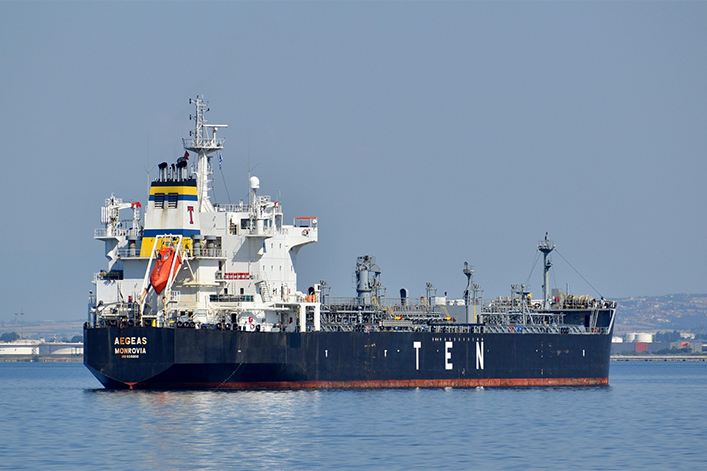
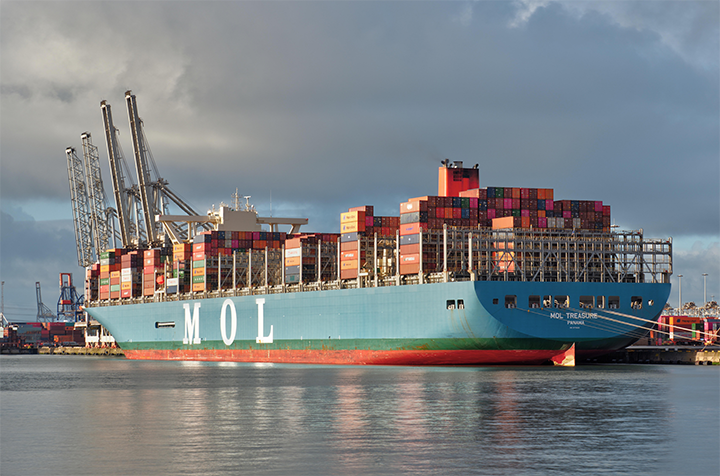
Photo courtesy: Pixabay
The Strait of Hormuz remains a key risk. Even with fewer direct Gulf imports, global oil prices are shaped by the region—so any disruption there drives prices higher worldwide
The closure of the Strait of Hormuz after the latest escalation of tensions in West Asia has sent a ripple through global energy markets and revived an old concern: how vulnerable the world still is to disruptions in a narrow stretch of water. The strait, which connects the Persian Gulf to the Arabian Sea, is the single most important transit route for crude oil. When traffic through it stops, even briefly, the consequences travel far beyond the Gulf.
For decades, the global oil system has been built around the assumption that shipments from Gulf producers will move freely through Hormuz. The numbers explain why the strait matters so much. Between 2020 and the first quarter of 2025, an average of about 88.7 million barrels of crude oil passed through this corridor every day. A disruption at this scale does not remain a regional issue; it quickly becomes a global economic one.
Asia sits at the centre of this dependence. Much of the oil moving through Hormuz is headed east. China accounts for the largest share of these imports, followed by India and South Korea. Over the period from 2020 to early 2025, China absorbed roughly 31 per cent of crude transported through the strait, India about 15 per cent and South Korea around 11 per cent.
Another way to understand the exposure is to look at how much of a country’s total oil imports rely on the route. By that measure, Japan stands out as the most dependent major economy. In 2023, nearly 73 per cent of Japan’s crude imports passed through the strait. China’s share was about 47 per cent and India’s around 42 per cent.

For India, the story is one of partial diversification rather than complete escape. The country has made a conscious effort in recent years to broaden the range of its suppliers. As a result, the share of India’s crude imports routed through Hormuz has declined from about 55 per cent in 2020 to roughly 41 per cent in the first quarter of 2025.
This reduction reflects changes in India’s sourcing strategy after a series of geopolitical shocks reshaped energy trade flows. The war in Ukraine, sanctions on Russian oil and shifting trade patterns encouraged India to diversify its purchases. Russian crude, in particular, has become a major component of India’s import basket, altering the geography of supply.
Yet diversification has not changed the basic arithmetic. India remains one of the largest buyers of crude oil that travels through the strait. In absolute terms, it is second only to China. While China’s share of the oil shipped through Hormuz has risen from around 28 per cent in 2020 to about 33 per cent in early 2025, India’s share has edged down from roughly 15 per cent to about 13 per cent.
Even a smaller share, however, still represents a large volume of oil. That is why any disruption in Hormuz has an immediate impact on global prices. Energy markets tend to react quickly to geopolitical signals from the Gulf. The experience of June 2025 offers an illustration. When Iran announced that it could close the strait amid rising tensions, crude prices jumped sharply across global markets. The mere possibility of disruption was enough to trigger volatility.
For India, such price movements have macroeconomic consequences. The country imports more than four-fifths of its crude oil needs. When global prices rise, the import bill increases and pressure builds on the current account deficit. Fuel costs filter through the economy, pushing up transport and logistics costs and eventually affecting inflation.
In that sense, the Strait of Hormuz remains a critical pressure point in India’s economic outlook. Even if the country buys less oil directly from Gulf producers than before, global oil prices are still shaped by events in the region. A supply disruption anywhere in the Gulf tightens the global market and raises prices for everyone.

This is why energy security has increasingly become part of India’s broader economic strategy. Diversifying suppliers, building strategic petroleum reserves and expanding renewable energy capacity are all part of the response. Each of these measures reduces vulnerability at the margin.
But the reality is that geography and geology still matter. The Gulf region holds some of the world’s largest and cheapest oil reserves. As long as that remains true, the shipping lanes through Hormuz will continue to carry a large share of the world’s oil.
The latest closure is therefore a reminder of an uncomfortable fact: despite decades of talk about diversification, the global economy still depends heavily on a narrow maritime corridor. For countries like India, managing that risk will remain a central challenge in the years ahead.