Sunday, 20 Sep, 2026

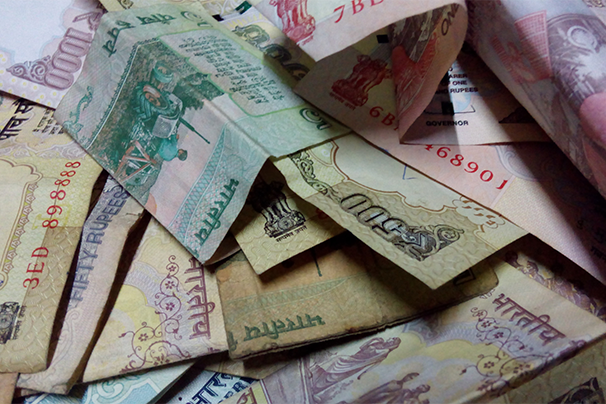
Photo courtesy: Pixabay
Rising oil prices widen the current account deficit, lift dollar demand and stoke imported inflation. The rupee’s 2.92% fall in March shows how quickly these pressures can translate into currency weakness
The sharp slide of the rupee to a record low of 93.72 against the dollar marks more than a routine bout of currency volatility. It signals a deeper stress building across India’s external account, financial flows and inflation outlook—with consequences that could ripple through markets and the broader economy in the months ahead.
A one-day fall of 1.15 per cent—the steepest since the shock of the Russia-Ukraine war in February 2022—is telling. It reflects not just market nervousness, but a confluence of adverse forces hitting the rupee simultaneously: a surge in crude oil prices, persistent foreign capital outflows, and structural pressures within the Reserve Bank of India’s own currency management framework.
The most immediate trigger is energy. The Indian crude basket hovering near $156 a barrel—up 120 per cent since the onset of the West Asia conflict — is a serious macroeconomic shock for a country that imports over 85 per cent of its oil needs. Every sustained rise in oil prices widens the current account deficit, increases dollar demand, and feeds directly into imported inflation. The rupee’s 2.92 per cent decline in March alone reflects how quickly these pressures can translate into currency weakness.

For markets, this creates a difficult feedback loop. A weaker rupee makes imports— especially fuel—even more expensive, stoking inflation risks just as policymakers attempt to anchor price stability. Higher inflation expectations, in turn, can push bond yields upward and complicate the Reserve Bank of India’s monetary stance. Equity markets are not immune either. Rising input costs squeeze corporate margins, particularly in energy-intensive sectors such as aviation, chemicals and logistics.
Compounding the problem is the steady exit of foreign capital. Equity outflows of $8.4 billion so far this month and negative bond flows of $836 million highlight weakening global appetite for Indian assets. This is not merely cyclical. Global investors are turning cautious amid geopolitical uncertainty and a stronger dollar environment. The dollar index at 99.58 underscores that the rupee’s weakness is part of a broader emerging market trend — but India’s vulnerability is amplified by its oil dependence.
The concern for Dalal Street is clear: if foreign portfolio investor (FPI) sentiment remains weak, equity valuations could come under pressure, particularly in sectors reliant on global liquidity. The note from Barclays that prospects of a sustained rebound in equity inflows remain weak should worry policymakers and market participants alike. Capital flows have long been a crucial buffer for India’s external account; their reversal exposes underlying fragilities.
Yet, the most underappreciated risk lies in the central bank’s forward book. The revelation that the Reserve Bank of India holds oversold dollar positions worth about $107 billion—with a deficit of $68.4 billion as of January—introduces a structural constraint. These positions will eventually need to be unwound, forcing the central bank to buy dollars in the future. That implies additional demand for the greenback at a time when supply is already tight.
This is why the RBI’s recent intervention—estimated at $4-5 billion—has only slowed, not reversed, the rupee’s slide. Without such intervention, traders suggest the currency could have tested 95 per dollar already. But intervention comes at a cost. It depletes reserves or adds to forward liabilities, limiting the central bank’s room for manoeuvre in a prolonged crisis.
In effect, the RBI is managing not just a currency, but a timing problem. Aggressive intervention now could leave it exposed later, especially if oil prices remain elevated or geopolitical tensions intensify. The comment that the central bank has “limited ammunition” reflects this delicate balancing act.
For the broader economy, the implications are layered. In the near term, a weaker rupee may offer some support to exporters by improving price competitiveness. But this benefit is likely to be muted in a global environment marked by slowing demand and trade disruptions. Moreover, India’s export basket has a significant import component, which dilutes the gains from currency depreciation.
The bigger risk lies in macro stability. A widening current account deficit, persistent capital outflows, and rising inflation could force policymakers into tighter monetary or fiscal conditions. That, in turn, may weigh on growth just as the economy is navigating an uncertain global landscape.
The outlook, therefore, remains cautious. With the rupee expected to trade in the 93.20–93.80 range and a clear negative bias, the direction of travel is evident. Unless oil prices retreat sharply or capital flows reverse, the pressure on the currency is unlikely to ease.
For India, this episode is a reminder of an enduring vulnerability: its exposure to external shocks, particularly through energy imports and global capital flows. Managing this phase will require not just tactical intervention, but a broader recalibration of external sector resilience — from diversifying energy sources to strengthening domestic financial buffers.
The rupee’s fall is not merely a market event. It is a signal that the fault lines of the global economy—war, energy insecurity, and capital volatility—are once again testing India’s economic defences.