Thursday, 17 Sep, 2026

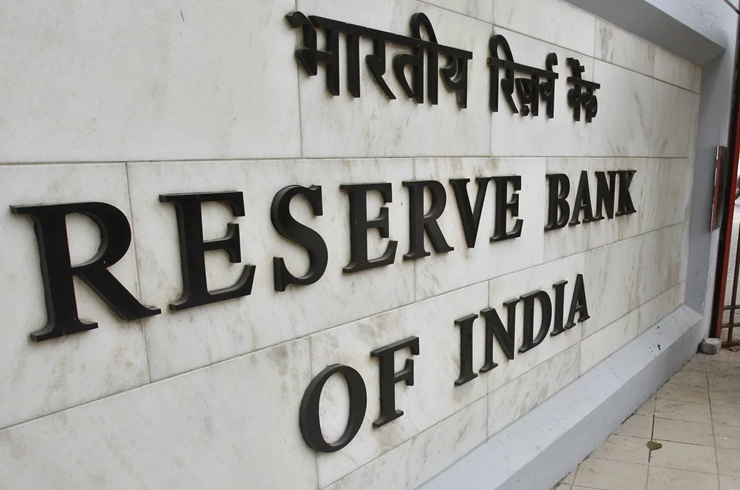
The policy announcements underscore the RBI's cautious approach as it seeks to balance the twin objectives of supporting economic growth and maintaining price stability. Image Source: IANS
The RBI lowered its GDP growth forecast for the current financial year to 6.6 percent from the earlier estimate of 6.9 percent, citing uncertainties in the global economic environment, geopolitical developments, and potential headwinds to domestic demand.
The Reserve Bank of India (RBI) has decided to keep the benchmark repo rate unchanged at 5.25 percent, marking the second consecutive monetary policy review in the current financial year where interest rates have been left untouched. Announcing the outcome of the second bi-monthly Monetary Policy Committee (MPC) meeting, RBI Governor Sanjay Malhotra stated that the six-member committee unanimously voted to maintain the existing policy rate while retaining a neutral policy stance, indicating a balanced approach amid evolving domestic and global economic conditions.
While keeping rates steady, the central bank revised its macroeconomic projections. The RBI lowered its GDP growth forecast for the current financial year to 6.6 percent from the earlier estimate of 6.9 percent, citing uncertainties in the global economic environment, geopolitical developments, and potential headwinds to domestic demand. At the same time, the central bank raised its inflation outlook, increasing the Consumer Price Index (CPI) inflation projection to 5.1 percent from the earlier estimate of 4.6 percent. The upward revision reflects concerns over food prices, energy costs, and broader inflationary pressures that could persist in the coming months.

Source: Reserve Bank of India
In a move aimed at encouraging greater capital inflows, the RBI also announced an increase in the investment limits for Non-Resident Indians (NRIs) and Overseas Citizens of India (OCIs) in equity instruments. The measure is expected to facilitate greater participation by the Indian diaspora in domestic financial markets and support long-term investment flows into the country.
Addressing questions on currency management, Governor Malhotra revealed that the RBI is examining the possibility of introducing polymer-based currency notes. He clarified that the proposal remains at a preliminary stage and is currently under evaluation. Polymer banknotes, which are already used by several countries, are generally considered more durable, resistant to counterfeiting, and cost-effective over their lifecycle compared to conventional paper notes.
Responding to concerns raised by customers regarding shortages of currency notes at certain bank branches and ATMs in different parts of the country, the RBI Governor assured that there is no systemic shortage of cash. He emphasized that the central bank has adequate liquidity and sufficient currency reserves to meet public demand. Any localized shortages, he said, would be addressed promptly through replenishment measures to ensure smooth cash availability across the banking network.
The policy announcements underscore the RBI's cautious approach as it seeks to balance the twin objectives of supporting economic growth and maintaining price stability. With growth projections moderated and inflation expectations revised upwards, the central bank appears focused on closely monitoring evolving economic conditions before making any further adjustments to interest rates.

Source: Ministry of Statistics and Programme Implementation
Recent inflation data indicate that retail inflation remains relatively contained despite emerging price pressures. India’s CPI-based retail inflation rose marginally to 3.48 percent in April 2026 from 3.40 percent in March, remaining below the RBI’s medium-term target of 4 percent. Rural inflation stood at 3.74 percent, while urban inflation was recorded at 3.16 percent. However, food prices continued to show signs of strain. Inflation measured by the Consumer Food Price Index (CFPI) increased to 4.20 percent in April from 3.87 percent in March. Rural food inflation was recorded at 4.26 percent, compared with 4.10 percent in urban areas. The increase was driven by higher prices of several key vegetables, with tomato prices surging by 35.28 percent year-on-year and cauliflower prices rising by 25.58 percent. These trends highlight the persistent vulnerability of food inflation to supply-side disruptions and seasonal fluctuations.
The Reserve Bank of India (RBI) has retained its Gross Domestic Product (GDP) growth forecast for the financial year 2025-26 at 7.6 percent, reflecting confidence in the resilience of the Indian economy despite prevailing global uncertainties. The central bank has also kept the Marginal Standing Facility (MSF) rate and the Bank Rate unchanged at 5.5 percent. Inflationary pressures remain a key area of focus, although core inflation, which excludes volatile food and fuel prices, remained stable at 3.7 percent during March and April. However, the RBI has revised its Consumer Price Index (CPI) inflation projection for the financial year 2026-27 upward to 5.1 percent.
The revision comes amid rising global energy prices, with the Indian basket of crude oil averaging around US$110 per barrel over the last two months. Current indications suggest that average crude oil prices for the year are likely to remain significantly higher than the assumptions made during the previous monetary policy review. Furthermore, the partial pass-through of elevated international crude oil prices to domestic petrol and diesel prices began in May, adding to inflationary pressures. Despite Foreign Institutional Investor (FII) outflows from Indian equity markets, the RBI noted that Foreign Direct Investment (FDI) inflows continue to demonstrate strong long-term investor confidence in India’s growth prospects.
Additionally, India's foreign exchange reserves remain at comfortable levels, providing a strong buffer against external economic shocks and supporting overall macroeconomic stability. Taking all these factors into account, the RBI has increased its inflation forecast by 50 basis points from its earlier estimate, underscoring the growing impact of global commodity prices on the domestic inflation outlook.