Friday, 16 Oct, 2026

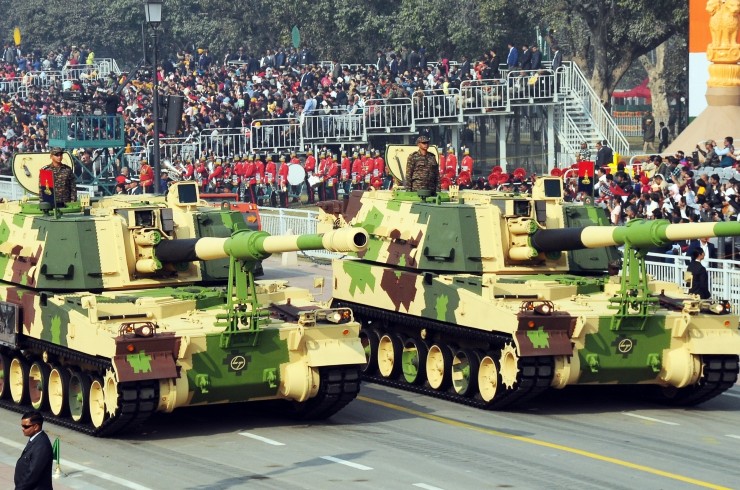
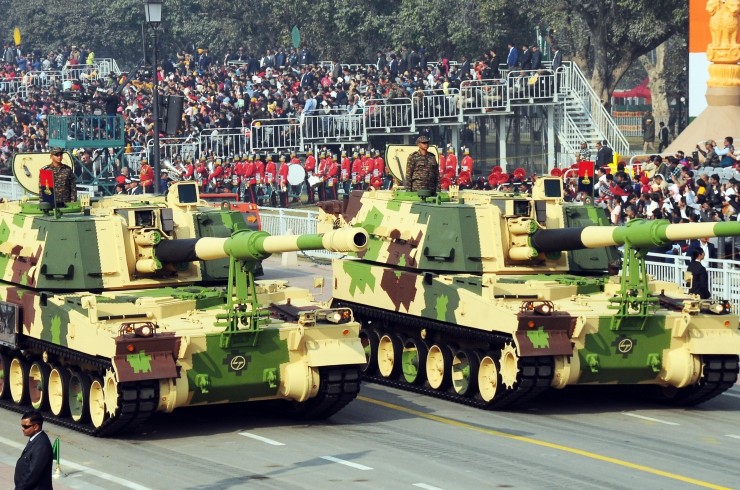
India’s defence production has recorded a major milestone, reaching an all-time high of Rs 1.51 lakh crore in FY 2024–25. Image Source: IANS
Overall capital expenditure of the Ministry has reached around 76 percent, which includes spending not only on capital acquisitions but also on critical areas such as infrastructure development, land procurement and research and development activities.
The Ministry of Defence has hit several milestones in the year 2025. Since January 2025, the Defence Acquisition Council has approved capital acquisition proposals exceeding Rs 3.84 lakh crore, reflecting a sustained push to strengthen national defence preparedness with a strong emphasis on modernisation through indigenisation. During the Financial Year 2025–26, up to the end of December 2025, the Ministry of Defence signed capital contracts worth Rs 1.82 lakh crore aimed at upgrading the capabilities of the Armed Forces. By the same period, nearly 80 percent of the Capital Acquisition Budget, amounting to approximately Rs 1.2 lakh crore, had already been utilised, underscoring the accelerated pace of expenditure on modernisation programmes.
Overall capital expenditure of the Ministry has reached around 76 percent, which includes spending not only on capital acquisitions but also on critical areas such as infrastructure development, land procurement and research and development activities. To support this momentum, procurement procedures have been significantly streamlined to reduce delays and improve efficiency, including measures such as simplifying the iDEX manual, rationalising defence export permissions, revamping the Defence EXIM Portal, easing the Technology Transfer policy, and decentralising decision-making through revised Delegation of Financial Powers and updated procurement manuals.
India’s defence production has recorded a major milestone, reaching an all-time high of Rs 1.51 lakh crore in FY 2024–25. This represents an 18 percent increase over the previous year’s output of Rs 1.27 lakh crore and nearly a 90 percent rise compared to FY 2019–20, when production stood at Rs 79,071 crore. Defence Public Sector Undertakings and other public sector entities accounted for about 77 percent of this production, while the private sector contributed the remaining 23 percent. The gradual rise in the private sector’s share, from 21 percent in FY 2023–24 to 23 percent in FY 2024–25, highlights its expanding role within the country’s defence industrial ecosystem. In line with this growth trajectory, the Government has set an ambitious target of scaling defence manufacturing output to Rs 3 lakh crore by 2029.
India’s Defence production

Source: Department of Defence Production, Ministry of Defence
In the Union Budget 2025–26, the Ministry of Defence has been allocated Rs 6.81 lakh crore, aligning with the Government’s broader vision of Viksit Bharat @ 2047 and the objective of building technologically advanced and self-reliant Armed Forces. This allocation marks a 9.53 percent increase over the Budget Estimates for FY 2024–25 and constitutes 13.45 percent of the total Union Budget, the highest share among all ministries. Of the total defence allocation, Rs 1.80 lakh crore has been earmarked for Capital Outlay. Approximately Rs 1.12 lakh crore, or 75 percent of the modernisation budget, has been reserved for procurement from domestic sources, with around Rs 28,000 crore specifically allocated for procurement from domestic private industry, thereby reinforcing the focus on indigenous manufacturing and private sector participation.
On October 17, 2025, the Raksha Mantri inaugurated the third production line for the Light Combat Aircraft Tejas Mk1A and the second production line for the Hindustan Turbo Trainer-40 at Hindustan Aeronautics Limited’s Nashik facility, and also flagged off the first Tejas Mk1A manufactured there. The third LCA Mk1A production line was operationalised by HAL in a record time of two years and is equipped with more than 30 structure assembly jigs covering all major aircraft modules, including the centre, front and rear fuselage, wings and air intake. This fully functional line has the capacity to produce eight aircraft annually, and with its commissioning, HAL’s total LCA production capacity has increased to 24 aircraft per year.
Further strengthening defence capabilities, the Defence Acquisition Council on December 29, 2025, cleared capital acquisition proposals worth around Rs 79,000 crore. These approvals cover a wide range of systems, including loiter munition systems for artillery regiments, low-level lightweight radars, long-range guided rocket ammunition for the Pinaka multiple launch rocket system, and integrated drone detection and interdiction systems for the Indian Army. For the Indian Navy, approvals included bollard pull tugs, high-frequency software-defined radios in manpack configuration, and leasing of high-altitude long-range remotely piloted aircraft systems. The Indian Air Force will benefit from procurements such as automatic take-off and landing recording systems, Astra Mk-II missiles, full mission simulators, and SPICE-1000 long-range guidance kits.
Earlier, on July 3, 2025, the DAC accorded Acceptance of Necessity for 10 capital acquisition proposals amounting to approximately Rs 1.05 lakh crore, all to be sourced indigenously. These approvals covered equipment such as armoured recovery vehicles, electronic warfare systems, an integrated common inventory management system for the three Services, and surface-to-air missile systems, aimed at enhancing mobility, strengthening air defence, improving logistics management, and boosting overall operational readiness. AoNs were also granted for the procurement of moored mines, mine countermeasure vessels, super rapid gun mounts, and submersible autonomous vessels, which will help mitigate risks to naval and merchant shipping. To further encourage indigenous design and development, these approvals were accorded under the Buy (Indian–Indigenously Designed, Developed and Manufactured) category.
On May 11, 2025, the Raksha Mantri virtually inaugurated the BrahMos Integration and Testing Facility in Lucknow, a significant component of the Uttar Pradesh Defence Industrial Corridor. Within just five months of its inauguration, the first batch of missiles produced at the facility was flagged off. The centre is equipped to carry out the complete process of assembly, integration and testing of BrahMos missiles, adhering to the highest technical and quality standards, and represents a major step forward in strengthening domestic missile manufacturing capabilities.
Defence exports also registered a new high in FY 2024–25, reaching Rs 23,622 crore. This marked an increase of Rs 2,539 crore, or 12.04 percent, over the exports recorded in FY 2023–24, which stood at Rs 21,083 crore. In FY 2024–25, the private sector contributed Rs 15,233 crore to defence exports, while Defence Public Sector Undertakings accounted for Rs 8,389 crore, compared to contributions of Rs 15,209 crore and Rs 5,874 crore respectively in the previous year. Building on this upward trend, the Government has set an ambitious defence exports target of Rs 50,000 crore by 2029, reinforcing India’s growing stature as a reliable exporter of defence equipment and technologies.
India’s Defence Exports

Source: Department of Defence Production, Ministry of Defence
At present, Indian defence manufacturers from both the public and private sectors are exporting a wide range of defence equipment and systems to nearly 100 countries across the globe. This steady rise in exports signals a broader transformation in India’s defence industrial base, pointing to the gradual maturation and expansion of the country’s military-industrial complex. The significance of this shift extends beyond economic gains or the need to address mounting security challenges along India’s borders. It is closely tied to New Delhi’s larger strategic objective of consolidating its position as a major power in the international system.
The development of stronger indigenous defence capabilities enhances India’s ability to project influence, deepen strategic partnerships, and reduce long-term dependence on foreign suppliers. A more capable and competitive defence industry also provides India with an important instrument of statecraft, enabling it to support friendly countries, shape regional security dynamics, and counterbalance rival powers through both deterrence and cooperation. In this sense, defence exports are not merely commercial transactions but also tools that can reinforce India’s geopolitical standing and strategic autonomy.
At the same time, despite the impressive growth in defence exports achieved in recent years, significant hurdles remain before India can be counted among the world’s leading arms suppliers. These include intense competition from established global players, the need to consistently deliver high-end and combat-proven systems, challenges related to scale, after-sales support, and long-term sustainment, as well as the necessity of aligning export policies with foreign policy priorities. Addressing these constraints will be critical if India is to translate its expanding defence industrial capacity into enduring influence and credibility in the global arms market.