Thursday, 17 Sep, 2026


At its latest monetary policy meeting on February 5, the central bank projected average inflation for the current financial year to remain around 2.1 percent. Image Source: IANS
A key contributor to the rise in inflation was food prices. Food inflation increased to 3.47 percent year-on-year in February, up from 2.13 percent in January, according to data released by the Ministry of Statistics and Programme Implementation.
India’s consumer price inflation continued its upward trend for the fourth consecutive month, reaching 3.21 percent in February, compared with 2.75 percent in January. The increase broadly matched economists’ expectations, as a Reuters survey had projected the consumer price index (CPI) to rise by about 3.1 percent.
A key contributor to the rise in inflation was food prices. Food inflation increased to 3.47 percent year-on-year in February, up from 2.13 percent in January, according to data released by the Ministry of Statistics and Programme Implementation. The rise reflects stronger price pressures in essential food items, which remain a major component of household spending in India.
February’s inflation figure is also significant because it represents only the second reading under India’s newly revised CPI series. The government recently updated the base year for calculating inflation to 2024 from the previous base year of 2012. This revision aims to better reflect current consumption patterns and economic realities. Authorities explained that the change was necessary due to substantial structural shifts in the economy over the past decade, including rising income levels, increased urbanization, rapid expansion of the services sector, and the growing influence of digital technologies on consumer behavior.

Source: Ministry of Statistics and Programme Implementation
Despite the recent uptick in inflation, the Reserve Bank of India (RBI) remains relatively optimistic about the overall outlook. At its latest monetary policy meeting on February 5, the central bank projected average inflation for the current financial year to remain around 2.1 percent. The RBI also indicated that food supply conditions appear favorable in the near term, which could help limit sustained inflationary pressure.
However, economists caution that external geopolitical developments could complicate the inflation outlook. In particular, escalating tensions and conflict in West Asia have increased volatility in global commodity markets. Although inflation is expected to remain within the RBI’s target band of 2 percent to 6 percent, analysts believe the current environment may discourage the central bank from making immediate changes to its policy stance.
Regional data shows notable differences in inflation trends across Indian states. Among the major states, Kerala recorded the highest food inflation at 6.17 percent, followed by West Bengal with 5.54 percent. Telangana reported the highest overall retail price inflation at 5.02 percent. Economists note that the February figure represents an 11-month high in retail inflation, largely driven by the rebound in food prices.

Source: Reserve Bank of India
The government has mandated the Reserve Bank of India to maintain the retail inflation at 4 percent with a margin of 2 percent on either side for a five-year period ending March 2026. The CPI is heavily weighted by the RBI while formulating its bi-monthly monetary policy. The repo rate was last increased on February 08, 2023 by the Monetary Policy Committee (MPC) by 25 basis points (bps), bringing it to 6.50 percent. The MPC had increased the benchmark interest rate by 250 basis points in the fiscal year 2022-23 in an effort to control the raging inflation. The RBI increases the repo rate as a measure of tight monetary policy to counter inflation. Repo rate is the interest rate at which the central bank of a country lends money to commercial banks. In the event of inflation, central banks increase repo rate as this restricts the commercial banks to borrow from the central bank. This ultimately reduces the money supply in the economy and thus helps in reducing inflation.
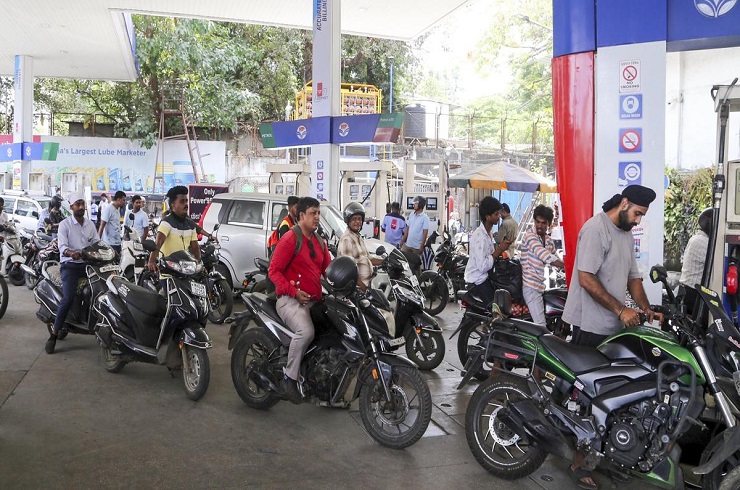
Devendra Kumar Pant, chief economist at India Ratings and Research, explained that geopolitical tensions have had a noticeable effect on energy markets. At one point, crude oil prices surged above $100 per barrel before easing slightly. In response to rising energy costs, the International Energy Agency announced that its member countries would collectively release around 400 million barrels of oil from their emergency reserves in an effort to stabilize global prices. Pant added that as long as the conflict in West Asia persists, oil prices are likely to remain elevated. Even though global crude and petroleum product prices have risen, retail prices of petrol and diesel in India have so far remained unchanged. Analysts expect these domestic fuel prices to stay stable in the near term.
Looking ahead, India Ratings and Research forecasts that retail inflation could climb further to around 3.7 percent in March. The RBI is therefore expected to closely monitor inflation dynamics while maintaining a cautious approach. Many economists anticipate that the central bank will continue its current pause on policy rate changes rather than tightening or easing monetary policy in the immediate future.
Recent inflation trends also show that CPI-based inflation has largely remained near the lower end of the RBI’s target range over the past several months. In six of the last seven months, inflation has hovered close to the lower bound of the 2 percent to 6 percent target band. Nevertheless, the RBI’s Monetary Policy Committee chose to keep key policy rates unchanged during its latest meeting, reflecting ongoing uncertainty in global markets.
The new CPI series has introduced several methodological changes designed to improve how inflation is measured. Previously, under the 2012 base year series, inflation had been relatively low, registering 1.33 percent in December and 0.71 percent in November. The updated index now relies on spending patterns identified in the 2023–24 Household Consumption Expenditure Survey.
This recalibration has adjusted the relative importance, or weights, assigned to different categories in the index. Economists estimate that the share of core items, such as housing, clothing, and services has increased by roughly 10 percentage points, while the weight of volatile food components has been reduced. As a result, the overall inflation reading has increased slightly under the new methodology, but it is expected to fluctuate less dramatically over time.
Another significant change is the increased weight given to housing in the inflation basket. The revised framework also improves the measurement of housing costs by incorporating rental data from rural areas and expanding the geographic coverage of surveys. These changes are intended to capture living costs more accurately across both urban and rural regions. By reducing the influence of highly volatile food prices and giving more emphasis to core spending categories, the new CPI series may produce a more stable measure of inflation. This could help policymakers better assess real income trends, household purchasing power, and consumption behavior.
The government’s chief economic adviser, V. Anantha Nageswaran, noted that a more stable CPI would have broader policy benefits. Lower volatility in inflation data could make government expenditures linked to inflation, such as adjustments to dearness allowance for public sector employees and payouts on inflation-indexed bonds, more predictable and easier to manage. Overall, the revised CPI framework is expected to provide policymakers with a more accurate and contemporary tool for monitoring price trends and guiding economic policy.