Monday, 12 Oct, 2026

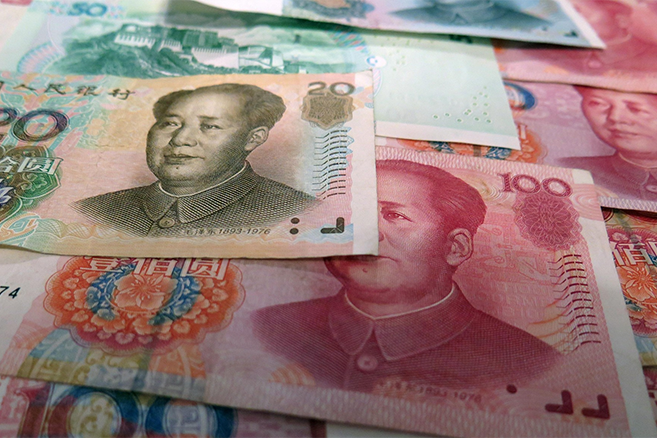
Photo courtesy: Pixabay
India never formally banned Chinese investment, but a lengthy inter-ministerial approval process—often taking a year or more—discouraged inflows and complicated deals involving funds with Chinese shareholders
Six years after tightening foreign investment rules in the wake of the Covid pandemic and border tensions with China, the Centre has begun cautiously loosening them. The Union Cabinet, chaired by Prime Minister Narendra Modi, has approved amendments to the foreign direct investment (FDI) framework under Press Note 3 of 2020, allowing certain investments linked to countries sharing land borders with India to proceed more easily.
The changes mark a calibrated shift rather than a full rollback of restrictions. While investors directly based in neighbouring countries will still require government approval, global funds with minor Chinese or other land-border ownership — below 10 per cent and without control—will now be allowed to invest through the automatic route. The government has also introduced a clear 60-day deadline to decide on investment proposals in selected manufacturing sectors.
The move reflects New Delhi’s attempt to balance economic pragmatism with strategic caution.
A policy born in crisis
Press Note 3 was introduced on April 17, 2020, at the height of the pandemic. With many Indian firms under financial stress, the government feared “opportunistic takeovers” by foreign investors, particularly from China. Under the revised policy, any investment originating from countries sharing land borders with India — China, Bhutan, Nepal, Bangladesh, Pakistan, Afghanistan and Myanmar — required prior government approval.

Before that date, Chinese investments could proceed under the automatic route, meaning no prior approval was required.
Although India never formally banned Chinese investment, the approval mechanism proved cumbersome. Proposals were vetted through an inter-ministerial process that often took a year or more, discouraging investment flows and complicating deals involving global venture capital and private equity funds with Chinese shareholders.
The broad application of the rule—even when investors from such countries held small, non-strategic minority stakes—became a particular concern for global funds investing in Indian start-ups and technology companies.
The 10 per cent threshold
The Cabinet’s latest amendment seeks to address this bottleneck. The government has introduced a clearer definition of “beneficial ownership”, aligning it with the Prevention of Money Laundering Rules, 2003.
Under the new framework, investments where beneficial ownership from a land-border country is below 10 per cent will be permitted through the automatic route, provided the stake is non-controlling.
This means global investment funds with small Chinese shareholdings will now be able to invest in India without seeking government clearance. Earlier, even a single share linked to China or another neighbouring country triggered the approval requirement.
However, the relaxation comes with strict limits. Entities registered in China, Hong Kong, or other neighbouring countries will still require prior government approval for any investment in India. Officials have emphasised that the policy change applies only to global investors based outside these countries whose beneficial ownership from them remains below the 10 per cent threshold.
Faster decisions in manufacturing
A second major change introduces a 60-day timeline for processing investment proposals in specific manufacturing sectors. These include electronic components, capital goods, electronic capital equipment, polysilicon, and ingot-wafer production, areas seen as crucial for India’s manufacturing ambitions.
A committee of secretaries headed by the Cabinet Secretary will have the authority to revise the list of eligible sectors.
Even in these cases, the government has retained a key safeguard: majority ownership and control must remain with resident Indian citizens or Indian-owned entities at all times.

The fixed timeline is intended to reduce uncertainty for investors, particularly those involved in technology partnerships or manufacturing collaborations.
Push for supply chain integration
The easing comes as India tries to strengthen its position in global supply chains and attract capital for advanced manufacturing. Officials say the revised policy should help channel more funding into start-ups, deep-tech firms, and manufacturing ventures, while still maintaining oversight over sensitive investments.
Legal experts believe the clarification will make investment structures more predictable. According to Atul Pandey of Khaitan & Co, the clearer definition of beneficial ownership could facilitate joint ventures and minority investments by global funds, particularly in technology and manufacturing sectors where cross-border partnerships are common.
The pressure for easing had also come from large global investors such as BlackRock and Carlyle Group, which argued that the sweeping restrictions were inadvertently blocking capital inflows into Indian companies.
A cautious recalibration
The policy shift follows recommendations from a high-level panel led by Rajiv Gauba, which suggested either scrapping Press Note 3 or easing it gradually. The panel proposed allowing investments where beneficial ownership from neighbouring countries remained below 10 per cent and even suggested permitting cumulative investments of up to 49 per cent in non-strategic sectors with approval.
Commerce Minister Piyush Goyal had earlier indicated that any easing would be “calibrated and step-by-step.”
The Cabinet’s decision reflects precisely that approach. India is not reopening the doors fully to Chinese investment. Instead, it is trying to remove the unintended barriers that the 2020 rules created for global investors, especially those funding technology and manufacturing ventures.
In effect, the government is signalling that while strategic caution will remain, economic integration and supply-chain participation require a more nuanced policy than the blanket restrictions imposed during the pandemic.