Friday, 16 Oct, 2026


Photo courtesy: (Pixabay)
The codes address two long-standing gaps—weak protection for informal workers and rigid rules for formal employers—while aligning labour regulation with a more digital, flexible, mobile workforce
The Centre has finally pulled the trigger on a reform that has been stuck in the pipeline for five years. By notifying the implementation of the four labour codes—on wages, industrial relations, social security, and workplace safety—the government has set in motion the most sweeping overhaul of labour regulation in half a century. The move promises universal social security, statutory minimum wages, and better conditions for workers. For companies, the stated reward is a cleaner rulebook and fewer compliance traps. But, as with most big reforms, the impact will differ sharply across sectors, firms, and income groups.
The codes replace 29 laws, many dating to the pre-liberalisation era. The simplification alone is significant. Yet, the fine print reveals a more complex story: more protection for workers at the bottom, more flexibility for firms at the top, and a vastly expanded regulatory net for the gig economy. Whether this becomes a turning point or a fresh round of friction will depend on how the Centre and states write the remaining rules over the coming weeks.

What changes for workers
For workers, the biggest shift is in coverage. The codes extend social security to the entire workforce—formal, informal, gig, and platform workers. For the first time, delivery agents, cab drivers, and app-based cleaners will have a legally defined place in the labour ecosystem. Platforms will contribute 1–2 per cent of annual turnover (capped at 5 per cent of payout to gig workers) into a welfare fund. The government has promised an Aadhaar-linked Universal Account Number so benefits follow workers across states and platforms.
On paper, this is the most meaningful upgrade in labour protection in decades. Appointment letters become compulsory, statutory minimum wages apply across sectors, and fixed-term employees get parity with permanent staff. Gratuity becomes available after one year, instead of five. Workers above 40 are entitled to free annual health check-ups. Women can work night shifts across all establishments—subject to safety conditions that companies must guarantee.

But the promise is brighter than the path. Social security for gig workers depends on how platforms report turnover, how states design the schemes, and how effectively contributions are enforced. The risk is that protections remain ornamental while actual benefits—insurance, pensions, maternity support—arrive slowly or unevenly.
What changes for companies
For employers, the reform lands in two parts: simplification and greater flexibility.
The simplification is real. A jumble of legacy laws has collapsed into four codes with unified definitions, common compliance formats, and a single enforcement architecture. This reduces the scope for inspector discretion and cuts down overlapping mandates.
Flexibility comes mainly through the higher threshold for layoffs and retrenchment, which rises from 100 to 300 workers. Companies argue that this makes hiring less risky and encourages expansion. States such as Rajasthan implemented this earlier with no visible surge in job loss, a point industry groups cite to counter union fears.

But firms are not getting a free pass. The codes increase accountability on workplace safety, documentation, and night-shift arrangements for women. Fixed-term employment will cost more now that benefits and gratuity are aligned with permanent roles. Companies employing gig workers must start provisioning for their share of welfare contributions—an added cost for e-commerce, food delivery, ride-hailing, and hyperlocal logistics.
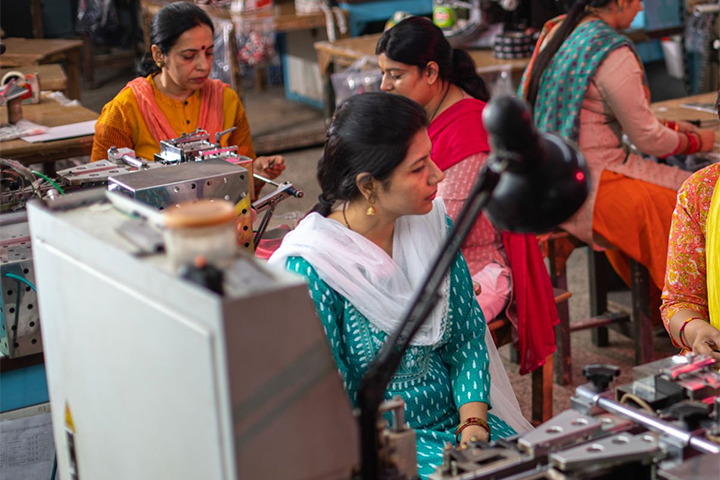
For large, formal-sector firms, these are manageable adjustments. For smaller firms, particularly in manufacturing, the cost of compliance may rise before the gains from simplification show up.
Why trade unions are protesting
Almost all major trade unions have opposed the implementation, calling it unilateral and politically driven. Their criticism centres on the belief that the codes tilt the balance too far in favour of employers—especially the provisions on layoffs, fixed-term work, and extended shifts.
The Centre argues that objections are political rather than substantive, noting that 27 states have already pre-published their draft rules. But union protests will add pressure during the transition, especially in labour-intensive states.
The bigger picture
The codes attempt to solve two long-standing problems: lack of protection for informal workers and rigid rules for formal employers. They move India closer to international labour standards and align policy with the emerging shape of work—digital platforms, flexible contracts, and mobile workforces.

But the reform’s success will depend on execution.
If states drag their feet on rulemaking, the codes risk becoming a halfway house. If companies treat the new protections as formalities rather than binding standards, workers will see little change. And if enforcement continues to be discretionary, neither side will fully trust the new regime.
The bottom line
This is the boldest labour reform in decades, but not a clean win for either side. Workers gain visibility, legal protection, and a chance at real social security. Companies get clarity, fewer compliance hurdles, and more room to manage their workforce. Yet both inherit new costs and responsibilities.
The codes promise a more modern, inclusive labour market. Whether they deliver one depends on how quickly rules are finalised—and how faithfully they are implemented.