Friday, 16 Oct, 2026


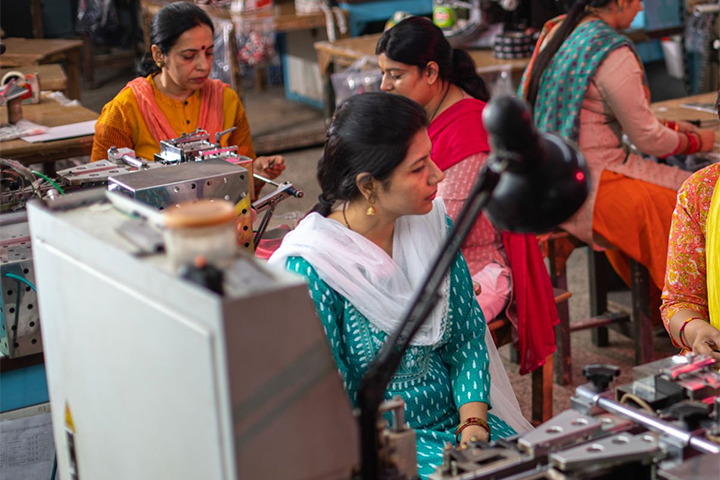
Photo courtesy: Pixabay
For years, companies kept the basic pay component low and relied more on allowances, limiting provident fund and gratuity costs. The new rule curbs that flexibility
When India’s new labour Codes kicked in, they did not trigger street protests or dramatic corporate warnings. What they did instead was quietly land on company balance sheets in the October–December quarter of 2025-26. The effect was swift and measurable.
The change looks technical. Under the new framework, basic pay must account for at least 50 per cent of an employee’s total cost to company. In addition, fixed-term employees become eligible for gratuity after just one year of continuous service, rather than the earlier five. These two provisions may sound modest. In practice, they alter the arithmetic of compensation.
For years, many companies structured pay packages with a relatively low basic component and a higher share of allowances. That kept contributions to provident fund and gratuity in check. The new rule narrows that flexibility. Once basic pay rises, so do statutory payouts linked to it — gratuity, social security contributions and retirement benefits. The result: a one-time catch-up cost and a permanently higher recurring obligation.
The third quarter numbers tell the story.
In a sample of 96 companies from the Nifty 100 universe, 73 reported a financial hit from the new Codes. Together, they provided Rs 17,631.5 crore in that single quarter. To put that in perspective, this amounted to 7.9 per cent of their combined salary and wage bill and 10.5 per cent of their adjusted net profit. These companies together had wage costs of about Rs 2.22 lakh crore and adjusted net profit of around Rs 1.68 lakh crore. A tenth of quarterly profit is not a rounding error.

Within the Nifty 50, 41 of 49 companies disclosed a combined impact of Rs 14,855 crore. That was 7.7 per cent of their total employee expenses and 10.6 per cent of adjusted net profit. Even for large, well-capitalised firms, that is material.
The burden has not been evenly spread. Information technology companies have taken the largest hit, followed by banks, airlines and capital-intensive industrial groups.
At the top of the list sits Tata Consultancy Services. It made a one-time provision of Rs 2,128 crore. That equalled 5.5 per cent of its salary bill for the quarter and 16.1 per cent of adjusted net profit. In other words, without the labour Code adjustment, its profit would have been materially higher.
Engineering major Larsen & Toubro set aside Rs 1,344 crore—10.5 per cent of employee expenses and nearly a third of adjusted quarterly profit. Infosys provided Rs 1,289 crore. Airline operator InterGlobe Aviation, which runs IndiGo, allocated Rs 1,037 crore—a striking 46 per cent of employee expenses and half of its adjusted net profit for the quarter.
Large manufacturers such as Tata Motors, Maruti Suzuki India and JSW Steel have also been affected. So have financial institutions and aviation companies, where payroll costs form a meaningful share of total expenses.
Some heavyweights—including Reliance Industries, State Bank of India, Oil and Natural Gas Corporation, Coal India, NTPC, Power Grid Corporation of India and Adani Enterprises—are still assessing the full financial implications. More adjustments may yet surface.
What does all this signify?
First, the labour Codes mark a structural shift in how corporate India accounts for its workforce. For employees, especially those on fixed-term contracts, the change enhances social security and aligns compensation with long-term benefits. It reduces the gap between permanent and contractual staff in terms of retirement entitlements. That has both economic and social significance.
Second, for companies, the era of aggressive salary structuring to minimise statutory payouts is narrowing. Labour is becoming more transparently priced. Over time, this could influence hiring models, the use of fixed-term contracts and automation strategies.
Third, at a macro level, the one-time provisions dent profits but do not threaten balance sheets. Most large firms have absorbed the hit without impairing cash flows. Yet the recurring increase in employee-linked costs will weigh on margins, particularly in labour-intensive sectors like IT services.
Finally, there is a signalling effect. Reform of labour laws has long been discussed as a way to simplify compliance and improve formalisation. The immediate narrative is about higher corporate costs. The longer-term question is whether clearer, more standardised rules create a more stable labour market.
For now, the numbers show that reform is not costless. Corporate India has written the cheque. The debate will shift to whether the returns—in productivity, workforce stability and social protection—justify it.