Friday, 16 Oct, 2026

Photo courtesy: Pixabay
The real estate boom is moving beyond housing. Investments in data centres, IT parks, logistics, retail and hospitality along the Noida Expressway are broadening the economic base and curbing speculative demand
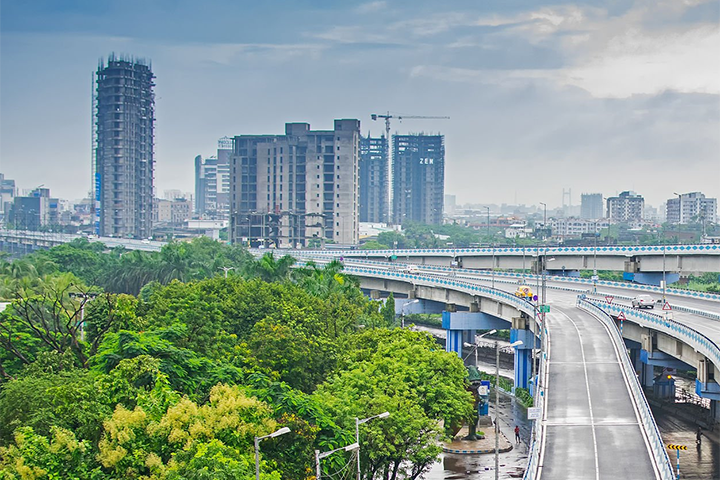
Noida’s skyline once stood as a reminder of India’s real estate misadventures, dotted with half-built towers and delayed promises. That image is now beginning to blur. Luxury housing projects and high-value co-developments are entering a market long defined by distress, pointing to a deeper shift in how Noida is being rebuilt and repositioned.
The most visible trigger for this transformation is the upcoming international airport at Jewar. Its influence extends well beyond the Yamuna Expressway Industrial Development Authority (Yeida) area, reshaping demand dynamics across Noida and Greater Noida. The airport has emerged as the anchor for a wider regional infrastructure build-out, improving connectivity and recalibrating long-term expectations for both residential and commercial development in the belt.

Regulatory reform has played an equally decisive role. Changes in the handling of stalled projects, tighter oversight under the Real Estate Regulation Act and improved funding mechanisms have introduced discipline that was missing for over a decade. Since 2019, project stress has reduced sharply, reversing a prolonged erosion of end-user confidence and encouraging developers to return with larger and more complex projects.
Supply data reflect the scale of this turnaround. Between 2022 and 2025, more than 52,000 residential units were launched across Noida, Greater Noida and Yeida. Greater Noida accounted for the bulk of new supply with around 32,179 units, followed by Noida at 11,312 units and Yeida at 8,544 units. Unlike earlier cycles, the bulk of these launches has been concentrated in premium and upper-mid segments rather than mass housing, signalling a clear repositioning of the market, according to a report in the Business Standard.
Prices have risen in step with this shift. Analysts estimate that average residential prices across all three micro-markets have increased by about 108 per cent since 2019. In Greater Noida, average values moved from roughly Rs 3,300 per square foot in 2020 to about Rs 6,600 per square foot in 2025. This pace of appreciation marks a sharp break from the previous decade, when oversupply and delivery delays capped price growth.
The clearest signal of changing market depth is visible in Yeida’s premium sectors. In areas such as Sector 22D, luxury projects are now being launched with ticket sizes ranging from Rs 7 crore to Rs 11 crore for large-format apartments. These valuations reflect not only infrastructure visibility linked to the airport but also rising demand for branded, low-density developments that cater to affluent buyers seeking alternatives within the National Capital Region.

The real estate story is also expanding beyond housing. Large investments are underway in data centres, information-technology parks, logistics hubs, retail assets and hospitality projects along the Noida Expressway and in the airport influence zone. This diversification strengthens the region’s economic base, generating employment and reducing the risk of a housing market driven purely by speculative demand.
Buyer composition has evolved alongside this diversification. High-net-worth individuals, non-resident Indians, corporate buyers and entrepreneurs from Tier-I and Tier-II cities are increasingly active in the market, joined by a smaller but visible segment of celebrity investors. Their presence has prompted developers to focus on branded residences, mixed-use developments and differentiated residential formats aimed at both lifestyle and long-term investment demand.
For developers, the strategy is selective rather than expansive, with an emphasis on projects that align with changing preferences and higher pricing thresholds. The bet is that Noida’s long-standing reputation risk has diminished enough to sustain premium positioning.
The transition, however, remains contingent on execution. Timely completion of the Jewar airport, continued infrastructure delivery and regulatory stability will determine whether this reset endures. For now, Noida appears to have crossed an important inflection point—shifting from a market defined by distress to one attempting a credible reinvention.