Sunday, 20 Sep, 2026

Photo courtesy: Pixabay
For New Delhi, the latest trade data suggest the economy is building a more diversified and resilient trade network, better able to withstand geopolitical shocks while supporting long-term trade growth
The conflict in West Asia is doing more than disrupting energy markets. It is quietly reshaping India’s trade geography, forcing businesses to redraw supply chains, diversify energy sourcing and find alternative shipping routes to keep goods moving. Latest trade data for the first two months of the current financial year show a marked shift in both India’s import and export patterns, underscoring how geopolitical tensions are beginning to alter commercial relationships that had remained largely stable for years.
The most striking change is the emergence of Oman as a key trading partner.
During April-May 2025, Oman ranked only as India’s 30th-largest source of imports. In April-May this year, however, it climbed to the 10th position after imports surged 3.8 times to $3.4 billion, largely on the back of higher energy purchases.
The reshuffle extends beyond Oman. Russia returned as India’s second-largest source of imports, while the US strengthened its position as India stepped up purchases of liquefied petroleum gas (LPG). Imports from Brazil rose 2.8 times to $2.7 billion, reflecting additional purchases of crude oil and other energy products. Peru also emerged as an increasingly important supplier, with imports jumping 3.7 times to more than $2 billion, lifting the South American nation from the 35th position a year ago to the 20th-largest source of imports.

Together, these shifts point to a broader strategy of diversifying energy supplies at a time when uncertainty surrounding shipping lanes and crude markets has increased.
The conflict has raised concerns over the security of maritime trade through the Strait of Hormuz, one of the world’s busiest energy corridors connecting the Persian Gulf with global markets. Although major disruptions have so far been contained, uncertainty over the route has prompted importers to spread procurement across a wider set of suppliers and logistics hubs.
The changes are equally visible on the export side.
Singapore overtook both China and the Netherlands to become India’s third-largest export destination during April-May, trailing only the US and the UAE. Exports to Singapore more than doubled to $5.1 billion, driven primarily by higher shipments of refined petroleum products as regional supply chains adjusted to the disruptions caused by the conflict.
Trade with Africa has also gained momentum. Tanzania emerged as India's eighth-largest export destination, rising sharply from the 25th position a year earlier after exports climbed from around $800 million to $2.2 billion. According to Commerce Secretary Rajesh Agrawal, petroleum products and gems and jewellery accounted for much of the increase.

South Africa also moved into India’s top ten export destinations, while exports to neighbouring Sri Lanka nearly tripled to $1.8 billion, highlighting how Indian exporters are finding opportunities in both regional and emerging markets amid changing global trade patterns.
One of the most significant developments has been Oman's growing role as a logistics gateway for Indian exporters.
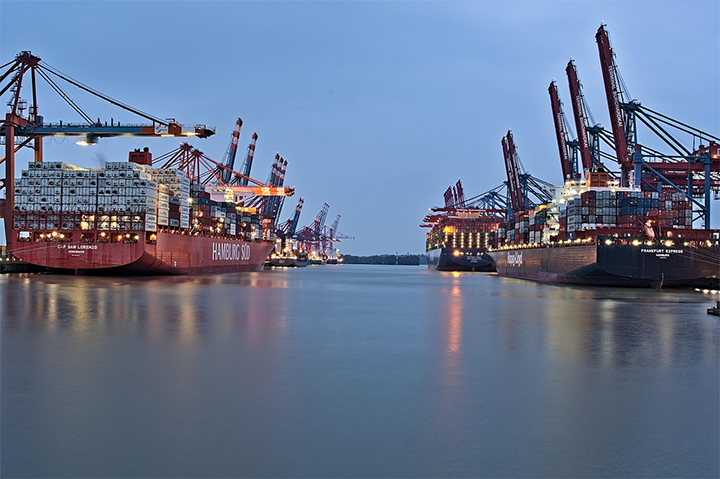
Agrawal said Oman has opened three ports—Sohar, Salalah and Duqm—for Indian cargo following the implementation of the India-Oman free trade agreement earlier this month. The ports are increasingly being used as transshipment hubs, allowing Indian goods to move onward to markets across the Gulf, including the UAE, while bypassing some of the logistical bottlenecks created by the regional conflict.
Although imports from West Asia remain around 18 per cent below last year’s level because of interruptions in energy supplies, exports to the region have nearly recovered to their previous levels. The latest trade figures suggest that India is adapting to geopolitical uncertainty with greater flexibility than in previous crises. Rather than relying heavily on a limited number of suppliers or export markets, businesses are broadening both sourcing and destination networks, reducing their exposure to disruptions in any single region.
The adjustments also underline the growing importance of trade resilience as a strategic objective. Companies are no longer focused solely on securing the lowest-cost supplies; they are increasingly prioritising reliability, diversified logistics and multiple sourcing options to safeguard production and exports.
While the immediate catalyst has been the conflict in West Asia, the resulting changes could have longer-lasting implications. New energy suppliers, alternative shipping corridors and emerging export destinations established during periods of disruption often remain commercially viable even after geopolitical tensions ease.
For India, the latest trade data indicate that the country is not merely responding to a temporary crisis. It is gradually building a more diversified and resilient trade architecture—one better equipped to withstand geopolitical shocks while supporting sustained growth in both imports and exports.