Thursday, 17 Sep, 2026

Photo Courtesy: PixaBay
June’s auto sales hint at something bigger than a cyclical rebound. They suggest the middle class is regaining the confidence to spend, a crucial ingredient for sustained economic growth.
For the last few years, India’s economy has looked strong on paper. Gross domestic product (GDP) kept rising, companies earned record profits, the stock market touched new highs and tax collections kept breaking records. But there was one big puzzle. Ordinary middle-class families were not spending much. Many delayed buying their first car or even a new motorcycle because prices had risen sharply and future incomes seemed uncertain.
June’s automobile sales, however, suggest that this may finally be changing. Cars and two-wheelers are among the biggest purchases made by middle-class families after buying a house. The latest sales figures are important not just for automobile companies but for the entire economy. They suggest that India’s long-cautious middle class may finally be opening its wallet again.
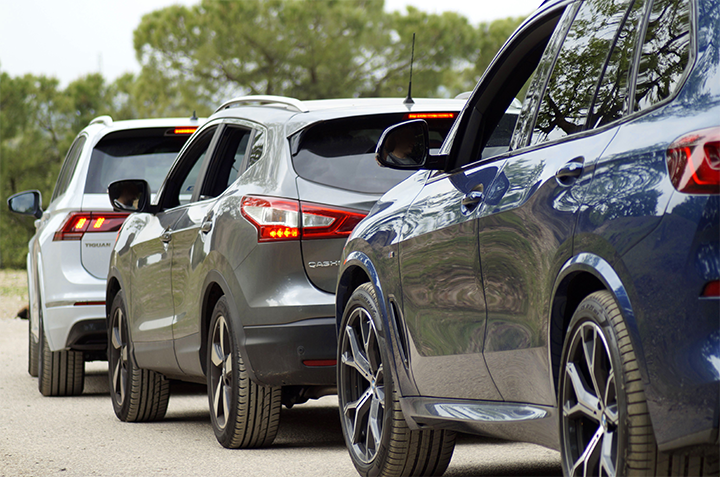
Overall vehicle retail sales jumped almost 22% year-on-year to a record 26 lakh units in June 2026. Passenger vehicle retail sales rose 29% to about 410,000 units, the highest ever recorded for the month. At first glance, this looks like another good month for the automobile industry. But a closer look reveals something far more significant.
The biggest surprise is not that more cars are being sold. It is who is buying them.
The clearest evidence comes from Maruti Suzuki, the country’s largest carmaker and the undisputed leader in small cars. During the fourth quarter of FY26, first-time buyers accounted for 51% of Maruti’s sales. That is a sharp rise from 42% in the first half of the year and 48% in the third quarter. Replacement buyers made up only 18%, while families buying an additional car accounted for 31%.
These numbers belong only to Maruti and not to the entire industry. Yet they are highly significant because Maruti dominates India’s entry-level car market. If first-time buyers are returning to Maruti showrooms, they are almost certainly returning to the automobile market itself.
This marks a major break from the trend seen after the pandemic.

For nearly five years, the passenger vehicle market appeared healthy largely because wealthier families upgraded from hatchbacks to expensive SUVs. First-time buyers disappeared as car prices climbed steadily. Rising steel costs, stricter safety norms, tighter emission standards, higher insurance premiums and increasing interest rates pushed the dream of owning a car beyond the reach of many middle-class households.
Manufacturers also shifted their focus. SUVs generated much higher profits than small cars, so companies launched more premium models while entry-level hatchbacks slowly disappeared from dealer showrooms.
Now the missing customer seems to be returning.
Maruti’s June sales tell the story clearly. Domestic passenger vehicle dispatches increased nearly 24% to 147,187 units. The automaker’s mini-car segment, comprising the Alto and S-Presso, recorded a remarkable 78% jump. Compact and mid-sized cars grew almost 16%, while utility vehicle sales rose nearly 29%.
Mahindra, whose portfolio is dominated by SUVs, sold 60,393 utility vehicles domestically in June, up 28% from a year earlier. That means affluent buyers continue to purchase larger vehicles while middle-class families are once again entering the market through affordable hatchbacks.
When both ends of the market grow simultaneously, it usually signals rising confidence across income groups.
One important reason is policy.
The benefits of GST 2.0 continue to flow through the economy nearly nine months after its introduction. Lower GST on entry-level cars has reduced purchase prices in the most price-sensitive segment of the market. For many middle-class families, even a small reduction in the monthly EMI can determine whether they buy a car or postpone the decision for another year.

Many of these new customers are upgrading from motorcycles to their first family car. They are not looking for panoramic sunroofs or luxury features. Their priorities are simple—low purchase price, good mileage, affordable maintenance and reliable service. For them, a small hatchback remains the cheapest and safest bridge from two-wheeler ownership to four-wheeler ownership.
The recovery is not limited to passenger cars.
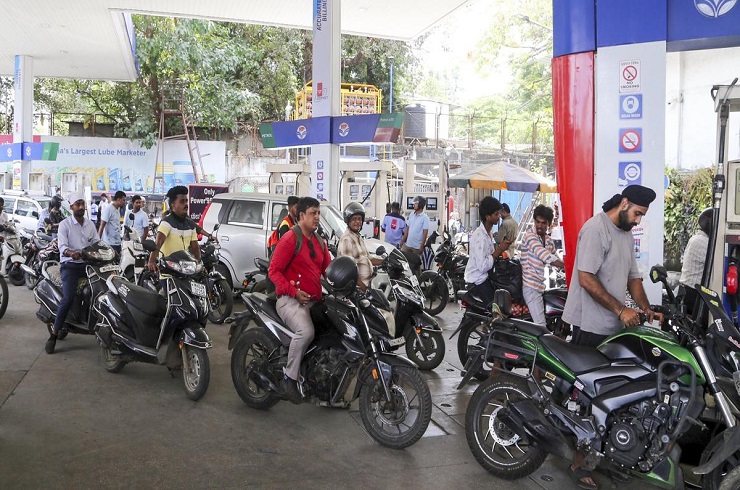
The two-wheeler market, another reliable indicator of middle-class spending, also strengthened in June.
Hero MotoCorp retained its leadership even though domestic wholesales slipped 4.24% year-on-year to 502,890 units. Importantly, the company said motorcycle demand remained resilient while scooter sales grew in double digits.
Honda Motorcycle & Scooter India reported a 20.61% increase in sales to 468,956 units, reflecting steady demand across segments.
Royal Enfield continued its remarkable expansion, with sales rising 33.75% to 102,930 units, helped by strong demand for its refreshed product range.
TVS Motor Company delivered perhaps the strongest performance of all. During the first quarter of FY27, its two-wheeler sales rose 27% to 1.564 million units compared with 1.232 million units a year earlier. In June alone, two-wheeler sales surged 47% to 565,417 units.
These numbers suggest that consumers are spending across almost every segment of the automobile market instead of concentrating only on premium products.
The recovery is also spreading geographically. According to the Federation of Automobile Dealers Associations (FADA), passenger vehicle registrations in rural India grew more than 35% year-on-year in June, comfortably ahead of the 24.7% growth recorded in urban markets.
Another striking feature of the recovery is the rapid shift towards alternative fuels. Electric vehicles, hybrids and CNG-powered cars together accounted for 40% of passenger vehicle retail sales in June, up from around 38% in May.
Among them, CNG vehicles held the largest share at 24.3%, followed by hybrids at 8.3% and electric vehicles at 7.8%.
This shows that consumers are responding rationally to persistently high petrol and diesel prices. Instead of delaying purchases, they are choosing vehicles with lower running costs.
June’s performance is different because it caps nearly nine months of sustained growth after the GST changes. More importantly, the recovery is no longer confined to affluent SUV buyers. It has spread to first-time car owners, hatchback buyers, motorcycle customers, rural households and even electric vehicle buyers.
That is exactly the kind of broad-based consumption India has been waiting for.
For years, economists worried that India’s growth rested too heavily on government spending, corporate investment and the consumption of wealthy households. The missing piece was the middle class.
If middle-class families have indeed regained the confidence to spend, the implications go well beyond the automobile industry. Higher vehicle sales create jobs in manufacturing, auto components, steel, tyres, electronics, finance, insurance, transport and dealerships. Every new car or motorcycle sold generates economic activity across dozens of industries.
That is why June’s automobile numbers deserve attention. They are not just about selling more cars or motorcycles. They may be telling us that after years of caution, India’s middle class has finally begun to spend again. And when the middle class starts spending, the entire economy shifts into a higher gear.