Thursday, 17 Sep, 2026


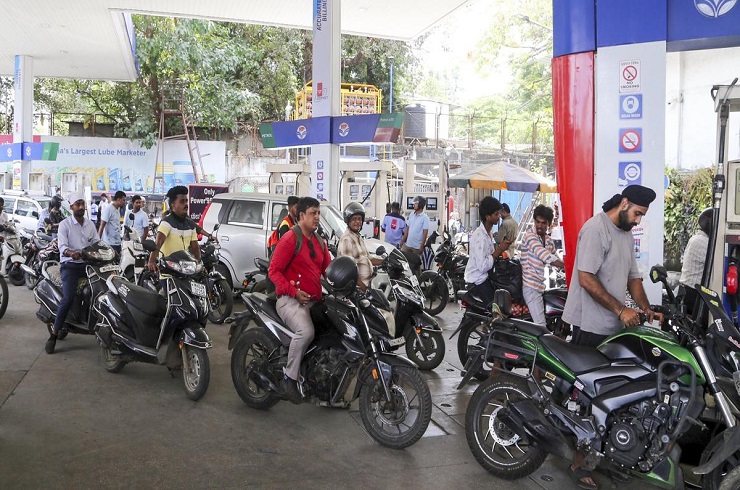
Open source image.
The rise in market borrowing reflects a broader shift in fiscal federalism, with states increasingly driving public investment and accounting for a large share of infrastructure and social-sector spending
States are borrowing more than ever from the market—and paying a higher price for it. The Reserve Bank of India’s (RBI’s) latest annual report reveals a significant shift in state finances: market borrowings are becoming the dominant source of deficit financing even as investors demand higher yields to lend.
The numbers tell the story.
States raised a record Rs 12.76 lakh crore through State Government Securities (SGS) in FY26, up from Rs 10.73 lakh crore a year earlier. Market borrowings financed 76.3 per cent of states’ gross fiscal deficits, compared with 71.8 per cent in FY25. In other words, more than three-fourths of state deficits are now being funded through debt markets.
This is not merely a reflection of larger borrowing needs. It also highlights a deeper structural reality confronting state finances: expenditure commitments are growing faster than internal revenue generation.
Over the past few years, states have simultaneously expanded welfare schemes, infrastructure spending, social-sector programmes and subsidy commitments. While tax collections recovered strongly after the pandemic, revenue growth has become uneven amid slower consumption and economic uncertainties. As a result, borrowing has become the easiest instrument for balancing budgets.
The problem is that borrowing is becoming more expensive.

The weighted average cut-off yield on SGS issuances rose to 7.32 per cent in FY26 from 7.20 per cent in FY25. More significantly, the spread over comparable Central government securities widened sharply to 50 basis points from 30 basis points.
This widening spread is an important market signal. Investors are demanding a larger premium to hold state debt relative to sovereign debt, indicating growing concerns about fiscal risks and debt sustainability at the sub-national level.
Even differences among states are becoming more pronounced. The average interstate spread on fresh 10-year SGS issuances doubled to 8 basis points from 4 basis points a year earlier. This suggests financial markets are increasingly differentiating between fiscally stronger and weaker states instead of treating all state debt as broadly similar.
For investors, that is a sign of maturing debt markets. For states with stretched finances, however, it could mean higher borrowing costs in the years ahead.
The RBI data also reveal varying degrees of liquidity stress among states. During FY26, 19 states and Union Territories used the Special Drawing Facility, 11 resorted to Ways and Means Advances, and 10 dipped into overdrafts at various points. While these are routine liquidity-management tools, their usage indicates that many states continue to face cash-flow mismatches despite robust borrowing programmes.
The contrast with the Centre is striking.
The Centre remained in surplus for most of FY26 and used Ways and Means Advances for only one day, compared with eight days in the previous year. That divergence highlights the growing fiscal pressure at the state level even as the Centre benefits from buoyant tax devolution, RBI surplus transfers and broader financing flexibility.
The larger concern is that rising borrowing dependence may gradually constrain future development spending.
Interest payments already consume a substantial share of state budgets. As borrowing rises and yields harden, debt-servicing costs will absorb an increasing portion of revenues, leaving less room for capital expenditure, healthcare, education and social welfare programmes.
This risk is especially relevant because several states have expanded welfare commitments significantly in recent years. While such spending may be politically popular, sustained reliance on debt to finance recurring expenditure can create long-term fiscal vulnerabilities.
The RBI’s response has been to encourage greater market discipline through a Benchmark Issuance Strategy. Beginning FY27, nine states — including Andhra Pradesh, Bihar, Chhattisgarh, Kerala, Madhya Pradesh, Maharashtra, Rajasthan, Telangana and Uttar Pradesh — will adopt a pilot framework involving pre-announced borrowing calendars and benchmark tenor issuances.
The objective is straightforward: improve transparency, deepen investor participation and reduce uncertainty around borrowing programmes. If successful, the strategy could help lower borrowing costs and improve liquidity in the state debt market.
Yet transparency alone cannot solve the underlying challenge.
The rise in market borrowing reflects a broader trend in India’s fiscal federalism. States are increasingly becoming the primary engines of public investment, accounting for a large share of the country’s infrastructure and social-sector spending. But their revenue-raising powers remain relatively constrained compared with their expenditure responsibilities.
As economic growth moderates and welfare demands intensify, that imbalance is becoming more visible.
For now, India’s state borrowing programme remains manageable. The RBI notes that both Central and state borrowing programmes were completed smoothly despite global financial volatility and geopolitical tensions. But the trajectory bears watching.
The message from FY26 is clear: states are borrowing more, investors are charging more, and fiscal space is narrowing. The challenge for policymakers is ensuring that today’s debt finances productive investment rather than becoming tomorrow’s fiscal burden.