Monday, 21 Sep, 2026


Source: Freepik
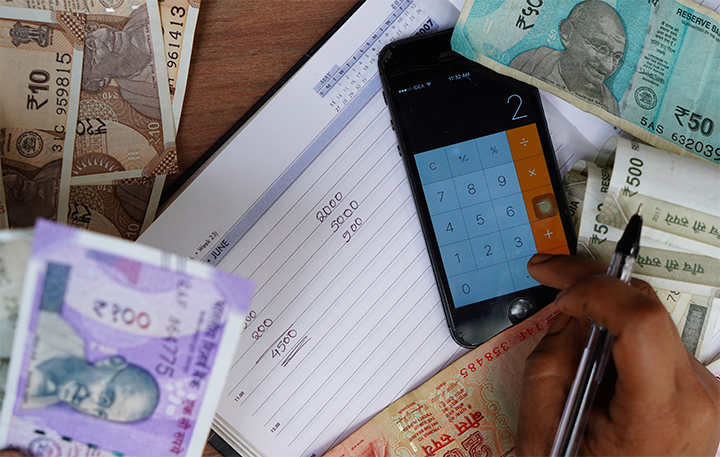
India’s currency has entered a new phase of pressure, slipping past the ₹90-per-dollar mark for the first time. Despite strong domestic indicators, a mix of weak exports, heavy foreign outflows and uncertainty over the US trade deal has pushed the rupee to record lows.
The rupee slipping past the ₹90-per-dollar mark this week has intensified concerns about India’s external position, even though domestic fundamentals remain strong. The currency has already depreciated over 5% this calendar year, and touched a new low of ₹90, reflecting sustained foreign outflows, a widening trade deficit and prolonged uncertainty around the India–US trade deal. What the market is witnessing is not a sudden shock, but a steady build-up of pressures that have converged at the same time.
On the surface, India’s macroeconomic numbers look supportive: crude oil prices have softened, inflation has cooled to below 1%, and GDP grew 8.2% in the September quarter. Yet the rupee continues to weaken. A major driver is the consistent withdrawal by foreign portfolio investors. FPIs have pulled out ₹1.48 lakh crore from domestic equities since January 2025, despite stable macro indicators. India has been one of the weakest equity performers globally over the past year, prompting investors to reallocate to markets with higher returns. This has also affected India’s external buffers; foreign exchange reserves declined by $12.1 billion between end-September and November 21, 2025, to $688.1 billion, with foreign currency assets shrinking by $21.2 billion despite a $9.2 billion rise in gold holdings.
A Widening Trade Deficit and a Delayed US Deal
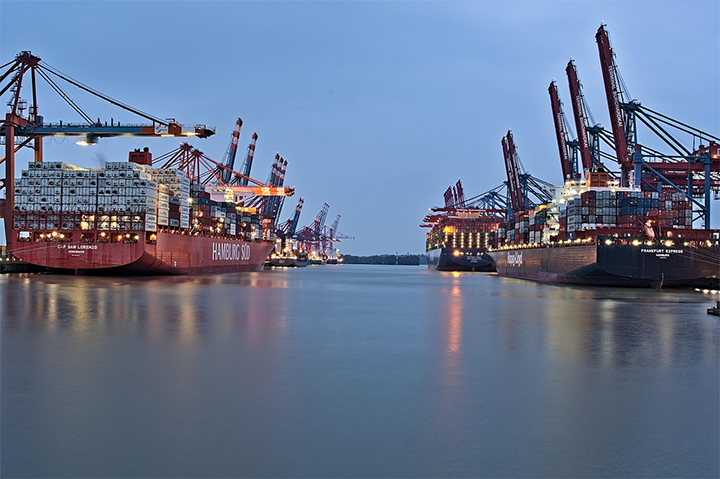
India’s merchandise trade deficit hit a record $41.7 billion in October, driven by weak exports and a sharp rise in imports. Exports contracted 11.8% to $34.4 billion, an eleven-month low, after the US imposed tariffs of up to 50% on several Indian goods. Oil exports fell 10.5% to $3.9 billion, non-oil exports dropped 12% to $30.4 billion, and almost all major categories- engineering, textiles, chemicals, gems and jewellery- saw sizeable declines. Only electronic goods grew, rising 19% year-on-year.

Imports, however, surged 16.6% to a record $76.1 billion. Gold imports exploded to $14.7 billion, triple the $4.9 billion a year earlier, due to festive demand and domestic prices crossing ₹1,28,000 per 10 grams. Non-oil, non-gold imports rose 12.4% to $46.5 billion on strong demand for electronics, machinery, fertilisers and silver.
The delay in finalising the India–US trade agreement has added another layer of pressure. Markets expected the deal months ago, and each week without clarity has raised concerns about tariff competitiveness and future trade flows. Analysts say the rupee is now functioning as a “pressure valve,” weakening gradually to offset tariff disadvantages. Many believe the rupee could slip to ₹91 unless the deal is announced soon. The RBI has avoided aggressive intervention, allowing controlled depreciation rather than risking reserve depletion.
The recent decline also reflects growing speculative activity. Traders report that once the rupee crossed 90, several exotic option positions were triggered, amplifying volatility. Despite this, India’s Chief Economic Advisor maintains that the slide is not a cause for panic, noting that inflation remains stable and expressing confidence of improvement in 2026.
The broader picture is one of external stress rather than domestic weakness. A combination of weak exports, record-high gold imports, heavy foreign outflows and policy uncertainty has built up over months. While a softer rupee may help exporters, it raises costs for import-dependent sectors like petroleum, electronics, and gems and jewellery. Markets remain cautious, watching whether the rupee’s fall is an overshoot or the beginning of a deeper depreciation cycle.