Sunday, 20 Sep, 2026

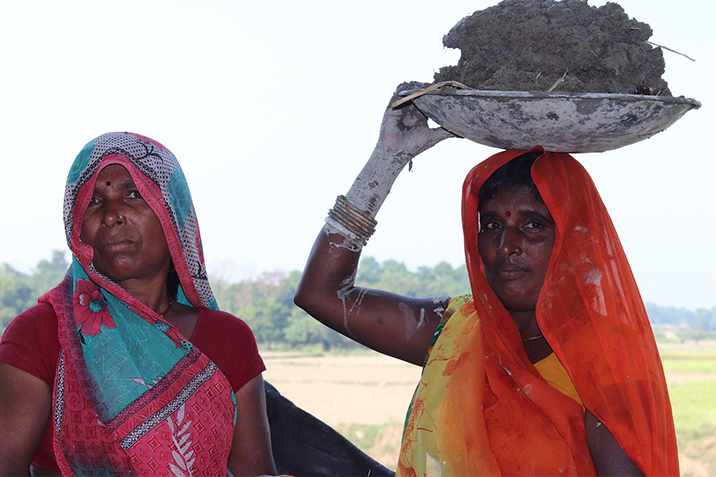
Photo courtesy: Pixabay
Affordable childcare, elder-care and community support remain scarce in many areas, making it harder for women to balance work and family responsibilities
As the world observes International Women's Day on March 8, fresh data suggests that while India has made some progress in expanding opportunities for women, large gaps persist in their participation in the labour market and in the quality of jobs available to them.
India’s female labour force participation rate stood at about 32 per cent in 2024 — far below that of several comparable emerging economies. Countries such as Vietnam, Thailand and China report substantially higher participation among women, highlighting how India continues to trail many of its peers in integrating women into the workforce.
The gender gap is also pronounced within the country. Male participation in the labour force is roughly double that of women, reflecting persistent structural barriers that prevent many women from entering paid employment. These barriers include social norms, safety concerns, limited mobility, and inadequate workplace opportunities in several parts of the country.
Even among women who do work, the nature of employment presents another challenge. Nearly 78 per cent of women in India’s labour force are engaged in what economists describe as vulnerable employment. For men, the corresponding share is about 69 per cent.

Vulnerable employment typically refers to work that lacks formal contracts, social security coverage or stable working conditions. It often includes self-employment in small family businesses, agricultural labour or informal sector work, where earnings are uncertain and worker protections remain limited.
The scale of such employment is also higher than that seen in many other emerging economies, including Brazil and China. This suggests that Indian women face a double constraint: fewer opportunities to join the workforce in the first place and a greater likelihood of ending up in insecure jobs once they do.
One of the main reasons for the low participation rate is the heavy burden of unpaid care work. Around 53 per cent of Indian women who remain outside the labour force report that they do so because of domestic and caregiving responsibilities. Among men, the figure is just 1.1 per cent.
The gap highlights the unequal distribution of household work and caregiving duties within families. In most households, women continue to shoulder the bulk of childcare, elder care and other domestic responsibilities, limiting the time and flexibility needed to pursue paid employment.

The shortage of formal support systems further reinforces this pattern. Access to affordable childcare facilities, elder-care services and community support structures remains limited in many parts of the country. Without these services, women often find it difficult to balance work and family responsibilities.
As a result, even when women acquire education and skills, their ability to translate these into sustained employment remains constrained. The challenge is therefore not only about creating jobs but also about building the enabling conditions that allow women to participate fully in the economy.
Improving labour force participation among women would have significant economic implications. Greater female participation could expand India’s productive workforce, raise household incomes and support broader economic growth.
For now, however, the data underscores a continuing paradox: while opportunities for women are gradually expanding, structural barriers still prevent millions from fully participating in the labour market. On a day that celebrates women’s achievements worldwide, the numbers serve as a reminder that much work remains to be done to close the gap.