Thursday, 17 Sep, 2026

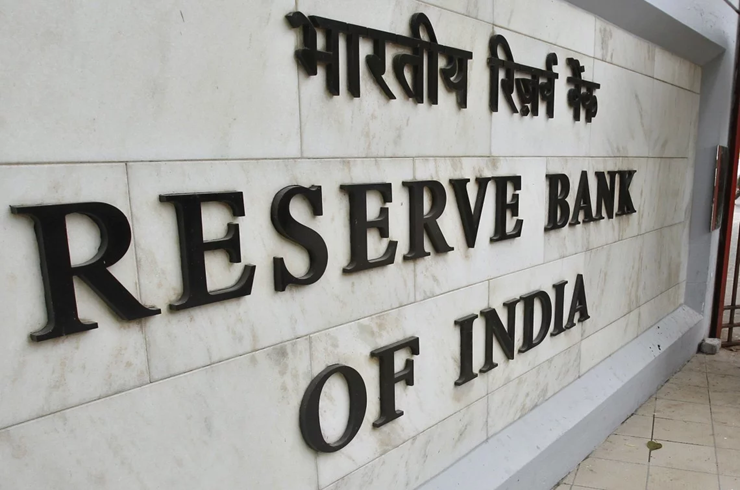
Governor Sanjay Malhotra said the committee retained its overall policy stance as ‘Neutral’. Image Source: IANS
Following the adjustment in the policy rate, the standing deposit facility (SDF) rate has been revised to 5 percent, while the marginal standing facility (MSF) rate and the Bank Rate now stand at 5.5 percent.
The Reserve Bank of India’s Monetary Policy Committee (MPC) on December 5 announced a reduction in the repo rate to 5.25 percent from 5.5 percent, marking its first rate cut after two consecutive meetings of maintaining the status quo. Governor Sanjay Malhotra said the committee retained its overall policy stance as ‘Neutral’. All six members of the MPC supported the decision unanimously.
Following the adjustment in the policy rate, the standing deposit facility (SDF) rate has been revised to 5 percent, while the marginal standing facility (MSF) rate and the Bank Rate now stand at 5.5 percent. Governor Malhotra also stated that the RBI will inject approximately Rs 1.45 lakh crore (about $16.15 billion) into the financial system in December to support liquidity conditions. This will be undertaken through open-market purchases of government securities worth up to Rs 1 lakh crore and a dollar-rupee buy/sell swap of $5 billion.

Source: Reserve Bank of India
Malhotra described the current phase of the Indian economy as a “rare goldilocks” period, characterised by strong growth alongside sharply easing inflation. Since October, the economy has experienced rapid disinflation, even slipping below the lower threshold of the RBI’s inflation target band, he noted. Despite this, economic momentum has remained robust. India’s foreign exchange reserves stood at $686 billion as of November 28, slightly lower than $688.1 billion the previous week. The decline reflects the central bank’s intervention to stabilise the rupee, which had touched an all-time low of 90.42 against the dollar on Thursday before recovering modestly to 89.93.
According to Malhotra, real GDP grew 8.2 percent in Q2 of 2025-26, the highest quarterly growth in six quarters, driven by strong domestic demand amid global uncertainties. Real gross value added (GVA) rose 8.1 percent, supported by strong industrial and services sector performance. The first half of the financial year benefited from rationalisation of income tax and GST structures, lower crude oil prices, front-loaded public capital expenditure, and supportive monetary and financial conditions facilitated by low inflation. With improving growth dynamics, the RBI raised its GDP growth forecast for FY26 to 7.3 percent from the earlier projection of 6.8 percent. Estimates for Q3 have been revised to 7 percent from 6.4 percent, and for Q4 to 6.5 percent from 6.2 percent.

Source: Ministry of Statistics and Programme Implementation
Malhotra also highlighted the significant easing in retail inflation. Headline CPI inflation fell to a record low in October 2025, with much of the decline driven by an unexpected correction in food prices, which typically rise during September and October. Core inflation (excluding food and fuel) remained subdued, though precious metal prices continued to exert some pressure. However, core inflation excluding gold dropped to 2.6 percent in October. Overall inflation, he said, has become more broad-based in its decline.
Given these trends, the RBI revised its inflation outlook for FY26 to 2 percent from the earlier estimate of 2.6 percent. The Q3 CPI inflation forecast has been cut to 0.6 percent from 1.8 percent, while Q4 inflation is now expected at 2.9 percent versus the previous projection of 4.0 percent. For Q1 of the next fiscal year, retail inflation is projected at 3.9 percent compared with 4.5 percent earlier. The RBI expects CPI inflation for July–September FY27 to be around 4 percent.
Divam Sharma,Co-Founder and Fund Manager at Green Port, said, "Inflation at a benign 2.2 percent and growth touching 8 percent in the first half of the year have already prompted the government to lift its full-year GDP estimate to 7.3 percent. In that context, the RBI’s unexpected 25 bps rate cut to 5.25 perent, along with a neutral stance, stands out as a bold move. It will certainly add more momentum to urban and rural consumption, which is already improving, and could further support capex and credit growth. However, stronger demand at this stage also raises the possibility of inflation drifting higher from current lows. The decision comes at a time when the rupee is hovering near all-time lows, and the probability of the RBI deploying FX swaps and OMOs to stabilise liquidity and currency pressures is high. While the near-term impulse is positive, investors should remain vigilant: excess liquidity, a weak currency, and strong demand can quickly tilt the economy towards overheating if not managed carefully."
Navin Dhanuka, Director, ArisUnitern RE Solutions Pvt Ltd, said, “The RBI’s 25 bps rate cut — taking the total reduction this year to 125 bps — comes at a crucial moment for the industry. Lower home-loan EMIs will materially improve affordability and boost homebuyer confidence, especially in the mid-income and aspirational segments. This policy shift strengthens project viability, accelerates on-ground execution and is likely to spur fresh supply as demand gains momentum, supporting broader growth across the real-estate sector.”
The government has mandated the Reserve Bank of India to maintain the retail inflation at 4 percent with a margin of 2 percent on either side for a five-year period ending March 2026. The CPI is heavily weighted by the RBI while formulating its bi-monthly monetary policy. The repo rate was last increased on February 08, 2023 by the Monetary Policy Committee (MPC) by 25 basis points (bps), bringing it to 6.50 percent. The MPC had increased the benchmark interest rate by 250 basis points in the fiscal year 2022-23 in an effort to control the raging inflation. The RBI increases the repo rate as a measure of tight monetary policy to counter inflation. Repo rate is the interest rate at which the central bank of a country lends money to commercial banks. In the event of inflation, central banks increase repo rate as this restricts the commercial banks to borrow from the central bank. This ultimately reduces the money supply in the economy and thus helps in reducing inflation.