Wednesday, 14 Oct, 2026

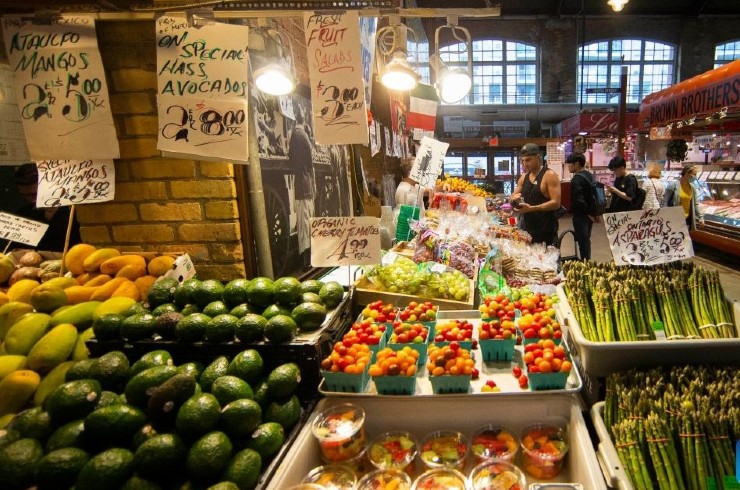
The September figures indicate a renewed acceleration in price pressures after inflation had moderated in the earlier part of the year. Image Source: IANS
A closer examination of the September figures reveals that food prices remain the principal source of inflationary pressure.
India’s retail inflation accelerated to 5.54 per cent in September 2026, rising from 4.83 per cent in August, as a sharp increase in food prices, particularly vegetables, intensified the pressure on household budgets. Data released by the government on Monday showed that inflation had reached its highest level since October 2024, when it stood at 6.21 per cent. The latest reading also marked the highest inflation rate recorded so far in 2026 under the revised Consumer Price Index (CPI) series.
The September figures indicate a renewed acceleration in price pressures after inflation had moderated in the earlier part of the year. Following a decline to 3.93 per cent in May, retail inflation rose to 4.38 per cent in June and 4.45 per cent in July before increasing to 4.83 per cent in August. With the September reading, inflation has remained above the Reserve Bank of India’s (RBI) medium-term target of 4 per cent for four consecutive months, complicating the central bank’s efforts to maintain price stability while supporting economic growth.
The latest data must also be viewed in the context of changes to India’s inflation measurement framework. Earlier this year, the government revised the CPI base year from 2012 to 2024 and updated the consumption basket to better reflect changes in household expenditure patterns. The revised series is intended to provide a more representative picture of price movements, although comparisons with inflation figures from the previous series require appropriate consideration of the methodological changes.
A closer examination of the September figures reveals that food prices remain the principal source of inflationary pressure. Retail food inflation surged to 7.74 per cent from 5.97 per cent in August, reflecting higher prices of vegetables and other essential food items. The acceleration in food inflation is particularly significant because food accounts for a substantial share of household expenditure, especially among lower-income families, leaving them more vulnerable to increases in the cost of everyday necessities.

Source: Ministry of Statistics and Programme Implementation
The pressure was more pronounced in rural areas, where food inflation climbed to 8.06 per cent in September, compared with 6.17 per cent in August. Urban food inflation also accelerated, rising to 7.18 per cent from 5.64 per cent over the same period. The divergence between rural and urban inflation was evident in the headline figures as well. Rural CPI inflation increased to 6.08 per cent from 5.24 per cent in August, while urban inflation rose to 4.88 per cent from 4.31 per cent. The higher rural reading suggests that households outside urban centres are facing a comparatively greater inflationary burden, particularly as food prices rise.
The acceleration in inflation comes amid growing concerns over agricultural output following a deficient southwest monsoon and the emergence of El Niño conditions. Adverse weather patterns can affect crop yields, disrupt agricultural supply chains and push up prices of essential food commodities. If these pressures persist, the impact could extend beyond vegetables to a wider range of food products, making inflation more difficult to contain. The extent of the eventual impact will depend on crop conditions, the availability of supplies and the effectiveness of government interventions to stabilise markets.
External developments have added another layer of uncertainty to the domestic inflation outlook. Brent crude oil prices have climbed above $100 per barrel amid an escalation of the conflict in West Asia, increasing the risk of higher fuel, transportation and production costs. Given India’s dependence on imported crude oil, a sustained increase in international energy prices could raise the cost of imports and put additional pressure on domestic prices. Higher transportation and input costs could also feed into the prices of manufactured goods and services, broadening inflationary pressures beyond food.
The depreciation of the Indian rupee has further complicated the situation. The currency has weakened by around 7 per cent against the US dollar, increasing the rupee cost of crude oil and other imported commodities. A weaker currency can amplify the domestic impact of rising international prices, particularly when higher import costs are passed on to businesses and consumers. The combination of expensive energy imports, currency depreciation and weather-related supply risks therefore presents a challenging environment for policymakers.
September’s inflation reading also exceeded market expectations. A Reuters poll of 41 economists conducted between October 5 and 7 had projected retail inflation at 5.40 per cent for the month, with estimates ranging from 4.90 per cent to 5.90 per cent. The actual reading of 5.54 per cent came above the poll’s central estimate, indicating that price pressures were somewhat stronger than anticipated. The result reinforces concerns that inflation may remain elevated if food supply disruptions and external cost pressures persist.
Against this backdrop, the RBI has revised its inflation outlook upwards and adopted a more cautious approach to monetary policy. At its October 7 monetary policy review, the Monetary Policy Committee (MPC) raised the benchmark repo rate by 25 basis points to 5.50 per cent, marking its first rate increase in nearly four years. The decision followed a cumulative reduction of 125 basis points in the repo rate during 2025, after which the policy rate had remained unchanged at 5.25 per cent for four consecutive reviews. The latest increase signals a shift in the central bank’s immediate priority towards containing renewed inflationary risks.

Source: Reserve Bank of India
The RBI also raised its consumer price inflation forecast for the financial year 2026–27 to 5.2 per cent from the 5.0 per cent projected in August. Its quarterly projections indicate that inflation is expected to remain elevated through the remainder of the financial year. The central bank now anticipates inflation of 4.9 per cent in the second quarter of FY27, rising to 6.0 per cent in the December quarter and easing slightly to 5.7 per cent in the March quarter. For the first quarter of FY28, inflation is projected at 5.6 per cent, with the risks around the forecast assessed as evenly balanced.
The upward revision reflects the RBI’s assessment that the inflation outlook is being shaped by a combination of domestic supply constraints and external cost pressures. Elevated crude oil prices, an unfavourable monsoon, El Niño conditions and the possibility of higher input costs spreading across the economy have increased the risk that inflation could remain above the central bank’s target for an extended period. While the latest forecast suggests that inflation may moderate from its projected peak, the anticipated trajectory indicates that a return to price stability could take longer than previously expected.
RBI Governor Sanjay Malhotra has also drawn attention to indications that inflationary pressures are becoming more widespread across the consumer basket. According to the central bank, the weighted share of items recording inflation above 4 per cent increased to around 37 per cent in August. This suggests that the challenge may extend beyond a handful of food commodities, raising the possibility that price increases could become more entrenched across different categories of consumption. The MPC also noted elevated inflation expectations, although it observed that the pass-through of supply-side pressures into firms’ pricing behaviour remained limited.
The extent to which businesses transfer higher input costs to consumers will be an important determinant of the inflation trajectory in the coming months. If firms absorb a significant portion of the increase, the immediate impact on retail prices may remain contained, albeit at the expense of profit margins. However, if elevated energy, transportation and raw material costs persist, businesses may eventually pass these increases on to consumers, broadening the inflationary impact. The RBI’s concern over more generalised price pressures reflects this risk of temporary supply shocks translating into sustained inflation.
The central bank has also highlighted the potential role of government intervention in limiting the impact of adverse weather conditions. Healthy foodgrain buffer stocks and proactive measures to ensure adequate supplies could help cushion the effects of disruptions in agricultural production. However, the effectiveness of these measures will depend on the nature of the supply shortfall, the availability of alternative sources and the speed with which essential commodities can reach markets.
The September inflation figures consequently present a difficult policy trade-off for the RBI. Higher interest rates can help contain demand-side pressures and influence inflation expectations, but they cannot directly address supply shortages caused by adverse weather or geopolitical disruptions. At the same time, persistently high inflation can erode household purchasing power, increase business costs and complicate investment decisions. The central bank must therefore balance the need to anchor inflation expectations against the potential implications of tighter monetary conditions for borrowing and economic activity.
The latest repo rate increase marks a notable departure from the monetary easing cycle of 2025 and underscores the RBI’s growing concern about the durability of price stability. With headline inflation at 5.54 per cent, food inflation approaching 8 per cent and external risks continuing to weigh on the outlook, the coming months will be critical in determining whether the latest increase represents a temporary setback or the beginning of a more persistent inflationary phase. Much will depend on the trajectory of crude oil prices, the impact of weather conditions on agricultural supplies, movements in the rupee and the extent to which higher input costs are transmitted to consumers. For households, businesses and policymakers alike, the challenge will be to navigate rising prices without allowing short-term shocks to become entrenched in the broader economy.