Tuesday, 22 Sep, 2026

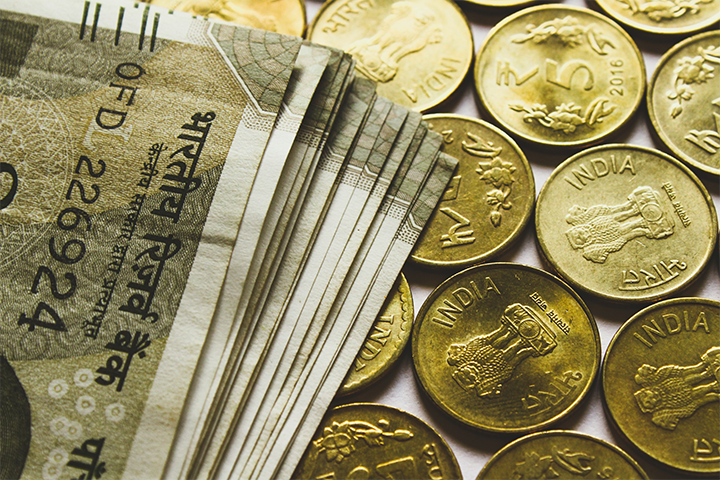
Photo courtesy: Pixabay
Fragmented supply chains are pushing Indian companies overseas in search of markets, technology and production capacity. Outward investment is no longer incidental—it has become part of India's structural economic shift
The debate on foreign investment in India almost always revolves around money flowing into the country. Yet an equally important shift is unfolding in the opposite direction. As supply chains are redrawn and global trade becomes more fragmented, Indian companies are investing overseas not merely to expand but to secure markets, technology, raw materials and manufacturing bases. The monthly numbers fluctuate, but the long-term direction is clear: outward investment has become an integral part of India's economic transformation.
The latest data from the Reserve Bank of India (RBI) illustrate this contrast. Outward foreign direct investment (FDI)—covering equity, loans and guarantees extended by Indian companies to overseas ventures—fell 40.55 per cent year-on-year to $2.99 billion in June 2026 from $5.03 billion a year earlier. Equity commitments dropped to $738 million from $2.2 billion, debt commitments eased to $469.9 million from $568.5 million, while guarantees declined to $1.78 billion from $2.97 billion.
Judged by a single month, the numbers suggest a slowdown. Viewed over a longer period, they tell a different story. Annual outward FDI has risen 49.5 per cent over the past decade, increasing from $31.33 billion in FY16 to $46.86 billion in FY26, despite the disruption caused by the pandemic. That points to a structural expansion rather than a cyclical surge.
The changing sectoral mix is equally revealing. Financial, insurance and business services have traditionally dominated India's overseas investments, accounting for more than a third of total commitments in most years. In April, the sector represented nearly two-thirds of all outward investment. By June, however, its share had fallen below one-fifth.
Construction emerged as the biggest surprise. Its share of outward commitments jumped almost fivefold, from 5.17 per cent in May to 25.68 per cent in June, indicating that Indian companies are increasingly pursuing infrastructure and project opportunities overseas alongside their traditional investments in financial services.

The destination of these investments also shifted. Singapore regained its position as the leading recipient of Indian outward investment in June, accounting for 23.79 per cent of total commitments, up sharply from 8.59 per cent in May. In the preceding two months, the United States and Mauritius had taken the lead with shares of 28.29 per cent and 20.38 per cent, respectively. Mauritius then saw one of the sharpest reversals, with its share collapsing to 1.08 per cent in June.
Even so, the longer-term trend remains remarkably stable. Singapore has been India's largest overseas investment destination throughout FY16 to FY26, interrupted only in FY19 and FY21, when the United States marginally overtook it.
The individual deals also reveal the breadth of India's overseas ambitions. According to RBI data, ONGC Videsh Rovuma committed $40 million to its Mozambique joint venture. Startup Investments invested nearly $35 million in a Singapore joint venture. Lenskart committed $22 million in equity to its Singapore subsidiary. GFCL EV Products invested $20 million in an Oman joint venture and another $0.13 million in its wholly owned subsidiary there, while OneSource Specialty Pharma committed $18 million to its Singapore subsidiary.
These investments span energy, consumer technology, pharmaceuticals and electric-vehicle supply chains, suggesting that overseas expansion is no longer confined to a handful of traditional sectors.

Yet the benefits remain unevenly distributed. A study by the Centre for WTO Studies shows that while large Indian corporations have established themselves as global investors, most medium-sized firms are only beginning to venture abroad and smaller companies largely remain confined to occasional, one-off investments.
That distinction is important. In an era of tariff barriers, geopolitical tensions and supply-chain diversification, overseas investment is no longer simply about acquiring foreign assets. It is increasingly a strategic tool for gaining technology, securing inputs, accessing customers and reducing dependence on any single market.
India's outward FDI story, therefore, is not defined by a one-month decline or a record annual figure. It is defined by the gradual emergence of Indian companies as global businesses. The next phase of that journey will depend not on a few corporate giants investing overseas, but on whether thousands of mid-sized firms can build an international presence. That will require easier financing, stronger institutional support and policies that help businesses navigate foreign markets.
The real test of India’s globalisation will not be how much capital leaves the country in any given month, but how many Indian companies succeed in building lasting businesses beyond its borders.