Friday, 16 Oct, 2026

Capital goods output increased by 10.4 percent, reflecting improved investment activity, while infrastructure and construction goods recorded an even stronger expansion of 12.1 percent. Image Source: PixaBay
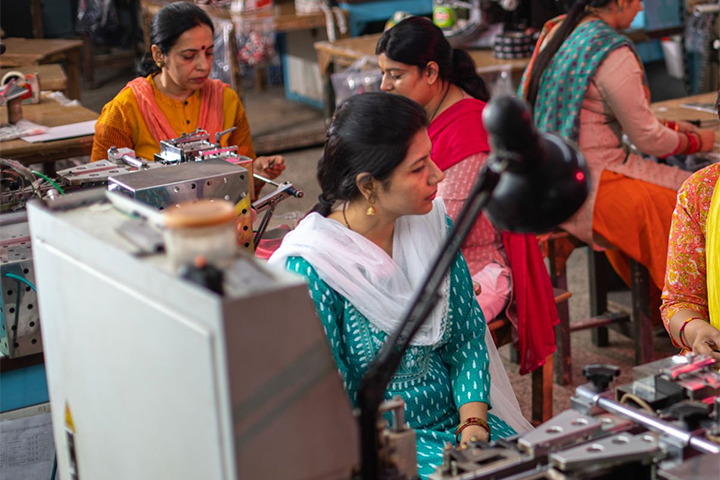
The resurgence in output was primarily driven by the manufacturing sector, which posted a strong growth of 8.0 percent during the month.
India’s industrial activity showed a marked rebound in November 2025, with the Index of Industrial Production recording a robust year-on-year expansion of 6.7 percent, clearly underscoring a recovery from the temporary slowdown witnessed a month earlier. The subdued growth of just 0.4 percent in October was largely attributed to Diwali-related holidays and festive-season disruptions that slowed factory operations and supply chains. With these effects fading in November, production levels normalised and consumer demand picked up, helping industrial output regain momentum. The latest reading also compares favourably with the 5.0 percent growth registered in November 2024, indicating an improvement in underlying industrial conditions.
The resurgence in output was primarily driven by the manufacturing sector, which posted a strong growth of 8.0 percent during the month. Several core industries played a pivotal role in this recovery, particularly basic metals and fabricated metal products, pharmaceuticals, and motor vehicles, all of which saw double-digit growth and contributed significantly to the overall expansion. Mining activity also improved, rising 5.4 percent year on year, supported by the end of the monsoon season and higher extraction of metallic minerals such as iron ore. In contrast, electricity generation declined by 1.5 percent, slightly tempering headline growth, though this contraction was not large enough to offset the strength seen in manufacturing and mining.

Source: Ministry of Statistics and Programme Implementation
Aditi Nayar, Chief Economist at ICRA Ltd. said, “While the year-on-year growth in the IIP surged to a 25-month high of 6.7 percent in November 2025 from 0.5 percent in October 2025, this upswing largely reflects the shift in the festive calendar, restocking after the festive season sales, as well as some normalisation in activity across the mining and electricity segments following the excess unseasonal rains in the previous month.” Ms. Nayar noted that even with the uplift in demand following the GST rate rationalisation in September, industrial output growth averaged 3.6 percent over October and November 2025, which was slower than the 4.3 percent growth recorded in the July–September 2025 quarter.
From a use-based perspective, industrial growth was broad-based. Capital goods output increased by 10.4 percent, reflecting improved investment activity, while infrastructure and construction goods recorded an even stronger expansion of 12.1 percent, signalling sustained public and private sector spending on projects. Intermediate goods output rose 7.3 percent, indicating steady demand within industrial supply chains, and consumer durables grew 10.3 percent, suggesting a recovery in discretionary spending.
Primary goods registered a relatively modest increase of 2.0 percent, whereas consumer non-durables expanded by 7.3 percent, pointing to stable demand for essential items. Overall, infrastructure and construction goods, intermediate goods, and consumer non-durables emerged as the largest contributors to November’s industrial growth, reinforcing the view that the recovery was both cyclical and fairly widespread across sectors.
Rajani Sinha, chief economist at ratings agency CareEdge said, “On the demand front, the positive aspect was the improvement in the output of consumer durables and non-durables which grew by 10.3 percent and 7.3 percent respectively, reversing the contraction seen in the previous months. Factors such as GST rationalisation, income tax relief and easing inflation have boded well for the consumption scenario. On the investment front, there has been healthy sustained healthy momentum in the grwoth of infrastructure/ construction goods and capital goods output.”